Tehran, Zanjan, Mahallat Targeted in Coordinated U.S.-Israeli Airstrikes
U.S. and Israeli airstrikes hit Tehran, Zanjan, and Mahallat, killing or wounding 40+, crippling power grids and a Qeshm desalination plant. The conflict spreads across the Middle East, hitting civilians, energy infrastructure, and global oil routes.
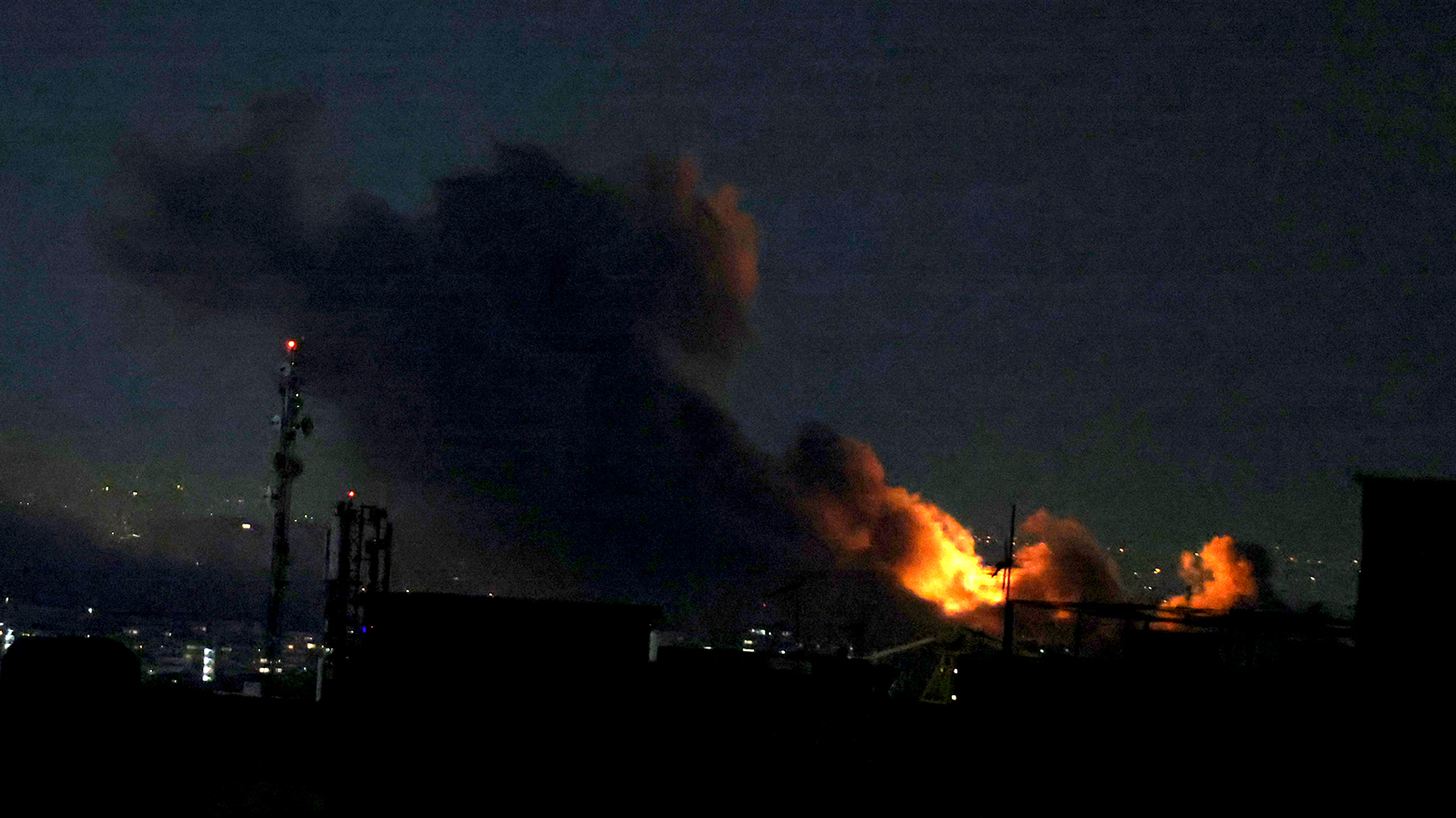
ERBIL (Kurdistan24) - At least 40 people were killed or wounded in a series of airstrikes on Iranian cities on Tuesday as U.S. and Israeli forces targeted residential units and religious sites in central and northwestern Iran, Iranian media reported. The attacks, which hit Tehran, Zanjan, and the Mahallat area of Markazi Province, also caused widespread disruptions to the country’s electricity network, authorities said.
According to Iranian reports, a U.S. and Israeli strike on residential units in Mahallat late Monday night left at least 11 dead and 15 wounded. The Mahallat area, situated in central Iran, experienced multiple explosions that damaged civilian housing.
In Zanjan Province, an attack on the administrative building of the “Al-A’zam” Husseinieh killed three people and wounded 12 others, officials said. Additional bombardments across several areas of Tehran were reported throughout Tuesday, intensifying the disruption of essential services.
The Tehran Province Electricity Distribution Company said 421 points in the capital’s power grid had been damaged in the strikes, with 16 new incidents reported in the past 24 hours.
Kambiz Nazerian, the company’s Director General, told domestic media that heavily impacted districts included Robat Karim, Shahriar, Bostan, Chardangeh, Kahrizak, and Pishva.
“Despite the extent of the affected zones, repair and renovation work on the network was carried out quickly, and electricity was restored in the shortest possible time,” Nazerian said, noting that 250 repair teams had been deployed across Tehran to address the outages.
The attacks come amid heightened tensions between Iran and the United States, with energy and service infrastructure increasingly targeted.
Analysts and officials have noted that disruptions to electricity and water systems have had a direct effect on civilian life, with continuous power outages reported in most provinces, particularly in the capital. Prior incidents have included cyberattacks and direct bombardments on energy facilities, prompting the Iranian government to strengthen protective measures.
AFP also reported that strikes damaged desalination plant on Iran island in Strait of Hormuz. According to the report, strikes have hit a desalination plant on Iran's Qeshm island in the strategic Strait of Hormuz, putting it out of service, Iranian media reported on Tuesday.
"One of the desalination plants on Qeshm Island was targeted... and is now completely out of service, as it is not possible to repair it in the short term," the ISNA news agency reported, quoting health ministry official Mohsen Farhadi.
It was not immediately clear when the attack took place.
AFP reported that the strikes affected military facilities in central Iran, a major religious site in the northwest, and several urban centers, while also triggering power cuts.
Footage verified by AFP showed large explosions and rising smoke columns in Isfahan. State media confirmed damage to the Grand Husseiniya, a prominent Shia religious center in Zanjan. Residents in Tehran reported intermittent power outages despite security measures in place.
“The fog of war continues,” Christopher Dembik, an investment adviser at Pictet Asset Management, said, reflecting uncertainty in global markets affected by the conflict.
Oil prices have remained volatile since the conflict began more than a month ago, initially spiking after strikes on Tehran that reportedly killed Supreme Leader Ayatollah Ali Khamenei and falling back following statements by U.S. President Donald Trump indicating expectations for a rapid resolution.
Trump had issued prior warnings that U.S. forces would target Iran’s oil and energy infrastructure if Tehran did not reach a war-ending deal.
According to AFP, he indicated that power systems, oil wells, the Kharg Island export terminal, and possibly desalination plants could be destroyed to pressure Iran into compliance. The Wall Street Journal reported that Trump told aides he might end the conflict even if the Strait of Hormuz remained largely closed, which would reinforce Tehran’s control over the critical shipping lane.
Following the strikes, Iranian authorities announced measures regarding the Strait of Hormuz, the narrow maritime passageway through which approximately one-fifth of global oil is transported.
An Iranian parliamentary committee voted to impose tolls on vessels transiting the strait and to ban ships from the United States and Israel entirely. The developments come amid global concerns over oil shipments and regional maritime security.
In Dubai and Iraq explosions were reportedly heard, while sirens sounded in Jerusalem.
Civil defense authorities in Saudi Arabia reported that two individuals were wounded when air defenses intercepted a drone near Riyadh.
Israeli emergency services confirmed that eight people sustained minor injuries from falling munitions fragments in Bnei Brak, near Tel Aviv, and at least 10 explosions were heard in the Jerusalem area following Iranian missile launches.
Israeli Prime Minister Benjamin Netanyahu said that over half of the military objectives had been achieved in the operation, without providing a timeline for the conflict’s continuation.
The war has also spread to southern Lebanon, where Israeli forces have been engaged in combat with Iranian-backed Hezbollah. On Tuesday, the Israeli military reported that four soldiers had been killed in that region.
The conflict has drawn attention from regional and international actors seeking to mediate.
Pakistani Foreign Minister Ishaq Dar, whose country is serving as an intermediary between Washington and Tehran, was scheduled to travel to Beijing for talks with Chinese Foreign Minister Wang Yi on “global issues of mutual interest.”
Dar hosted the foreign ministers of Saudi Arabia, Egypt, and Türkiye in Islamabad on Sunday and stated that Pakistan was prepared to host direct talks between the United States and Iran in the coming days.
Iranian officials have confirmed that Washington’s request to engage in dialogue has been transmitted through intermediaries, including Pakistan, without public identification of the U.S. contacts involved.
The ongoing U.S.-Israeli operations have affected not only civilian infrastructure and residential areas but also Iran’s energy sector and maritime commerce. Kuwait’s state oil company reported a fire aboard one of its crude oil tankers in Dubai’s port following what it described as a “direct and malicious Iranian attack.”
The Strait of Hormuz remains a focal point of the conflict, with only select vessels permitted passage under Iranian control, further influencing global energy markets. Two Chinese container ships were reported to have successfully passed through the strait, with Beijing expressing appreciation for the arrangements.
The strikes have also prompted significant damage to civilian facilities and services.
Iranian media confirmed that attacks on residential units and a religious center resulted in dozens of casualties, while Tehran’s electricity distribution network suffered extensive disruptions, with repair teams mobilized to restore service.
Local authorities emphasized that despite damage across multiple districts, restoration efforts were ongoing and electricity had been reconnected to affected areas.
The attacks occurred against a backdrop of escalating tensions following President Trump’s threats against Iran’s energy and military infrastructure.
The coordination between U.S. and Israeli forces involved simultaneous targeting of residential, religious, and administrative buildings, as well as military installations, according to Iranian and international reporting. The impact on civilian life, urban services, and energy distribution has been widespread, reflecting the intensity of current military operations in the region.