IRGC Navy Launches Wave 88 Strikes on U.S. and Israeli Targets in Persian Gulf
Tasnim News Agency reported that the IRGC Navy conducted Wave 88 of Operation True Promise, striking U.S. and Israeli assets, while coordinated U.S.-Israeli airstrikes across Iran caused casualties, damage to residential and religious sites, and widespread power outages.
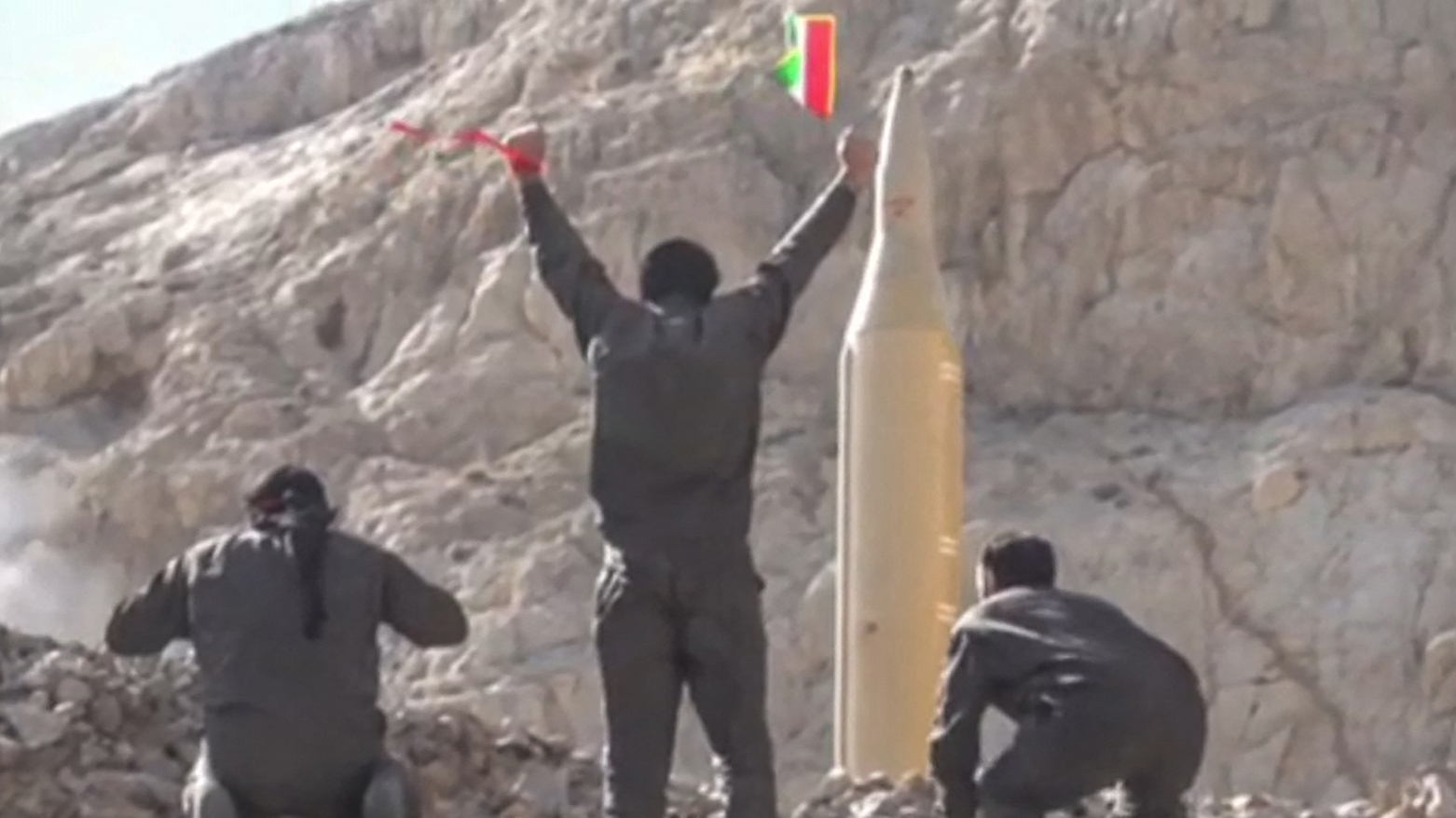
ERBIL (Kurdistan24) - The Islamic Revolutionary Guard Corps (IRGC) announced early Tuesday that its Navy carried out Wave 88 of Operation True Promise, targeting U.S. and Israeli assets in the Persian Gulf, the Strait of Hormuz, and surrounding regions, IrGC-affiliated Tasnim News Agency reported.
According to the agency, the operations, conducted under the code “Ya Fatimah al-Zahra (SA),” involved multiple coordinated assaults using ballistic missiles and kamikaze drones.
In the first operation, the IRGC Navy struck a container ship belonging to the Israeli regime, identified as Express Halfong, in the central waters of the Persian Gulf.
Tasnim News Agency noted that in a separate strike, a gathering point of U.S. Marines along the coast of the United Arab Emirates, reportedly outside a military base, was hit by drones.
Additional actions targeted the anti-drone system (HAWK) of the U.S. Fifth Fleet stationed near Manama Airport in Bahrain, and two aerial early warning radar installations at the Ahmed al-Jaber military base, also in Bahrain.
The IRGC declared that the Strait of Hormuz is “completely…under the control” of its forces and that any movement by enemy vessels would be subject to missile and drone strikes.
Tasnim News Agency further reported that the operations were dedicated to the memory of Rear Admiral Alireza Tangsiri and other naval personnel, emphasizing the continuation of his directives. The agency indicated that the operations were ongoing at the time of publication, highlighting a sustained focus on both maritime and regional targets.
The announcement coincided with reports of ongoing U.S. and Israeli airstrikes across Iranian cities, which caused casualties and significant infrastructure damage, according to Iranian media.
Reports indicated that at least 40 people were killed or wounded in strikes on Tehran, Zanjan, and the Mahallat area of Markazi Province on Monday night and Tuesday.
A strike on residential units in Mahallat left at least 11 dead and 15 wounded, while an attack on the administrative building of the Al-A’zam Husseinieh in Zanjan killed three people and injured 12 others, officials said. Additional bombardments across Tehran caused widespread disruptions to urban services.
The Tehran Province Electricity Distribution Company said 421 points in the city’s power grid had been damaged by the strikes, with 16 new incidents recorded over the preceding 24 hours.
Kambiz Nazerian, the company’s director general, told domestic media that districts including Robat Karim, Shahriar, Bostan, Chardangeh, Kahrizak, and Pishva were heavily affected. “Despite the extent of the affected zones, repair and renovation work on the network was carried out quickly, and electricity was restored in the shortest possible time,” Nazerian said, Tasnim News Agency reported.
AFP also reported that military facilities in central Iran, as well as a major religious site in the northwest, were damaged in the strikes, which coincided with power outages in several urban centers.
Video footage verified by AFP showed large explosions and smoke columns in Isfahan, while Iranian state media confirmed damage to the Grand Husseiniya, a prominent Shia religious center in Zanjan. Residents in Tehran reported intermittent power outages despite heightened security measures, the report added.
The ongoing U.S.-Israeli operations have also affected maritime security and global energy markets. Kuwait’s state oil company reported a fire aboard one of its crude oil tankers in Dubai port following what it described as a “direct and malicious Iranian attack,” AFP noted.
The Strait of Hormuz, a critical passageway for approximately one-fifth of global oil shipments, remains under tight Iranian control, with only select vessels permitted to transit. Two Chinese container ships reportedly passed through the strait, and Beijing expressed appreciation for the arrangements, according to AFP.
Explosions were reported in Dubai and northern Iraq near Erbil airport, while civil defense authorities in Saudi Arabia said two people were wounded when air defenses intercepted a drone near Riyadh, AFP reported.
Israeli emergency services confirmed that eight people sustained minor injuries from falling munitions fragments in Bnei Brak, near Tel Aviv, and at least ten explosions were heard in the Jerusalem area following Iranian missile launches.
Israeli Prime Minister Benjamin Netanyahu said that over half of the military objectives had been achieved, according to AFP, without providing a timeline for the continuation of the conflict. The war has also extended to southern Lebanon, where Israeli forces are engaged with Iranian-backed Hezbollah fighters.
The Israeli military reported that four soldiers had been killed in southern Lebanon on Tuesday.
Amid the escalation, regional actors are pursuing diplomatic channels. Pakistani Foreign Minister Ishaq Dar, acting as an intermediary between Washington and Tehran, was scheduled to travel to Beijing for talks with Chinese Foreign Minister Wang Yi on “global issues of mutual interest,” AFP reported.
Dar previously hosted foreign ministers from Saudi Arabia, Egypt, and Türkiye in Islamabad, noting that Pakistan was prepared to host direct U.S.-Iran negotiations in the coming days. Iranian officials confirmed that Washington’s request to engage in talks has been transmitted through intermediaries, including Pakistan, without publicly identifying U.S. officials involved, the report added.
The attacks affected not only civilian infrastructure but also Iran’s energy and maritime sectors. Iranian media confirmed that strikes on residential units and religious sites resulted in dozens of casualties, while Tehran’s electricity network suffered widespread disruptions.
Local authorities emphasized that despite damage across multiple districts, restoration efforts were ongoing, and electricity had been reconnected to affected areas, Tasnim News Agency reported.
The developments come after U.S. President Donald Trump had previously warned that Iranian energy and military infrastructure could be targeted if Tehran did not reach a war-ending agreement.
AFP reported that Trump indicated U.S. forces could destroy power systems, oil wells, the Kharg Island export terminal, and desalination plants to compel compliance. The Wall Street Journal also reported that Trump told aides he might end the conflict even if the Strait of Hormuz remained largely closed, a position likely to reinforce Iranian control over the passage.
Christopher Dembik, an investment adviser at Pictet Asset Management, described the situation as a “fog of war,” citing ongoing uncertainty in global markets affected by the conflict, AFP reported.
Oil prices have remained volatile since the start of U.S.-Israeli operations, initially spiking after attacks on Tehran that reportedly killed Supreme Leader Ayatollah Ali Khamenei, and subsequently falling following statements by the U.S. president about a potential rapid resolution.