Israeli Strike in Beirut Kills Senior Hezbollah Commander Linked to Iraq Operations
A Lebanese security source said Hashem, described as Hezbollah’s “military chief for the Iraq file,” was inside a tent near several vehicles when the strike occurred
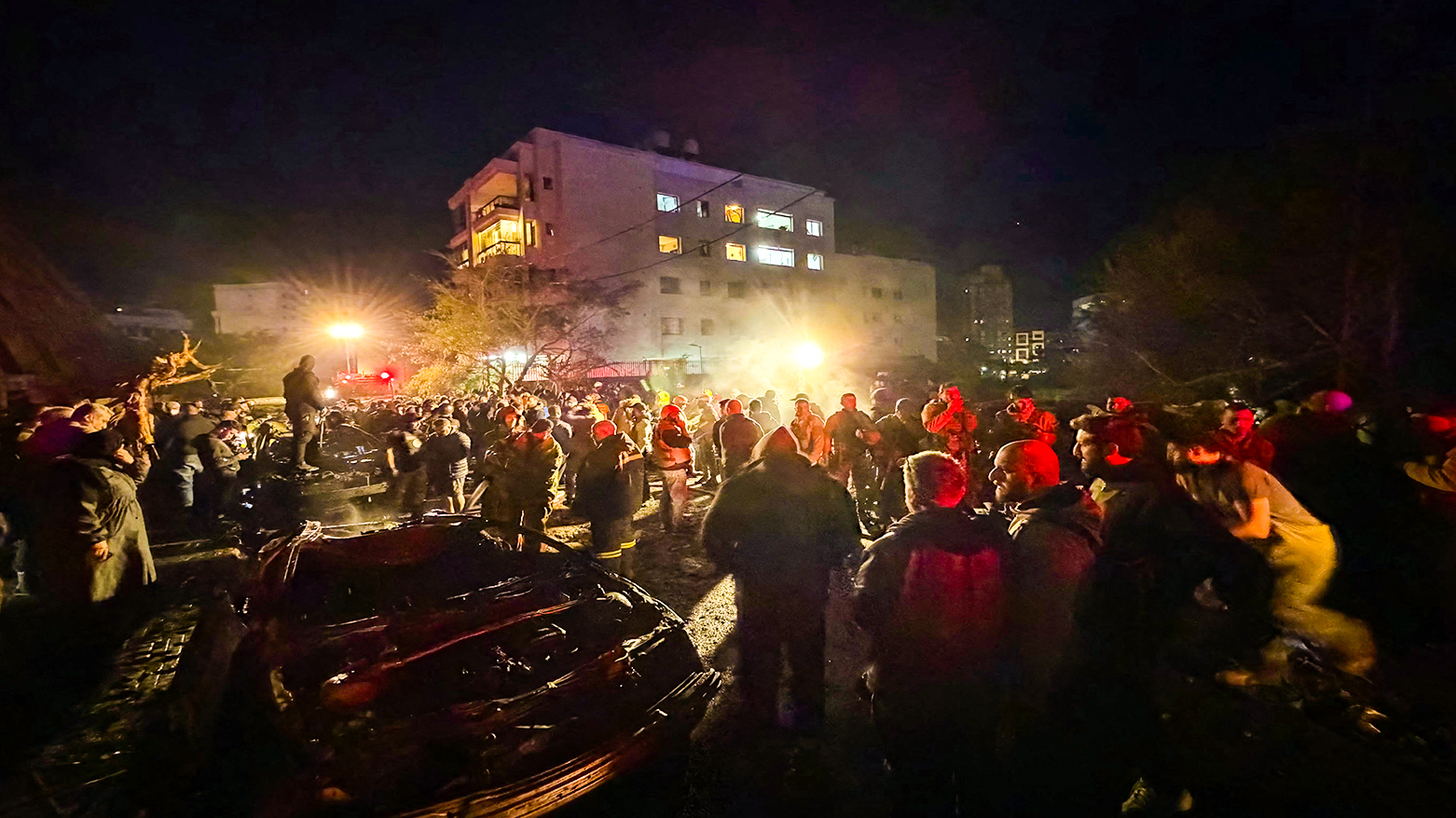
ERBIL (Kurdistan24) — An Israeli airstrike in southern Beirut early Wednesday killed a senior Hezbollah commander responsible for Iraq-related military affairs, according to Lebanese security and Hezbollah sources cited by AFP.
The strike targeted the Jnah area, where Yousef Hashem—also referred to as Hajj Yusuf Ismail Hashem—was reportedly attending a meeting. A Lebanese security source said Hashem, described as Hezbollah’s “military chief for the Iraq file,” was inside a tent near several vehicles when the strike occurred.
A source close to Hezbollah confirmed his death, while Lebanon’s health ministry reported that a total of seven people were killed in the attack.
The Israel Defense Forces (IDF) said in a statement on Wednesday that Hashem was a veteran commander with more than four decades of experience and played a central role in rebuilding Hezbollah’s military capabilities.
The Israeli military added that he had overseen operations targeting Israel and was a key figure within the group’s command structure.
🔴ELIMINATED: Hajj Yusuf Ismail Hashem, the Commander of Hezbollah’s Southern Front
— Israel Defense Forces (@IDF) April 1, 2026
Hashem, eliminated by the Israeli Navy in a strike in Beirut, was a senior commander with 40+ years of experience, and was a central figure in Hezbollah that led its rehabilitation & commanded… pic.twitter.com/a22iexG7pH
In a separate statement, the IDF also announced the killing of Mahdi Vafaei, identified as head of the engineering branch of the Quds Force’s Lebanon Corps.
According to Israel, Vafaei was involved in developing underground infrastructure across Lebanon and Syria, supporting Hezbollah and allied forces.
The strike comes amid a broader escalation between Israel and Iran-backed groups across the region, following the outbreak of war on February 28, triggered by US-Israeli strikes on Iran. Since then, hostilities have expanded to multiple fronts, including Lebanon, Iraq, Yemen, and the Gulf.
Hezbollah, a key ally of Iran, has played a central role in the regional confrontation, launching attacks against Israel while coordinating with allied factions across borders.
Israeli forces have responded with intensified strikes aimed at degrading the group’s command structure and logistical networks.
The targeting of a senior figure responsible for Iraq operations highlights the increasingly interconnected nature of Iran-aligned groups in the region, often described as the “axis of resistance,” which spans from Tehran through Baghdad and Damascus to Beirut.
Analysts say such high-profile assassinations risk further escalation, potentially prompting retaliatory attacks not only from Hezbollah but also from affiliated militias in Iraq and beyond.
As the conflict deepens, Beirut—long considered a key stronghold for Hezbollah—has become an increasingly active front, raising concerns about wider destabilization in Lebanon, which is already grappling with a prolonged economic and political crisis.