Drone Attack Hits Rumaila Oil Field in Southern Iraq, Injuries Reported
A drone strike hit Iraq’s Rumaila oil field, injuring three and underscoring rising threats to key energy sites as regional conflict intensifies. No group claimed responsibility, and the impact on production remains unclear amid widening instability.
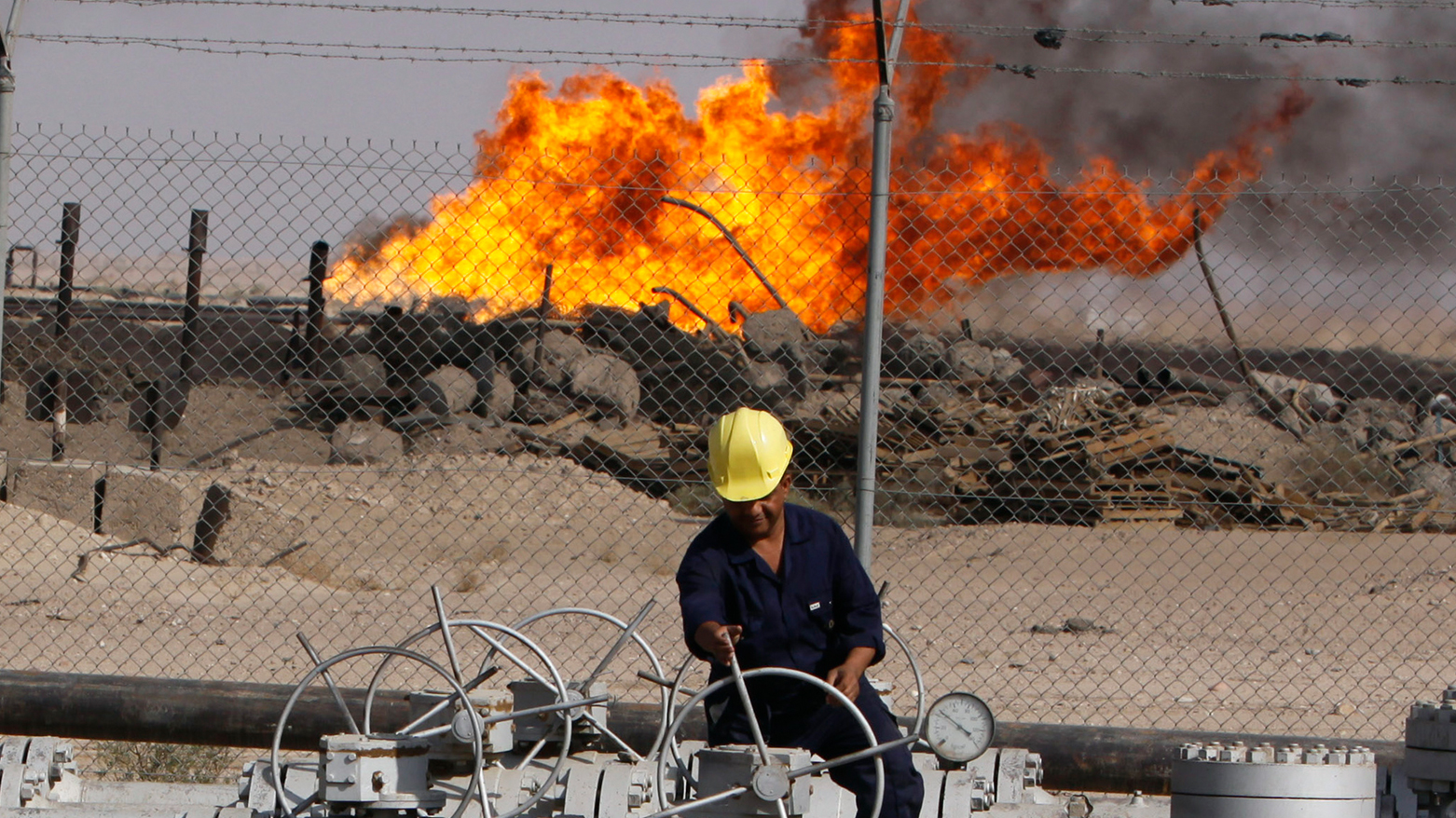
ERBIL (Kurdistan24) - A drone attack struck the Rumaila oil field in Iraq’s Basra Governorate on Saturday, injuring three people, Reuters reported, citing security sources, in an incident affecting one of the country’s largest and most significant energy sites.
According to Reuters, two drones targeted the facility earlier in the day, resulting in injuries to three individuals. The news agency, quoting security officials, said no group has claimed responsibility for the attack, and the full extent of material damage remains unclear.
The Rumaila oil field, located in southern Iraq, is considered one of the largest oil fields globally and plays a central role in Iraq’s economy, providing a substantial share of the country’s oil exports. Production at the site is overseen by a consortium that includes the British company BP, China’s PetroChina, and Iraq’s Basra Oil Company, according to the report.
Security sources cited by Reuters indicated that the attack involved unmanned aerial vehicles, a method that has been used in previous incidents targeting energy infrastructure in Iraq. Authorities have not provided further operational details about the origin or trajectory of the drones.
The incident comes amid a broader pattern of attacks on oil facilities and military installations in Iraq, which have previously been targeted by drones and missiles. Such attacks are often carried out by armed groups seeking to exert pressure on foreign operators and disrupt regional stability, according to the Reuters report.
No immediate statement was issued by Iraqi authorities regarding the identity of the perpetrators or potential retaliatory measures. Officials have not confirmed whether production at the Rumaila field was affected by the attack.
The strike occurs against the backdrop of an escalating regional conflict involving Iran, the United States, and Israel, now entering its sixth week, according to reporting by The Associated Press. The broader conflict has increasingly affected energy infrastructure and transit routes across the Middle East.
The Associated Press reported that two U.S. military aircraft went down in separate incidents in recent days, marking a significant development in the ongoing hostilities. One fighter jet was shot down in Iran, with one crew member rescued while another remains missing, officials said. In a separate incident, Iranian state media reported that a U.S. A-10 aircraft crashed in the Persian Gulf after being struck by Iranian defenses, though a U.S. official told AP it was unclear whether the aircraft had been shot down or had crashed due to other causes.
AP further reported that the war has contributed to disruptions in global energy markets, with Iran targeting energy infrastructure in the Gulf region and tightening control over oil and gas shipments through the Strait of Hormuz. These developments have had broader economic implications, including rising fuel prices and increased volatility in global markets.
The impact of the conflict has extended to critical infrastructure within Iran. The Atomic Energy Organization of Iran said in a statement, cited by AP, that an airstrike near the Bushehr nuclear facility killed a security guard and damaged a support building. The International Atomic Energy Agency confirmed that no increase in radiation levels was detected following the strike, according to an agency social media post referenced by AP.
In addition, AP reported that U.S. and Israeli airstrikes have targeted multiple locations across Iran, including a petrochemical facility in the Mahshahr Special Petrochemical Zone and a site linked to Iran’s Agriculture Ministry in Mehran. Iranian media outlets cited by AP reported explosions at several facilities within the petrochemical zone.
The escalation has also affected neighboring countries. Bahrain’s Defense Ministry reported eight drone attacks within a 24-hour period, bringing the total number of projectiles launched at the country since the start of the conflict to 188 missiles and 453 drones, AP noted. Bahrain hosts the U.S. Navy’s Fifth Fleet.
In Israel, emergency services reported that one individual was injured by glass shrapnel following a missile strike in the central city of Bnei Brak. Israel’s Magen David Adom said the injured person was transported to a hospital, though it remained unclear whether the injuries were caused by a direct hit or falling debris, according to AP.
Elsewhere in the region, authorities in Dubai reported damage to building facades caused by debris from intercepted drones, including a building belonging to the U.S. technology firm Oracle. No injuries were reported in that incident, AP said. Iranian officials have previously threatened to target certain U.S. companies, accusing them of involvement in intelligence activities, according to the report.
The conflict has also prompted diplomatic engagement among international actors. AP reported that Italian Prime Minister Giorgia Meloni discussed defensive military assistance with Saudi Arabia’s Prime Minister Mohammed bin Salman, focusing on measures to counter potential Iranian retaliation and efforts to restore stability in regional trade routes, including the Strait of Hormuz.
On the Iraq-Iran border, the Shalamcheh crossing was temporarily closed following a separate strike that killed one person and injured others, AP reported, citing Iraqi authorities. The crossing is a key route for trade and religious travel, and officials said alternative routes were being used.
According to Pentagon data cited by AP, 365 U.S. service members have been wounded since the conflict began, with 13 fatalities reported. The data includes personnel from multiple branches of the U.S. military, reflecting the scale of the ongoing operations.
The drone attack on the Rumaila oil field underscores the vulnerability of critical energy infrastructure in Iraq amid the broader regional conflict. Iraqi oil facilities have previously been targeted in attacks attributed to armed groups, often involving drones or missiles, Reuters noted.
Authorities have not indicated whether additional security measures will be implemented at the Rumaila field following Saturday’s incident. The lack of immediate claims of responsibility has left the circumstances of the attack under investigation, with officials expected to assess both the operational and security implications.
The attack highlights the intersection of local security challenges in Iraq with wider regional tensions, particularly as energy infrastructure remains a focal point in the conflict. Reports of strikes, drone activity, and disruptions to oil transport routes continue to emerge across the region, reflecting the ongoing volatility.