Basra Oil Set for Export via Kurdistan Region Pipeline to Türkiye’s Ceyhan Port
The export of Basra oil through the Kurdistan Region pipeline to Türkiye’s Ceyhan port is set to begin Monday, increasing Iraq’s total exports via the route to 330,000 barrels per day.
ERBIL (Kurdistan24) - Basra oil is scheduled for the first time to be exported via the Kurdistan Region’s pipeline network to the Turkish port of Ceyhan, a source at the North Oil Company said Monday, marking a new phase in Iraq’s oil export operations following a recent agreement between the Kurdistan Regional Government (KRG) and the federal government.
The source told Kurdistan24 correspondent Soran Kamaran that on Monday, Basra crude would begin moving through the Kurdistan Region’s pipeline infrastructure toward Ceyhan, in Türkiye, after final technical preparations were completed at key pumping facilities.
According to the source, operations at the K1 pumping stations in Kirkuk have been fully prepared to receive the incoming Basra oil. The crude is transported from southern Iraq to Kirkuk, where it is blended with oil extracted from the Kirkuk fields before being fed into the export pipeline that runs through the Kurdistan Region toward Türkiye’s Mediterranean port.
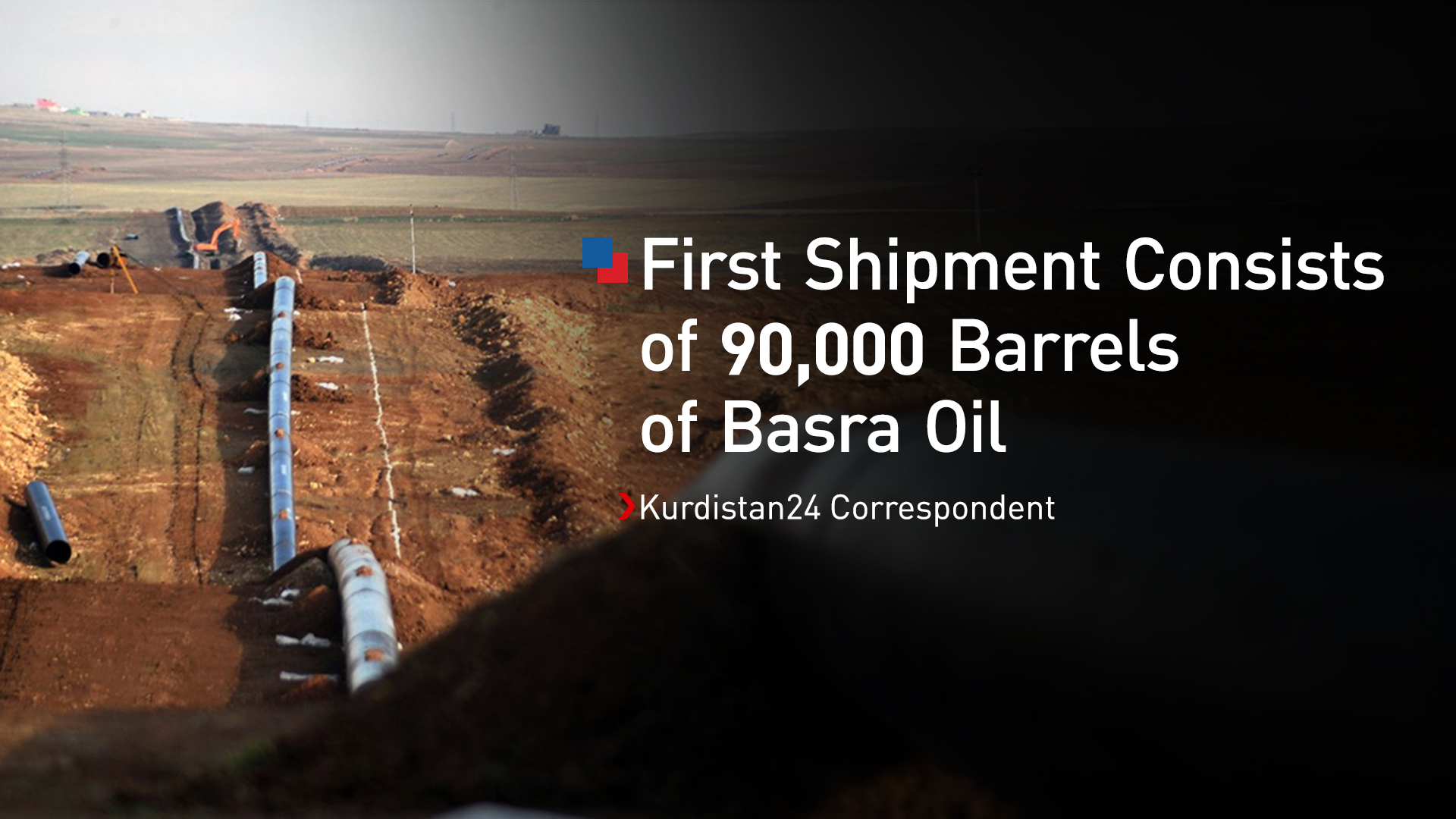
The source said the first shipment consists of 90,000 barrels of Basra oil, transported to Kirkuk using approximately 400 tanker trucks. Upon arrival, the oil is scheduled to be directly injected into the pipeline system without delay.
The integration of Basra oil into the existing export infrastructure is expected to increase total export volumes passing through the Kurdistan Region’s pipeline network. According to the source, once blending operations are fully underway, total Iraqi oil exports via this route will reach approximately 330,000 barrels per day.
The move represents the first instance in which oil produced in Basra has been routed through the Kurdistan Region’s pipeline system for export, according to the source, signaling a shift in logistical coordination between different segments of Iraq’s oil sector.
The development follows an agreement reached on March 18, 2026, between the Kurdistan Regional Government and the Iraqi Federal Government regarding the resumption of oil exports from Kirkuk through the Kurdistan Region’s pipeline network.
Under that arrangement, coordination between Erbil and Baghdad was established to facilitate the movement of crude oil from northern fields to international markets via Türkiye, according to official statements issued at the time.
On March 18, the KRG Ministry of Natural Resources announced that exports from the Kirkuk oil fields had resumed at an initial rate of 250,000 barrels per day through the Kurdistan Region’s pipeline system. The ministry said the exports were being routed to the port of Ceyhan, following directives issued by Prime Minister Masrour Barzani.
In its statement, the ministry said operations commenced early that day at 6:30 a.m., with technical teams from both the Kurdistan Region and the Iraqi federal government coordinating at the Saralu oil facility to enable the flow of crude from Kirkuk fields into the pipeline system.
The ministry described the move as part of efforts to manage what it termed “extraordinary circumstances” affecting the country and to maintain stability in the energy sector. Officials also indicated that the arrangement aimed to ensure continued revenue generation and support economic resilience during a period of regional challenges.
Prime Minister Masrour Barzani said at the time that the resumption of oil exports through the Kurdistan Region’s pipeline would take place “as soon as possible,” emphasizing the need for coordination between regional and federal authorities. In remarks posted on X, he cited the importance of collective responsibility in addressing national challenges and maintaining the flow of energy resources.
The Prime Minister also noted that discussions with the federal government were ongoing, particularly regarding broader economic and trade issues, including restrictions affecting imports into the Kurdistan Region. He added that efforts were underway to secure assurances for international oil and gas companies to resume operations safely.
According to the Ministry of Natural Resources, the export system is designed to transport crude oil from Kirkuk to the Fishkhabour terminal, from where it is then sent through the Kurdistan Region’s pipeline network to the Turkish port of Ceyhan on the Mediterranean coast.
The addition of Basra crude into this system represents a logistical extension of that framework, with oil now being transported from southern Iraq to northern processing and export facilities.
The source at the North Oil Company said that blending Basra oil with Kirkuk crude forms part of the operational process, allowing for combined volumes to be transported efficiently through the existing infrastructure. The blending process occurs at facilities in Kirkuk before the oil enters the pipeline network.
No additional details were provided regarding the duration of the arrangement or whether further shipments of Basra oil would follow the initial convoy. The source also did not specify whether adjustments to infrastructure capacity would be required to accommodate increased volumes over time.
The increase in export capacity to 330,000 barrels per day reflects the combined output of Kirkuk fields and the additional Basra crude being integrated into the system, according to the source.
The use of tanker trucks to transport the initial shipment underscores the logistical coordination required to connect southern oil fields with northern export infrastructure. Approximately 400 trucks were used to move the first 90,000 barrels to Kirkuk, highlighting the scale of the operation.
The development comes as both the Kurdistan Regional Government and the Iraqi Federal Government continue to coordinate on energy policy and export mechanisms, according to statements issued by officials in recent weeks.
The March 18 agreement marked a key step in restoring oil exports from Kirkuk after a period of disruption, with both sides emphasizing the importance of cooperation in managing the country’s energy resources.
Officials have described the resumption of exports as a measure aimed at strengthening economic stability and ensuring consistent revenue flows. The addition of Basra oil into the export system further expands the scope of that coordination.
The port of Ceyhan serves as a major outlet for Iraqi crude exported through the Kurdistan Region’s pipeline network, providing access to international markets via the Mediterranean.
According to the source, the immediate injection of Basra oil into the pipeline upon arrival in Kirkuk is intended to maintain operational continuity and ensure that export volumes increase without delay.
No disruptions to pipeline operations were reported in connection with the integration of Basra crude, and the source indicated that all technical preparations had been completed in advance of the shipment.
The movement of oil from Basra to Kirkuk represents a northward logistical flow that differs from traditional export routes, which typically involve southern terminals. However, the source did not provide further details regarding the broader strategic implications of the shift.
The ongoing coordination between regional and federal authorities remains central to the operation of Iraq’s oil export system, with both sides working to align production, transport, and export mechanisms.
The scheduled export of Basra oil via the Kurdistan Region pipeline marks a continuation of efforts to integrate different segments of Iraq’s oil infrastructure under a coordinated framework.
The first shipment of Basra crude is expected to be processed and exported through the pipeline system on Monday, with total export volumes projected to rise to 330,000 barrels per day once blending operations are fully implemented.
This article was updated as further information emerged on Monday, Apr. 6, 2026, at 10:24am.