Syrian President Warns of Regional Military Threats, Emphasizes Strategic Role in Global Energy Security
Ahmed al-Sharaa highlights Iran’s attacks on Gulf states and Syria’s potential as a secure corridor for oil and gas exports
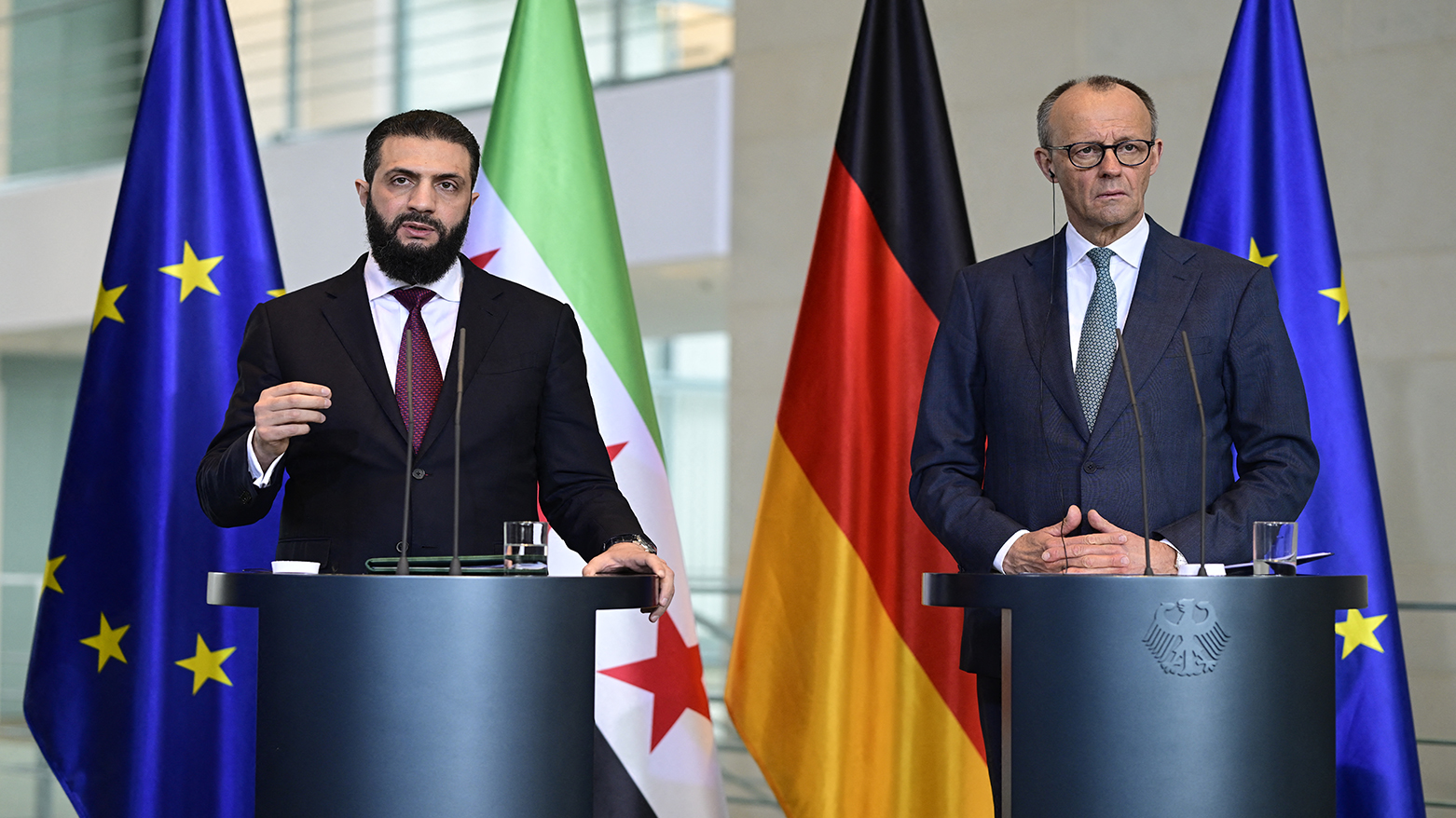
ERBIL (Kurdistan24) — Syrian President Ahmed al-Sharaa issued a stern warning on Monday regarding the growing military threats in the Middle East and their potential impact on global energy security. In a public statement, al-Sharaa condemned Iran’s missile and drone attacks on Gulf countries, noting that such escalations risk destabilizing international oil and gas markets, particularly if the conflict is prolonged and diplomatic solutions are not achieved.
Al-Sharaa sharply criticized the targeting of critical energy infrastructure in Gulf nations, stating, “These attacks create a significant threat to global energy supply chains and market stability, especially if the war drags on and no political agreement is reached.”
He reiterated Syria’s support for the affected countries, emphasizing that Gulf states have never been a party to regional tensions but have been unfairly targeted.
Highlighting Syria’s unique geographic position along the Eastern Mediterranean, al-Sharaa described the country as a potential safe and reliable corridor for international energy trade.
“Syria can serve as a secure overland and maritime route, ensuring regional oil reaches European markets quickly and safely, which is essential for maintaining global economic stability amid rising tensions,” he said.
Analysts note that al-Sharaa’s comments come amid heightened U.S.-Iran tensions, which have disrupted the strategic Strait of Hormuz, a chokepoint through which roughly 20% of global oil supplies transit.
The resulting uncertainty has prompted global energy markets to seek alternative routes for oil and gas deliveries, underscoring Syria’s potential role in providing a stable passage for energy exports.
Syria’s statements reflect its effort to position itself as a key regional player capable of supporting energy security and mitigating risks to international trade, even as neighboring states face repeated military attacks.
By offering a secure corridor for crude oil and natural gas shipments, Damascus aims to strengthen its geopolitical relevance and contribute to stabilizing global energy flows during a period of heightened regional volatility.
During his visit to Berlin on Monday, Syrian President Ahmad Sharaa made the earlier remarks while meeting with German Chancellor Friedrich Merz to discuss the return of Syrian expatriates from Germany.
Chancellor Merz emphasized that both leaders aim for 80 percent of Syrians living in Germany—Europe’s largest Syrian diaspora, numbering over one million—to return to their homeland over the next three years.
The initiative reflects Germany’s broader policy of controlled repatriation while supporting Syria’s reconstruction efforts.
Sharaa outlined plans for a “circular” migration model, designed to allow Syrians to contribute to rebuilding their country without forfeiting the stability and livelihoods they have established abroad.
The Syrian president, who has cultivated relations with Western governments through trips to the United States, France, and Russia, highlighted ongoing efforts to ease international sanctions and facilitate reconstruction after more than a decade of civil war.
These measures, he noted, are intended to encourage safe, structured returns and bolster Syria’s economic and social recovery.