Airstrikes Target PMF Positions in Saladin as Regional Exchanges Intensify
The five airstrikes in Saladin Governorate within 24 hours mark the latest in a series of attacks targeting PMF units across Iraq amid continued regional military escalation.
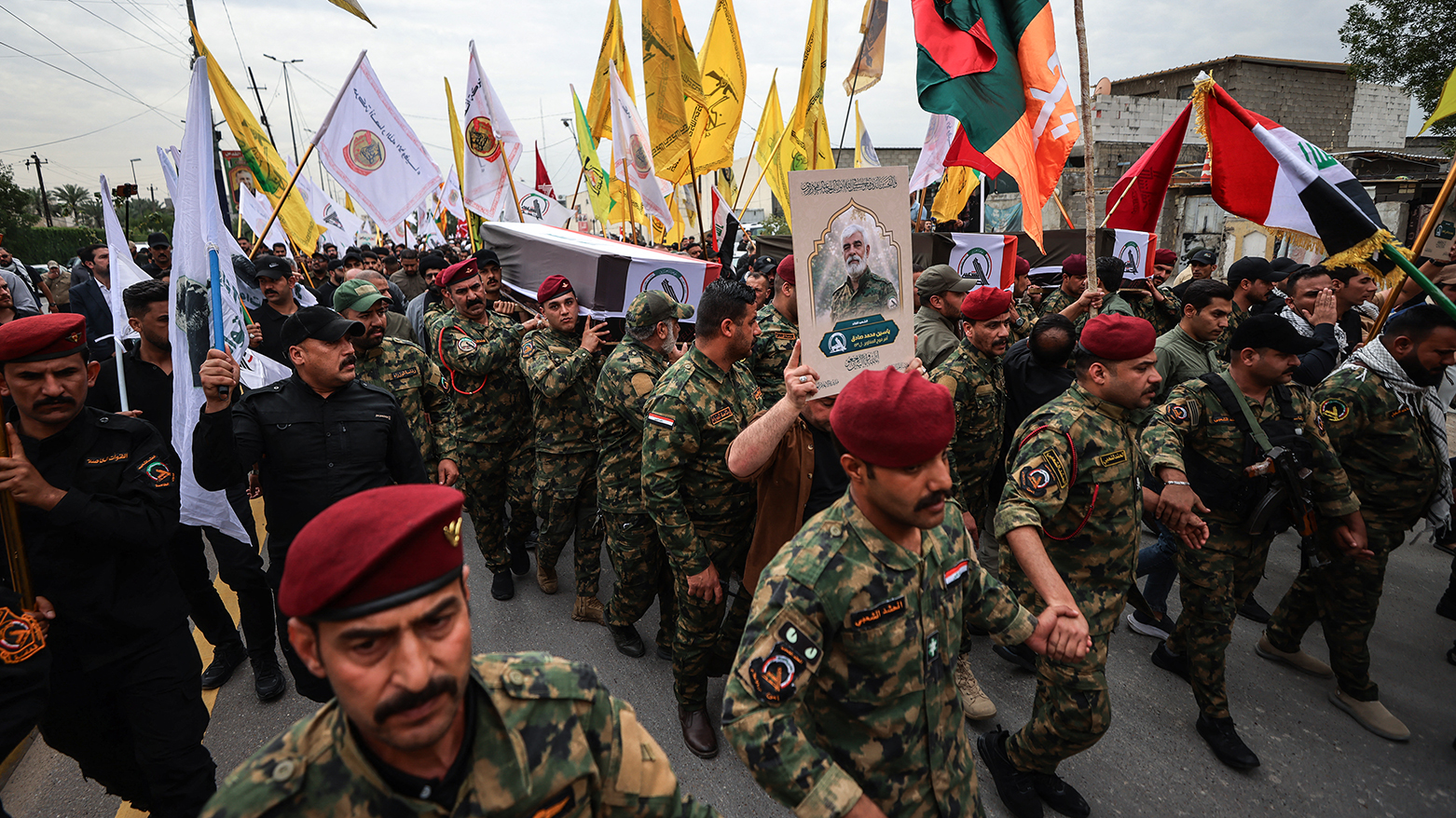
ERBIL (Kurdistan24) - Five airstrikes in less than 24 hours targeted positions of the Popular Mobilization Forces (PMF) in Iraq’s Saladin Governorate, including a headquarters near Khurmatu, a security source said Monday, as the incidents unfolded within a broader regional escalation marked by U.S.-Israeli strikes on Iran and subsequent Iranian missile attacks on Israel and Gulf states hosting U.S. bases.
A security source in Saladin Governorate said early Monday that a PMF headquarters on the outskirts of Khurmatu district in the eastern part of the governorate was struck by a warplane, marking the fifth such attack recorded in the area within a single day.
According to the source, the aircraft directly targeted a PMF position in eastern Saladin. The source added that no official figures had yet been released regarding casualties or the extent of material damage resulting from the strike. Iraqi security forces responded by immediately cordoning off the area and initiating an investigation into the incident, the source said.
The latest strike followed a sequence of attacks that began early Sunday and continued throughout the day and night across multiple locations in the governorate. According to the same source, the headquarters of the PMF 52nd Brigade was first bombarded at approximately 2:00 a.m. Sunday.
Later that day, at around 8:00 p.m., two separate airstrikes targeted a PMF headquarters in the Siniyah sub-district of Baiji district. The attacks were followed by another strike at approximately 10:00 p.m., when the 4th Battalion of the 52nd Brigade at the Haliwa Military Airport in Khurmatu district was hit.
Shortly before midnight, at around 11:30 p.m., an additional attack attempt was reported against Balad Airbase. Security sources said the missile directed toward the base did not reach its intended target, instead striking a civilian home in Al-Bujayli village in the Yathrib sub-district.
As a result of the misdirected strike, five civilians inside the home were injured and subsequently transported to hospital for treatment, according to the source. No fatalities were reported in connection with that specific incident.
The security source said the attacks had contributed to heightened tension across eastern areas of Saladin Governorate, where intermittent instability has been reported. Calls have increased in recent hours for stricter security measures and efforts to prevent further incidents, the source added.
No group has formally claimed responsibility for the airstrikes in Saladin, and Iraqi authorities have not publicly attributed the attacks to any specific actor.
The Popular Mobilization Forces (PMF) Commission later revealed in a statement that early Monday morning the United States and Israel attacked two sites belonging to the PMF.
The PMF statement noted that at 2:38 AM, the intelligence headquarters of the 25th Brigade, under the Nineveh Operations Command in the Hatra (Al-Hadhar) sector, was targeted.
The PMF further indicated that following this attack, at 3:00 AM, four additional airstrikes were carried out against the 4th Battalion of the 52nd Brigade, under the Northern and Eastern Tigris Operations Command, at Haliwa Airport in the Khurmatu district.
The PMF Commission also announced that the attacks resulted in no human casualties.
The series of strikes comes amid a broader pattern of aerial attacks targeting PMF positions across Iraq in recent weeks, according to statements issued by the group and reports from security officials.
Last Thursday , the PMF said one of its units in Nineveh Governorate had been targeted by two airstrikes within less than 24 hours. In a statement circulated through its official channels, the group said the fourth regiment of the 14th Brigade, operating under the Nineveh Operations Command, was struck twice at approximately 7:50 p.m. and 5:20 a.m. the following day.
The PMF described those strikes as part of what it called a continuing series of attacks on its positions and characterized them as “U.S.-Israeli aggression,” though it did not provide evidence to support that claim. The statement added that no casualties were recorded in those incidents.
In a separate development in Nineveh, the PMF confirmed that Yasin Muhammad Sadiq, commander of the 53rd Brigade in Tel Afar district, was killed in a series of airstrikes. According to the PMF, two strikes occurred in quick succession at approximately 5:50 p.m. and 6:40 p.m., resulting in the deaths of the commander and another member, while four others were injured.
Additional incidents have been reported in other provinces. In Kirkuk’s Dibis district, a PMF base belonging to the 61st Brigade was struck in what local sources described as an aerial attack. A police source in the district told Kurdistan24 that personnel were present at the site but that no confirmed fatalities had been reported at the time. The source added that nearby residential homes sustained significant material damage, with some injuries reported.
The Iraqi Ministry of Defense also reported that security forces intercepted and shot down an unidentified drone flying at low altitude in the area of the 3rd Battalion, 44th Brigade, under the Kirkuk Operations Command. The ministry said the incident resulted in no casualties.
Officials have emphasized that the PMF operates as part of Iraq’s formal security structure. Sabah al-Nu’man, spokesperson for the Commander-in-Chief of the Armed Forces, said in remarks to multiple media outlets that Iraq reserves its legal right to respond to attacks targeting PMF units. He stressed that such incidents would be pursued through official channels.
Al-Nu’man said the PMF functions under the authority of the Commander-in-Chief of the Armed Forces and described it as an integral component of the country’s security apparatus. He added that attacks against PMF units “will not pass without legal follow-up.”
Separately, Iraqi Prime Minister Mohammed Shia al-Sudani reaffirmed his support for the PMF during a visit to its headquarters, according to a statement from his office. Sudani described the organization as “a fundamental component of the national security system” and stressed that it operates under the constitution and applicable laws.
The Prime Minister also instructed security agencies to maintain order and prevent any party from drawing Iraq into the broader regional conflict, according to the statement. He further emphasized the importance of protecting diplomatic missions across the country.
The repeated strikes on PMF positions have occurred in parallel with escalating military exchanges across the region. Since the outbreak of hostilities on February 28, when U.S. and Israeli forces carried out airstrikes in Iran that resulted in the deaths of several high-ranking figures, Iran has launched multiple missile attacks targeting Israel and U.S. military installations in the region, according to official statements and media reports.
Iranian missile strikes have targeted Israeli cities, including Haifa, where Israel’s Fire and Rescue Service reported that two people were killed after a missile hit a residential building. The Israeli military said the structure sustained a direct impact, resulting in partial collapse, while emergency teams continued search operations for missing individuals.
At the same time, Gulf countries have reported incoming missile and drone threats. Kuwait’s army said its air defense systems were engaged in intercepting projectiles targeting its territory, while the United Arab Emirates said its defense systems were responding to similar threats, according to official statements.
Iranian officials have issued warnings regarding potential escalation. A spokesperson for Iran’s Khatam al-Anbiya Central Headquarters said that further attacks on civilian targets would prompt a broader and more extensive response, according to remarks carried by state broadcaster IRIB.
The broader regional conflict has also drawn in non-state actors. The Lebanese group Hezbollah said it launched rockets toward northern Israel, targeting towns in that area, as cross-border exchanges expanded.
In parallel, strikes have been reported inside Iran. Israeli military statements said that a wave of attacks had been carried out against what were described as “regime targets” in Tehran. Iranian media also reported strikes affecting residential areas and infrastructure in the capital and other cities.
Among the sites reported to have been hit was Sharif University in Tehran, where explosions and bombardment were recorded in surrounding areas, according to Iranian media reports. Additional strikes were reported in Mehrabad, Bandar Abbas, Qom, and Shiraz, with multiple explosions heard in several locations.
The continuation of these developments has been accompanied by warnings and alerts issued by diplomatic missions. The U.S. Embassy in Baghdad issued a security advisory warning that Iran-aligned militia groups could be planning attacks in central Baghdad within a 24- to 48-hour timeframe.
The advisory stated that potential targets could include diplomatic facilities, businesses, universities, airports, hotels, energy infrastructure, and other locations associated with the United States, as well as Iraqi institutions and civilian areas.
The embassy reiterated the U.S. State Department’s Level 4 “Do Not Travel” advisory for Iraq and urged U.S. citizens to leave the country, noting that those who remain face significant risks. It also warned of potential kidnapping threats targeting Americans and indicated that some individuals involved in such activities might present themselves as government officials.
Despite the heightened security concerns, the U.S. diplomatic mission remains operational under an ordered departure status, according to the advisory.
Oil markets have also reacted to the ongoing conflict. Crude oil prices opened higher on Monday, with North Sea Brent crude rising to $110.30 per barrel and U.S. West Texas Intermediate increasing to $113.62 per barrel, according to market data cited in reports.
Meanwhile, the OPEC+ group agreed to increase oil production quotas by 206,000 barrels per day starting in May. The organization warned that repairing energy infrastructure damaged in recent attacks could be costly and time-consuming, potentially affecting supply levels.
As military exchanges and security incidents continue across multiple countries, the situation in Iraq remains closely tied to broader regional dynamics, with repeated strikes on PMF positions reflecting the ongoing volatility.
ADDITION: PMF statement was added to the article. UPDATE: Monday, Apr. 6, 2026, at 11:48am