Israel Says It Struck Major Iranian Petrochemical Facility at South Pars
Israel said it struck a major Iranian petrochemical facility at South Pars, describing it as a central component of Iran’s energy sector and military financing, according to official statements.
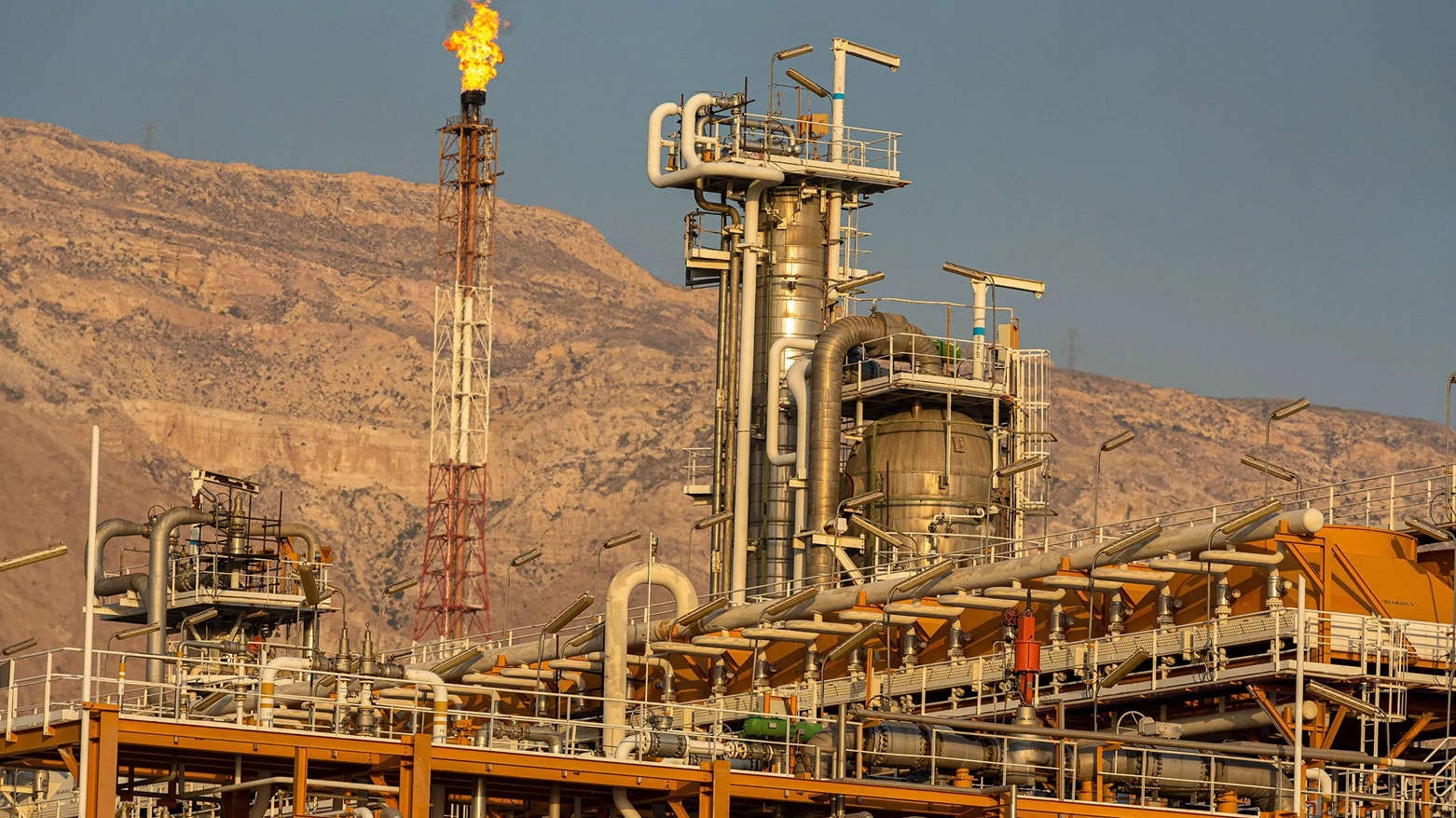
ERBIL (Kurdistan24) - Israel’s Defense Minister Israel Katz said the Israeli Air Force carried out a strike on what he described as Iran’s “largest petrochemical facility,” located in Asaluyeh at the South Pars gas field, according to a statement released Monday.
Katz said the target was a central component of Iran’s petrochemical sector, responsible for approximately 50 percent of the country’s petrochemical production. He added that the strike followed a previous Israeli attack last week on what he identified as the second main facility in the same sector.
Iranian media outlets reported earlier that airstrikes had targeted facilities at the South Pars gas field, a major energy hub in southern Iran. The semiofficial Fars news agency and the judiciary-affiliated Mizan news agency both reported the attack, attributing it to the United States and Israel, though neither country initially confirmed involvement at the time of those reports.
In his statement, Katz said the two targeted facilities together accounted for roughly 85 percent of Iran’s petrochemical exports. He stated that both sites had been rendered inoperable following the strikes. “The two facilities, which together are responsible for about 85% of Iran’s petrochemical exports, have been taken out of use and are not functioning,” Katz said.
He described the impact of the operation as a “severe economic blow amounting to tens of billions of dollars” to Iran. According to Katz, the petrochemical sector serves as a key source of funding for Iran’s military activities, including those of the Islamic Revolutionary Guard Corps. He said the industry functions as a “central engine in financing the activities” of the Guard and broader military development.
Katz further stated that the Israeli military had been instructed to continue targeting what he referred to as Iran’s national infrastructure. “The IDF has been instructed to continue striking with full force the national infrastructure of the Iranian terror regime,” he said, adding that continued Iranian actions against Israel would result in escalating economic and strategic damage.
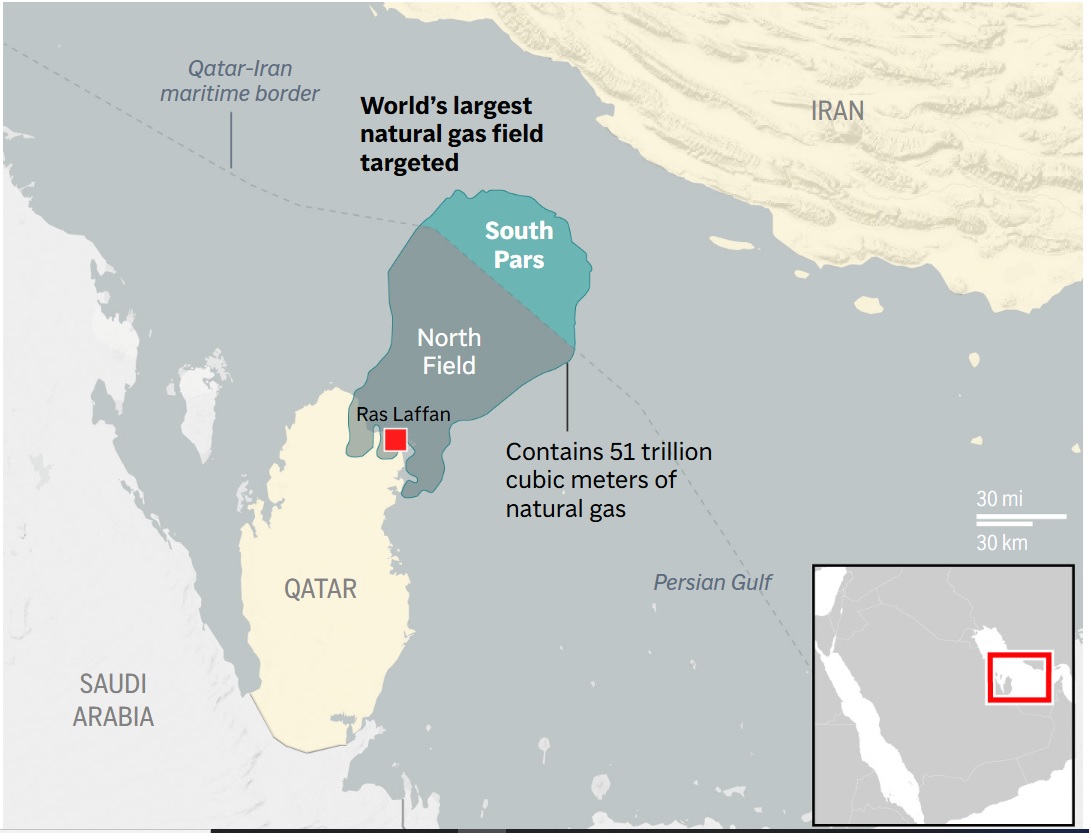
Source: International Energy Agency Graphic by: Phil Holm
The reported strike took place against the backdrop of ongoing hostilities between Israel and Iran, which have included exchanges of missile fire and airstrikes targeting military, infrastructure, and, in some cases, civilian areas. According to information compiled by The Associated Press, the conflict has expanded in scope in recent days, with multiple reported attacks across Iranian territory and retaliatory strikes impacting Israeli cities.
Iranian media confirmed that facilities at the South Pars natural gas field were targeted on Monday. The field, which Iran shares with Qatar, is considered the largest gas field in the world and is a central component of Iran’s energy production and export capacity. Iranian officials have previously condemned attacks on the site, warning of broader regional consequences.
Following an earlier Israeli strike on South Pars in March, Iran’s president Masoud Pezeshkian warned of what he described as “uncontrollable consequences” that “could engulf the entire world,” according to prior statements reported by The Associated Press. That earlier attack was followed by Iranian strikes targeting oil and natural gas infrastructure in Gulf Arab states.
Monday’s reported strike also occurred amid continued military activity across multiple fronts. The Associated Press reported that Israeli airstrikes in Iran have targeted a range of locations, including residential areas near Tehran and infrastructure sites. Iranian authorities said that an airstrike near Eslamshar, southwest of Tehran, killed at least 15 people, though details on the circumstances of that strike remain limited.
In a separate development, Iranian state media reported that Maj. Gen. Majid Khademi, the head of intelligence for Iran’s paramilitary Revolutionary Guard, was killed in an attack on Monday. Israel later confirmed that an airstrike in Tehran had targeted and killed Khademi. The circumstances surrounding the strike and the exact location were not fully detailed in initial reports.
Israeli officials have linked their targeting decisions to ongoing Iranian attacks on Israeli territory. According to Israeli military statements cited by The Associated Press, Iran launched multiple missile barrages toward Israel on Monday, with impacts reported in several cities, including Haifa and areas in central Israel.
Emergency services in Israel reported casualties resulting from those attacks. In Haifa, four people were found dead after being trapped under rubble following a missile strike, according to Israeli military statements. Additional injuries were reported in other locations, including Petah Tikva and Tel Aviv, where individuals were treated for shrapnel wounds.
Israeli authorities also issued multiple alerts warning of incoming missile fire throughout the day, with the military indicating that several barrages had been launched from Iran within a short period.
The broader conflict has also drawn reactions and warnings from international actors. According to The Associated Press, U.S. President Donald Trump reiterated threats to target Iranian infrastructure if Tehran does not reopen the Strait of Hormuz, a key global shipping route. Trump indicated that potential targets could include power plants and bridges, describing such actions in a social media post.
At the same time, diplomatic efforts to halt the fighting have been reported. Two Middle East officials told The Associated Press that Iran and the United States had received a draft proposal calling for a 45-day ceasefire and the reopening of the Strait of Hormuz. The proposal was reportedly put forward by mediators from Egypt, Pakistan, and Türkiye, with the aim of creating a window for negotiations toward a longer-term agreement.
According to those officials, the proposal was delivered to Iranian Foreign Minister Abbas Araghchi and U.S. Middle East envoy Steve Witkoff. Neither side has publicly responded to the proposal, and its prospects remain unclear.
The Associated Press also reported that Pakistan’s Foreign Minister Ishaq Dar called for “urgent de-escalation” during a phone conversation with his Japanese counterpart. A statement from Pakistan’s Foreign Ministry said Dar reaffirmed his country’s support for initiatives aimed at reducing tensions and promoting stability.
European Council President António Costa also commented on the situation, warning that escalation would not lead to a ceasefire. In a statement cited by The Associated Press, Costa said that only negotiations could achieve peace and stressed that targeting civilian infrastructure would be “illegal and unacceptable.”
In addition to military developments, the conflict has had broader regional implications. The Associated Press reported that an Iranian drone strike damaged a telecommunications building in Fujairah in the United Arab Emirates, though no injuries were reported. In Abu Dhabi, authorities said one person was wounded by shrapnel following the interception of an Iranian missile.
Other countries have taken steps to mitigate the impact of disruptions to energy supplies. South Korea, for example, announced plans to deploy ships to Saudi Arabia to establish alternative oil transport routes, according to its Ministry of Trade, Industry and Resources.
The conflict, which began with joint U.S.-Israel strikes on Feb. 28, has resulted in thousands of deaths and significant damage to infrastructure, according to The Associated Press. It has also disrupted global markets and key shipping routes, contributing to rising fuel prices and broader economic uncertainty.
Within Iran, infrastructure and institutional sites have also been affected. An airstrike reportedly hit a building at Tehran’s Sharif University of Technology, disrupting online services, according to a professor cited by The Associated Press. The university, considered a leading engineering institution, has been linked in past reports to Iran’s military programs, though it also serves civilian educational functions.
As military operations continue, both sides have issued statements indicating their intent to persist. Israeli officials have emphasized continued strikes on infrastructure, while Iranian authorities have condemned the attacks and, in some cases, attributed them to a broader coalition involving the United States.
The situation remains fluid, with ongoing reports of strikes, casualties, and diplomatic activity. The reported Israeli strike on the South Pars petrochemical facility represents one of the most significant attacks on Iran’s energy infrastructure since the escalation of hostilities.
The Israeli defense minister’s statement underscored the strategic importance of the targeted site, both in terms of economic output and its role in supporting Iran’s military capabilities, according to his characterization.
The developments come amid continued uncertainty over whether diplomatic efforts, including the proposed ceasefire, will gain traction. No official responses from Tehran or Washington to the proposal had been reported as of Monday.
The Israeli strike on the South Pars petrochemical facility marks a significant escalation in targeting Iran’s energy infrastructure, according to official statements.