Trump Rebukes Pope Leo Over Iran Remarks, Cites Protest Death Toll
US president intensifies rhetoric amid escalating tensions and public exchange with the Vatican
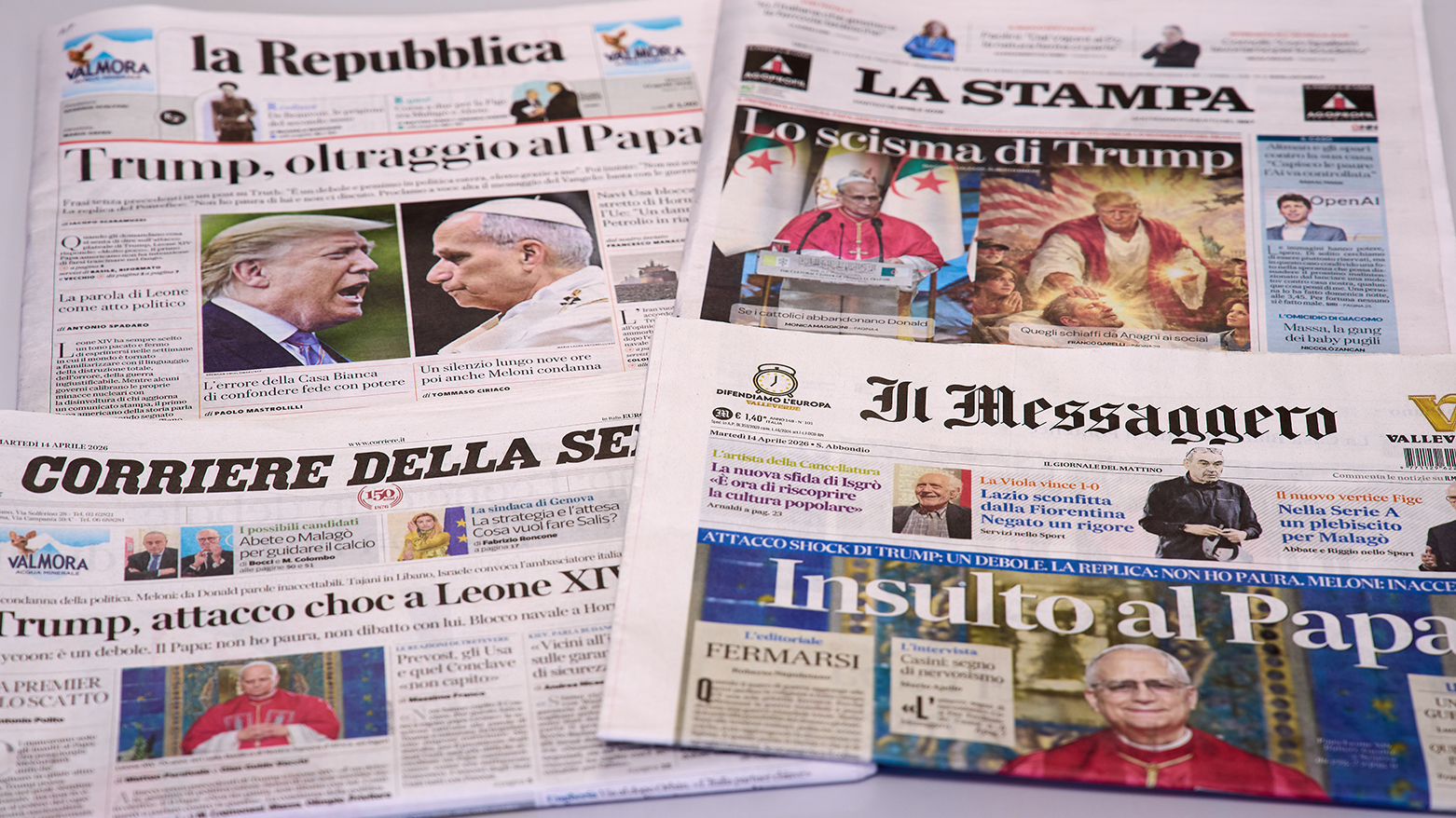
ERBIL (Kurdistan24) — US President Donald Trump on Wednesday sharply criticized Pope Leo XIV over remarks concerning Iran, escalating an increasingly public back-and-forth between Washington and the Vatican amid heightened regional tensions.
Writing on his Truth Social platform, Trump urged the pontiff to acknowledge Tehran’s alleged crackdown on protesters, stating: “Will someone please tell Pope Leo that Iran has killed at least 42,000 innocent, completely unarmed protesters in the last two months, and that for Iran to have a nuclear bomb is absolutely unacceptable.”
He concluded the post with a signature political refrain: “AMERICA IS BACK!!!”
The comments mark the latest salvo in a growing rhetorical clash between Trump and the Vatican, which has recently emphasized diplomacy, restraint, and de-escalation in addressing the intensifying crisis involving Iran.
The Pope’s appeals for dialogue and caution over military escalation have appeared to diverge from Washington’s increasingly hardline posture toward Tehran.
Trump’s remarks also come as his administration doubles down on efforts to prevent Iran from advancing its nuclear capabilities, framing the issue as a central pillar of US national security.
The president has repeatedly warned that Tehran must not be allowed to acquire nuclear weapons, while signaling readiness to pursue aggressive measures if necessary.
The exchange reflects a broader historical tension between US political leadership and the Vatican, particularly during periods of conflict in the Middle East, where papal diplomacy has often prioritized humanitarian considerations and negotiated settlements.
In recent weeks, that divide has become more pronounced, with the Pope cautioning against further escalation and calling for renewed international engagement, while Trump has amplified accusations against Iran and adopted a more confrontational tone.
Analysts say the public nature of the disagreement underscores the widening gap between moral diplomacy and strategic deterrence, as global actors grapple with the risks of a deepening crisis that continues to reverberate across the region.
Trump’s latest remarks form part of a broader and increasingly personal confrontation with Pope Leo XIV, culminating in what analysts describe as an unprecedented rhetorical escalation by a sitting US president against a pontiff.
In recent days, Donald Trump dismissed the Pope as “weak” and “wrong,” capping months of simmering tensions between the White House and the Vatican.
The friction traces back to the election of the first-ever American pope in May 2025, whose emphasis on international law, humanitarian norms, and migrant rights set the stage for an eventual clash with Trump’s more nationalist and security-driven agenda.
While both sides initially managed their differences, the relationship deteriorated sharply from January onward, as US military actions in Venezuela and threats toward Cuba and Greenland prompted increasingly pointed expressions of concern from the Vatican.
The divide deepened further amid the expanding Middle East conflict, particularly after Trump warned of targeting the entirety of Iran’s “civilization,” a statement the Pope publicly described as “unacceptable.”
According to French scholar François Mabille, head of the Geopolitical Observatory of Religion, such rhetoric “tipped the scales,” transforming a policy disagreement into a direct personal confrontation.
Unlike his predecessors, Pope Leo has combined broad appeals for peace with selective direct criticism, including condemning what he described as the “inhuman” treatment of migrants in the United States.
His calls for citizens worldwide to pressure political leaders to reject war have also drawn scrutiny in Washington, with some analysts arguing that such interventions blur longstanding diplomatic norms governing Vatican neutrality in US domestic politics.
Experts note that tensions between the Catholic Church and global powers are not new—Pope John Paul II notably opposed the 2003 Iraq War—but the intensity and personalization of the current dispute mark a departure.
Historically, US presidents have avoided overt attacks on the papacy, mindful of domestic political sensitivities among Catholic voters.
The current episode also follows earlier friction with Pope Francis, who shortly before his death in April 2025 criticized Trump-era migration policies, drawing sharp rebukes from US officials.
The Vatican has sought to downplay the dispute, rejecting reports of formal diplomatic confrontations earlier this year. Responding to Trump’s remarks, Pope Leo maintained a measured tone, stating that he has a “moral duty” to speak out against war.
Italian Prime Minister Giorgia Meloni, a political ally of Trump, nonetheless described the president’s comments as “unacceptable,” underscoring broader unease among Western leaders.
Despite the escalation, some analysts suggest the dispute may prove short-lived, noting Trump’s often fluid political positioning. Still, the episode highlights a rare and consequential clash between moral authority and political power at a time of mounting global instability.