From Lalish to the World: Exploring the Deep Spiritual Traditions of Yazidi Festivals
Yazidi religious festivals, centered around Lalish, reflect deep spiritual traditions tied to nature, renewal, and unity, with key celebrations like the New Year, Jama, and Khidr Ilyas preserving cultural identity and resilience.
ERBIL (Kurdistan24) - In the heart of Kurdistan, the sacred valley of Lalish stands as the spiritual center of the Yazidi faith, where ancient rituals, seasonal festivals, and deeply rooted beliefs continue to shape a profound connection between humans, nature, and the cosmos.
Yazidi religious festivals reflect this enduring bond, with each celebration carrying symbolic meaning tied to renewal, spirituality, and communal harmony. At the core of these traditions lies a rich calendar of sacred occasions, led by the most significant festival, the Yazidi New Year.
The Yazidi New Year: Renewal of life and earth
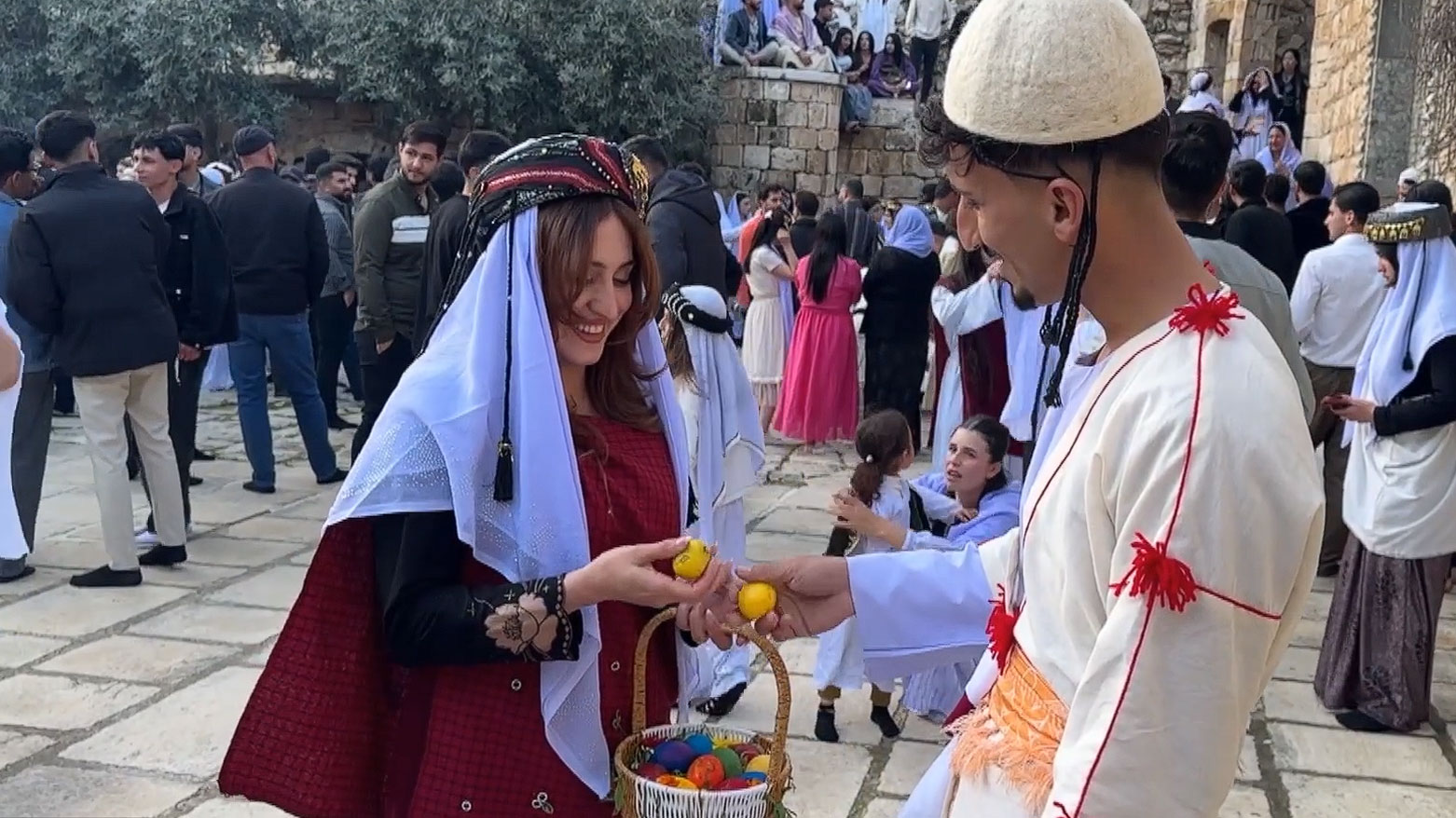
The Yazidi New Year is considered the most important and sacred religious festival, held annually in mid-April, typically between April 14 and 20. In 2026, it falls on April 15. If April 1 coincides with a Thursday, the celebration is moved to the following Wednesday.
At Lalish, the spiritual heart of Yazidism, Baba Sheikh and the Yazidi Spiritual Council perform the ritual of lighting 365 lamps, symbolizing the days of the year. Yazidis mark the day by visiting nature, believing that on this occasion, Melek Taus descends to Earth to spread peace and beauty, transforming it into a place suitable for life.
April is regarded as the “Bride of the Year,” and during this month, activities such as marriage and plowing are prohibited out of respect for nature’s renewal. Eggs, symbolizing the Earth, are boiled and dyed to reflect the colors of spring. Traditional bread known as “Sawuk” is prepared and distributed to the poor or taken to graves, while red flowers and symbolic mixtures are placed on doorways to protect homes and welcome blessings.
Belenda: A celebration of renewal and forgiveness
Belenda is one of the oldest Yazidi festivals, held on the first Friday of January. The name signifies “rising” or “emergence,” symbolizing the end of planting season and the anticipation of growth.
Families gather, visit cemeteries, and distribute food such as Sawuk bread, raisins, and walnuts. The festival also includes the ritual of lighting a communal fire, around which prayers are offered for prosperity. Special foods such as “Kasham” bread are prepared, sometimes containing a hidden object believed to bring luck to the person who finds it.
Khidr Ilyas: Hope, spirituality, and divine signs
Observed in the second half of February, the Khidr Ilyas festival carries deep spiritual meaning. Those named Khidr or Ilyas, or those fulfilling vows, fast for three days leading up to the celebration.
Khidr is believed to protect travelers and those in need, while Ilyas is seen as the guardian of the seas. On the eve of the festival, a mixture called “Pekhun” is prepared and left overnight, with the belief that a divine sign may appear as a blessing.
The festival also emphasizes compassion and respect for life, as hunting or killing any living being is strictly forbidden during this time.
Forty days of winter: Endurance and spiritual purification
The winter fasting festival, observed on February 2, marks the end of a 40-day period of severe cold that begins on December 21. During this time, religious figures known as “Chilager” fast and dedicate themselves to prayer.
The celebration signifies their return to society, with ceremonies held in Lalish, including the lighting of candles and the performance of “Sema,” a sacred ritual accompanied by music.
The sacrifice festival: Symbol of devotion
Held annually on June 23, the Yazidi Sacrifice Festival is closely associated with the story of Prophet Abraham and symbolizes devotion and redemption.
Animals are sacrificed, and the meat is distributed among the poor and visitors at Lalish, reinforcing values of generosity and communal care.
The fasting festival: Triumph of light over darkness
One of the most sacred Yazidi festivals takes place in mid-December, during the shortest days of the year. Yazidis fast for three days before celebrating on Friday.
The festival symbolizes the victory of light over darkness, with families gathering, visiting graves, and distributing food. It is also a time for reconciliation, as disputes are resolved and social harmony is restored.
Summer fasting: Strength and spiritual discipline
The summer fasting festival, held between late July and early August, follows a 40-day fasting period beginning in late June. Celebrations center around Lalish, where rituals and ceremonies are conducted.
The festival highlights endurance and spiritual discipline during the hottest days of the year, with religious figures dedicating themselves to prayer and purification.
Jama festival: The largest annual gathering
The Jama festival is the longest and most significant collective celebration, held from October 6 to 12 over seven days. Yazidis from across the world gather at Lalish in what resembles an annual pilgrimage.
The festival emphasizes unity and peace, with no conflicts permitted during its duration. Rituals include Sema ceremonies and the lighting of 365 lamps each evening. A sacrificial animal is offered toward the end, and its meat is shared as sacred food.
A living cultural identity
Yazidi festivals are not merely religious occasions but a living expression of identity, resilience, and cultural continuity. Through rituals such as lighting 365 lamps and dyeing eggs, these traditions preserve a deep spiritual philosophy rooted in harmony with nature.
Despite the challenges faced by the community, these celebrations remain a powerful testament to the enduring heritage of the Yazidi people, centered around Lalish and carried forward across generations.