Mar Paul III Nona Assumes Office as Patriarch of the Chaldean Church in Iraq and the World
The formal installation of His Beatitude Mar Paul III Nona as the new Patriarch of the Chaldean Catholic Church took place in Baghdad. The transition underscores the enduring presence of Iraq’s Christian community and highlights the Kurdistan Region’s ongoing commitment to interfaith coexistence.
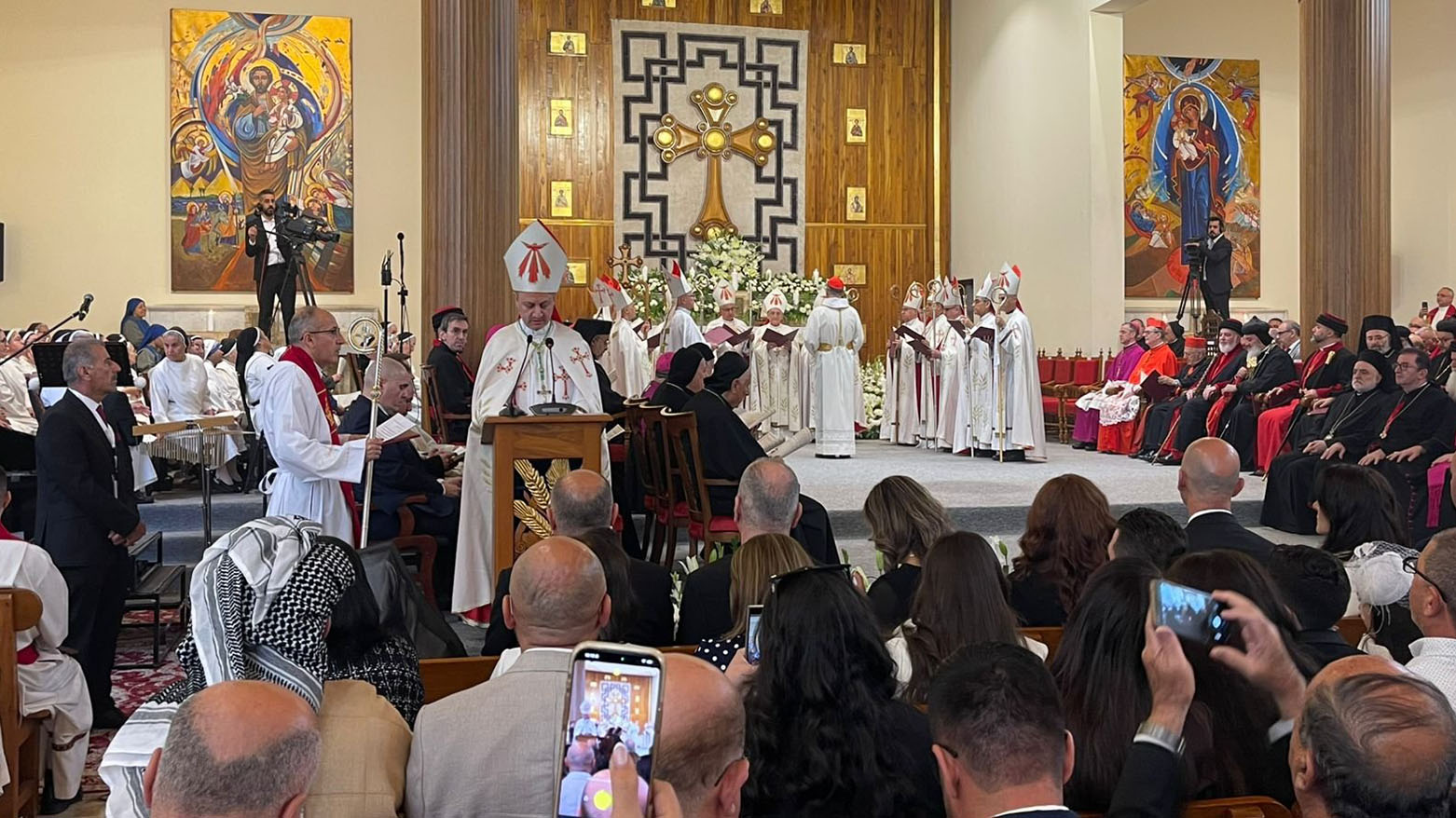
ERBIL (Kurdistan24) - Under the vaulted arches of St. Joseph's Church in Baghdad, His Beatitude Mar Paul III Nona was formally installed on Friday as the new Patriarch of the Chaldean Catholic Church. The solemn ceremony, attended by high-ranking religious figures and government officials, marked the beginning of a new ecclesiastical era for one of Iraq's most prominent Christian institutions, as the new leader formally succeeded former Patriarch Mar Louis Raphael I Sako.
The transition carries significant spiritual and social weight for Christian communities across the Middle East and the global diaspora.
The Chaldean Patriarchate has historically functioned not only as a religious authority but also as a primary representative of Christian heritage within Iraq's complex sociopolitical landscape.
As Mar Paul III assumed his ecclesiastical duties amidst a festive atmosphere and special prayers, the event underscored the enduring presence of the Chaldean Church in the region despite decades of demographic and security challenges.
A Church in Transition
The installation ceremony in Baghdad served as a rare moment of institutional continuity for a community navigating the severe long-term impacts of conflict and displacement.
During his inaugural address, Patriarch Mar Paul III Nona affirmed that the presence of the Chaldean Church in Iraq constitutes a fundamental pillar with roots stretching deep into antiquity.
He emphasized to the congregation that "unity within the Church is of paramount necessity," describing the institution as a "single home that embraces all," with its objectives united in a shared journey of faith.
Addressing the formidable responsibilities now facing the Church, the Patriarch tackled both the psychological and practical dimensions of the region's challenges.
"Fear is a natural path, but the real problem lies not in the feeling of fear itself, but in surrendering to it," he stated.
He warned that when individuals fall victim to fear, they tend to withdraw and retreat into isolation, seeking a sense of security that may ultimately prove illusory.
Concluding his address, Mar Paul III reaffirmed his determination to move forward with his mission in a spirit of confidence, despite the prevailing harsh conditions.
He underscored a policy of openness toward everyone as the primary means of confronting adversity, signaling a resilient path forward for the roughly one million Chaldeans worldwide.
A Life Shaped by Service and Displacement
The new Patriarch brings a uniquely grounded perspective to his role, having personally experienced the severe hardships faced by his flock.
Born in the town of Alqosh in the Nineveh Plains on Nov. 1, 1967, Mar Paul III was raised in a devout family.
Following his ordination as a priest in Baghdad in 1991, he dedicated his early years to pastoral service before pursuing higher studies in Rome, earning a Doctorate in Theological Anthropology from the Pontifical Lateran University in 2005.
Returning to Iraq, he served as a parish priest in Alqosh and as Vicar General of the diocese, alongside his academic work at the Babel College of Philosophy and Theology.
In 2010, he was ordained a bishop and appointed Chaldean Archbishop of Mosul, succeeding the martyred Archbishop Paulos Faraj Rahho.
During his tenure in Mosul, His Beatitude lived through some of the most harrowing conditions in the city's modern history. Following the ISIS invasion of Mosul in 2014, he was forced into displacement alongside his people.
In 2015, he relocated to serve the Diocese of Saint Thomas the Apostle in Australia and New Zealand, working diligently to preserve the Chaldean identity in exile.
He is also a recognized intellectual, having authored numerous theological works, including his 2024 study, The Sunday of Nature.
Regional Engagement and the Kurdistan Connection
The installation of the new Patriarch also highlighted the strong institutional ties between the Chaldean Church and the Kurdistan Regional Government (KRG).
Representing Prime Minister Masrour Barzani, the KRG Minister of Transport and Communications, Ano Abdoka, traveled to Baghdad to formally convey the congratulations and blessings of the Prime Minister on the occasion of the Patriarch's election by the Holy Synod.
The meeting between the KRG envoy and the Patriarch underscored a mutual commitment to regional stability.
During the encounter, the Patriarch expressed his profound gratitude for the message and commended the Prime Minister's leadership.
Recognizing the ongoing development and infrastructural changes within the Kurdistan Region, the religious leader characterized Prime Minister Masrour Barzani as a "man of action, not just words."
Minister Abdoka also revealed that Patriarch Mar Paul III intends to conduct an official visit to the Kurdistan Region soon.
The planned visit will include inspections of local churches and parishes, as well as meetings with government authorities, signaling a desire to strengthen ties with a region that has served as a safe haven for displaced Christians since the 2014 crisis.
Coexistence as Policy and Practice
The engagement between the Chaldean Patriarchate and Erbil is rooted in a deliberate KRG policy framework prioritizing minority inclusion and religious freedom.
Following the Patriarch's election, Prime Minister Masrour Barzani issued a statement emphasizing that the Kurdistan Region takes pride in the position of the Chaldean community, reaffirming an "unwavering commitment to strengthening the culture of peaceful coexistence."
This sentiment was echoed by President Masoud Barzani, who noted that the election of the new Patriarch should serve as an opportunity to reinforce interfaith harmony and tolerance across Iraq.
President Barzani stressed that the Kurdistan Region has consistently sought to remain a protective space for cultural diversity and fraternity among all its components.
These official communications frame coexistence not merely as a rhetorical slogan, but as a practical governance principle enforced through legal frameworks, such as the 2015 Law on the Protection of the Rights of Communities.
The KRG's continued support for strategic projects, ranging from the construction of new churches to residential developments for Christian youth in Ankawa, reflects an institutional attempt to stabilize the Christian presence in the region.
Continuity and Future Outlook
The installation of Patriarch Mar Paul III Nona arrives at a sensitive time for Iraq's minority communities, who continue to advocate for stronger political representation and the protection of their cultural identity.
His leadership is expected to navigate these complex issues while fostering closer ties with both the federal government in Baghdad and regional authorities in Erbil.
As the Patriarch prepares for his upcoming visit to the Kurdistan Region, the transition highlights the broader implications for Christian communities across the Middle East.
The successful coordination between ecclesiastical leadership and regional political frameworks remains a vital component of maintaining interfaith stability, ensuring that the ancient Chaldean heritage continues to endure as an integral part of Iraq's social and political landscape.
Mothafar Mzuri, Kurdistan24's journalist from Arabic section, contributed to this report.