Sharif’s Gulf Tour Signals Renewed Push for US-Iran Talks in Pakistan
Islamabad’s growing leverage positions it as a more assertive mediator than Oman amid the fragile ceasefire
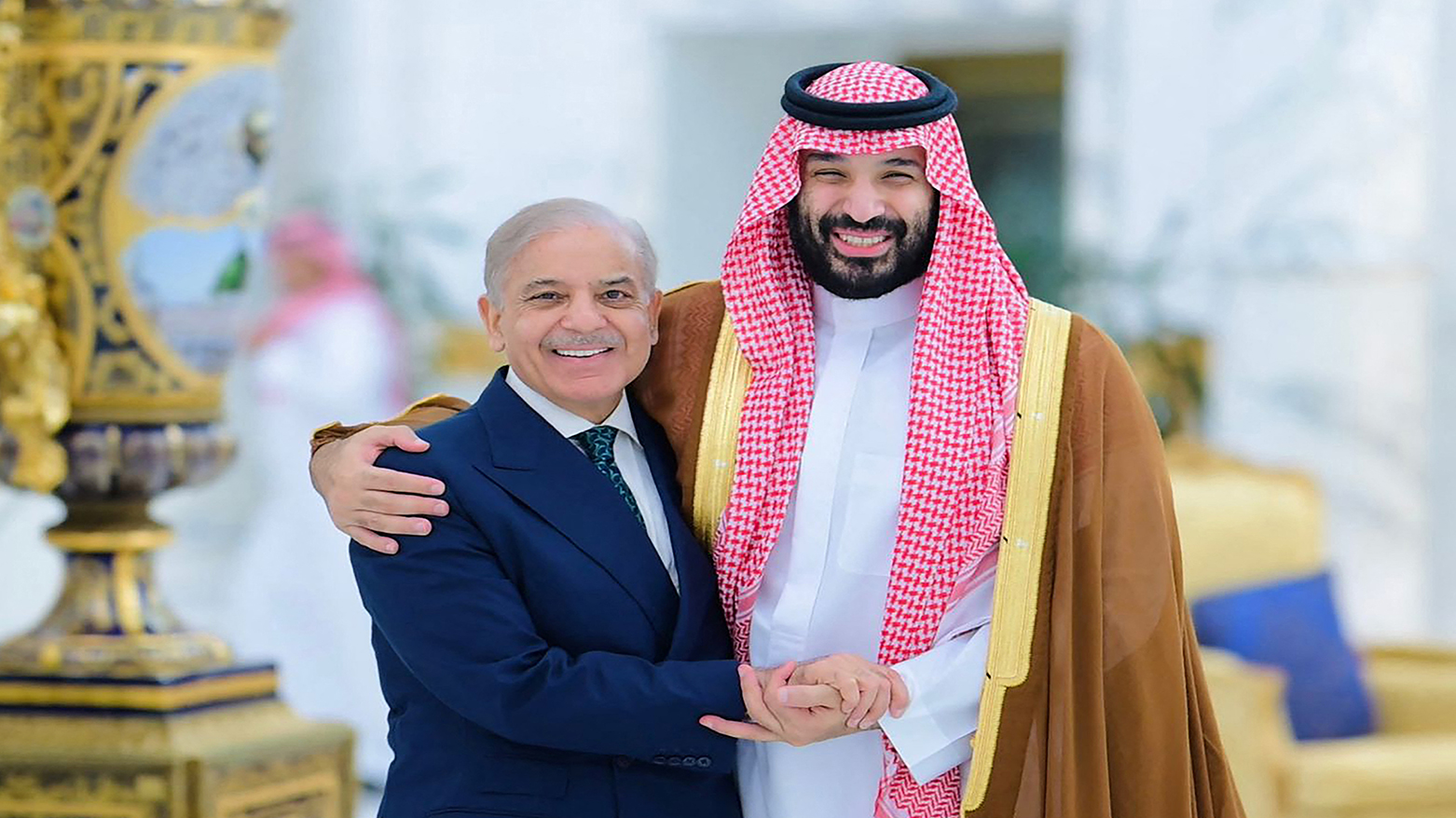
ERBIL (Kurdistan24) — Pakistan's Prime Minister Shehbaz Sharif arrived in Saudi Arabia on Wednesday at the start of a four-day regional tour, as momentum builds toward a possible second round of U.S.-Iran negotiations expected to be held again in Pakistan.
Sharif’s trip, which also includes visits to Qatar and Türkiye, comes days after Washington and Tehran held their highest-level talks in decades in Islamabad—an engagement widely seen as a breakthrough despite ending without a final agreement.
According to Pakistan’s government, Sharif held talks on the “regional situation” with Mohammed bin Salman in Jeddah on Wednesday, and is expected to continue his regional diplomacy in Doha on Thursday, before attending the Antalya Diplomacy Forum in Türkiye, where he will meet Recep Tayyip Erdogan and other leaders.
The diplomatic push unfolds against the backdrop of a fragile ceasefire following the conflict triggered by the February 28, 2026, US-Israel strikes on Iran, which led Tehran to target U.S. allies in the Gulf and disrupt critical energy exports, sending global oil prices sharply higher.
Pakistan’s rising role as a mediator
Officials in Washington and Tehran have both signaled strong support for Pakistan’s mediation role, with White House Press Secretary Karoline Leavitt describing Islamabad as an “incredible mediator” and emphasizing continued U.S. reliance on Pakistani channels to advance negotiations.
Diplomatic sources indicate a second round of talks could take place “within days” or early next week, though no formal date has been announced. The urgency is driven by a ceasefire window expected to expire around April 21–22.
Pakistan’s emergence as the primary mediator marks a notable shift from previous reliance on Oman, which historically facilitated quiet U.S.-Iran contacts. While Oman’s neutrality enabled discreet diplomacy, it lacked the political and security leverage to influence outcomes decisively.
In contrast, Pakistan brings substantial strategic weight to the table—positioning itself not merely as a neutral host, but as an active broker capable of exerting pressure on both sides.
Leverage in Washington and Tehran
On the U.S. front, Pakistan remains a longstanding strategic partner, and Donald Trump is seen as maintaining a direct and trusting relationship with Sharif. Analysts note that this personal rapport enhances Islamabad’s ability to shape communication and reduce friction during negotiations.
More significantly, Pakistan holds considerable leverage with Iran. As a nuclear-armed state with deep defense ties to Saudi Arabia—Tehran’s regional rival—Islamabad occupies a uniquely influential position in the regional security architecture.
Under existing defense understandings between Pakistan and Saudi Arabia, any escalation into a broader U.S.-Israel-Iran war could potentially draw in Gulf Arab states. In such a scenario, Pakistan could face pressure to align militarily with Riyadh—an outcome Iran is keen to avoid.
This dynamic effectively strengthens Pakistan’s hand in mediation. The implicit message conveyed to Tehran is stark: a negotiated settlement may avert a wider regional war that could otherwise expand to include additional state actors, including Pakistan itself.
Sharif’s personal diplomacy
Sharif’s leadership style and personal background also play a role in Pakistan’s mediation strategy. Coming from one of Pakistan’s most prominent business and political families, he is the younger brother of Nawaz Sharif, who served three terms as premier.
Before entering politics, Sharif was deeply involved in the family’s industrial and business enterprises, giving him familiarity with high-level economic negotiations and the interests of major stakeholders.
This background is viewed as an asset in dealing with figures such as Trump and Crown Prince Mohammed bin Salman—leaders who combine political authority with significant business influence.
Analysts say Sharif’s pragmatic, transactional approach allows him to better navigate the intersection of geopolitics and economic interests that underpin the current crisis.
Economic and strategic alignment
Sharif’s visit to Saudi Arabia also underscores the economic dimension of Pakistan’s diplomacy. Riyadh recently pledged $3 billion to support Pakistan’s foreign reserves, while extending an existing $5 billion deposit—highlighting the depth of bilateral ties.
In a statement following his meeting with Mohammed bin Salman, Sharif reaffirmed Pakistan’s “unwavering solidarity” with the Kingdom and emphasized continued efforts to facilitate a U.S.-Iran agreement aimed at “lasting peace and stability in the region.”
In parallel with Sharif’s Gulf tour, Pakistan’s military leadership has also stepped up engagement. Asim Munir led a delegation to Tehran, where he met Iranian Foreign Minister Abbas Araghchi.
Araghchi welcomed Pakistan’s mediation efforts, noting that Tehran had engaged “in good faith” during the Islamabad talks, while criticizing what he described as shifting U.S. positions and continued pressure tactics, including a naval blockade.
Despite growing diplomatic momentum, significant gaps remain between Washington and Tehran. The first round of talks in Islamabad ended without a final agreement, and both sides continue to exchange accusations over negotiating positions.
Still, with a fragile ceasefire holding and multiple channels of communication active, Pakistan’s assertive mediation—backed by political, military, and economic leverage—has positioned it at the center of efforts to prevent a renewed regional war.