Kirkuk Provincial Council Meeting Delayed Until Evening Over Lack of Quorum
Session stalls as key Kurdish blocs boycott amid ongoing dispute over governorship
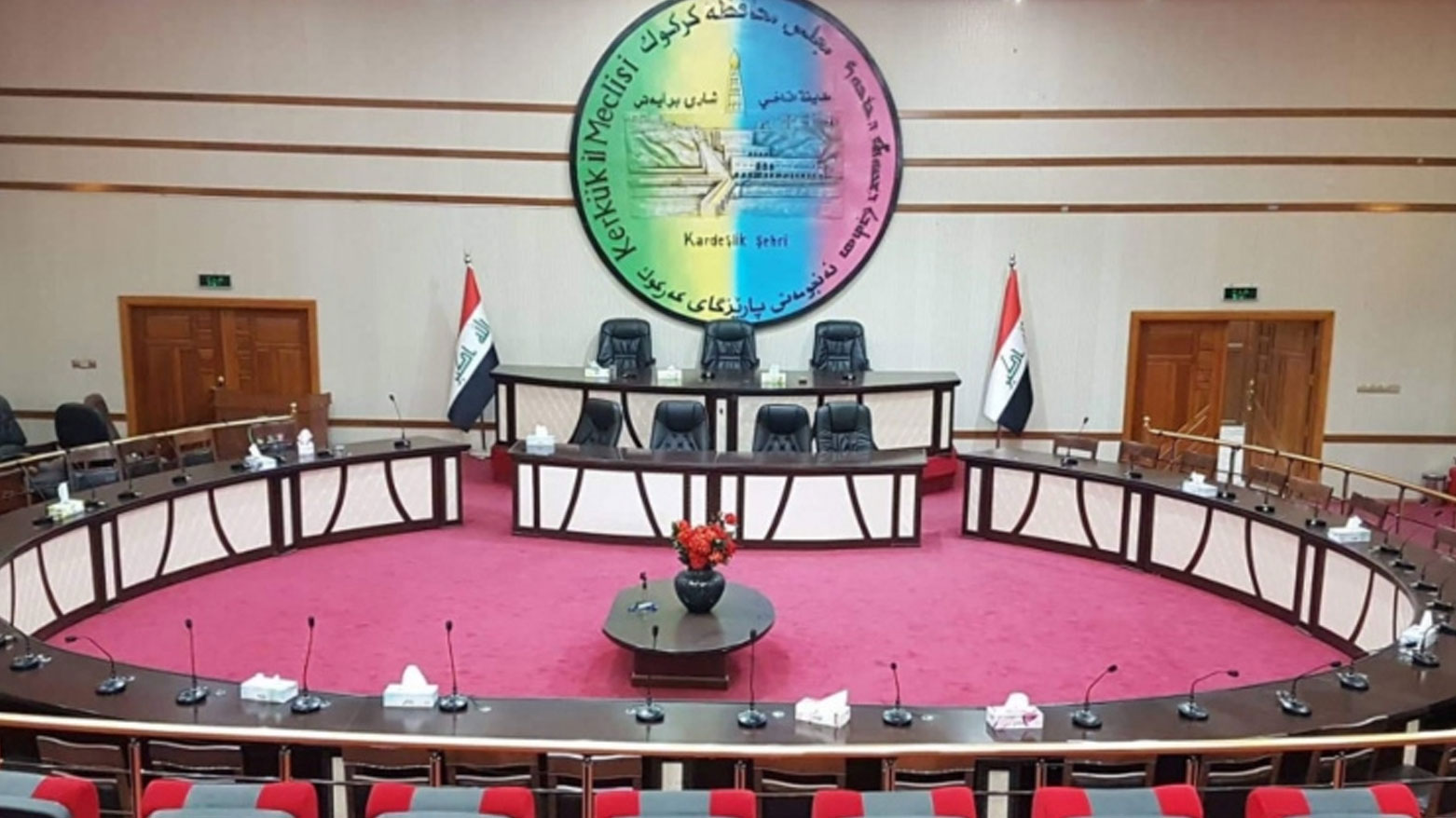
ERBIL (Kurdistan24) — A scheduled meeting of the Kirkuk Provincial Council was postponed on Thursday after failing to meet the required legal quorum, according to a Kurdistan24 correspondent in the province.
The session, initially planned earlier in the day and later rescheduled for 6:00 p.m., was delayed after the council chair and six members entered the meeting hall but were unable to secure the minimum attendance needed to proceed.
Under council rules, at least nine members must be present to meet the quorum. However, only seven members attended, prompting the council head to formally postpone the session.
Both major Kurdish factions—the Kurdistan Democratic Party (KDP) and the Patriotic Union of Kurdistan (PUK)—boycotted the meeting, hindering efforts to convene.
According to Kurdistan24, the members who attended the session included representatives from the Arab and Turkmen blocs. Among them were council chairman Mohammed Hafiz, along with Raad Saleh al-Jubouri, Zaher Assi, Ruaa al-Jubouri, Ahmed al-Hamdani, Sawsan Jadou, and Ahmed Ramzi.
The delay comes amid heightened political tensions surrounding the future of Kirkuk’s governorship, with competing factions divided over reported agreements to rotate the post among different ethnic and political groups.
The current deadlock reflects broader disputes that have shaped governance in Kirkuk since the October 16, 2017 events in Kirkuk, when Iraqi federal forces reasserted control of the province.
Following those events, then-prime minister Haider al-Abadi appointed Rakan al-Jubouri as acting governor, a position he held until 2024.
In 2024, a political agreement reached at Baghdad’s Rashid Hotel between the Patriotic Union of Kurdistan, Arab blocs, and the Babylon Movement led to the election of PUK's Rebwar Taha as governor, after securing nine votes out of 16 council members.
The PUK held five seats in that arrangement, alongside three Arab members and one Christian representative.
Despite the postponement, the council is still expected to reconvene later Thursday, as political actors continue negotiations to resolve the impasse over leadership in the disputed province.