Ceasefire Takes Effect in Lebanon as Violations Reported, Israel Holds Positions
Just after midnight in Beirut, gunfire signaled not battle but relief: a ten-day ceasefire had begun. Families turned south toward homes they had fled, even as Israeli troops remained in place and Hezbollah stood outside the accord—a pause heavy with hope, and with doubt.
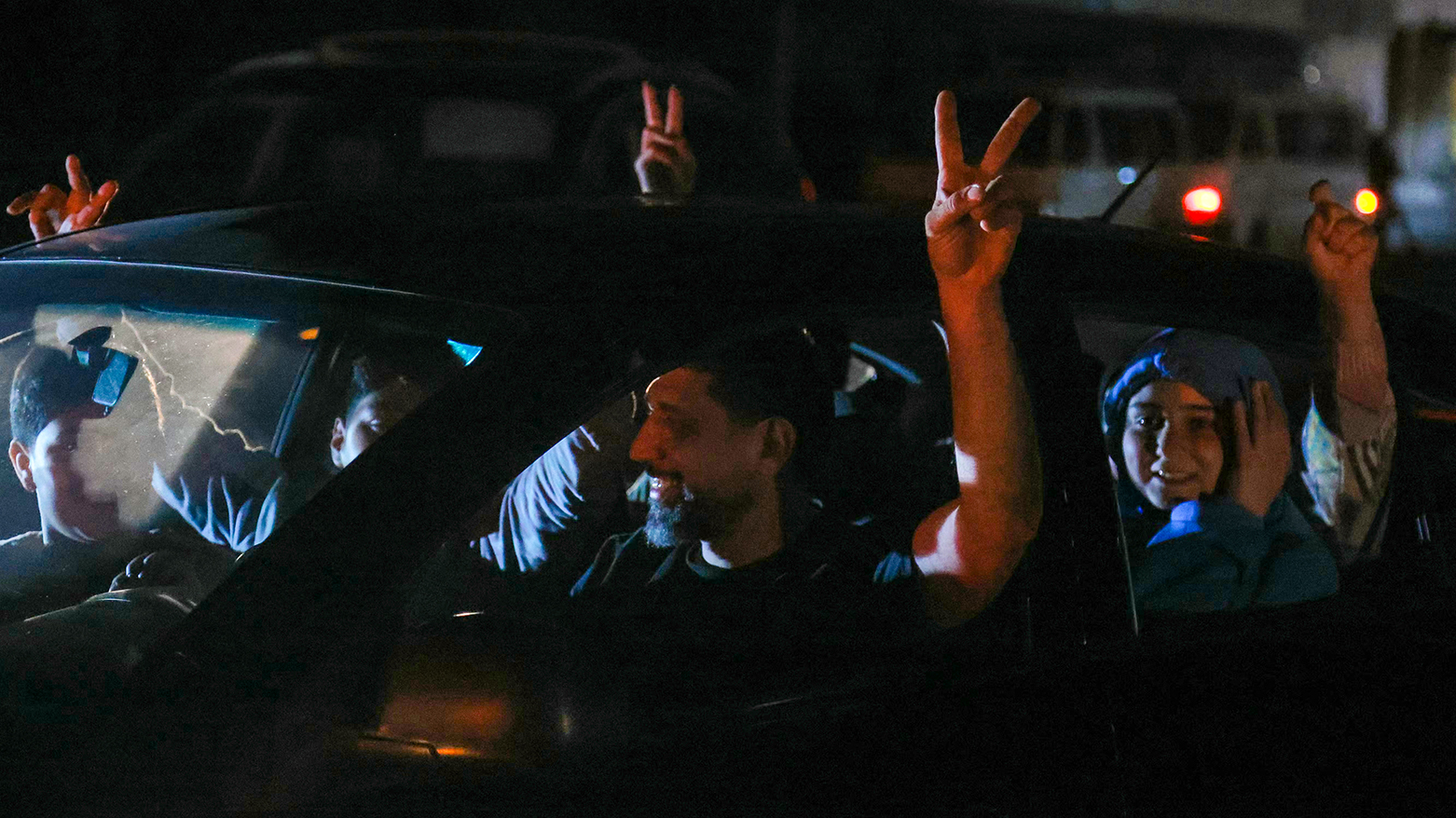
ERBIL (Kurdistan24) - A 10-day ceasefire between Israel and Lebanon took effect early Friday, but reports of violations and continued Israeli military activity underscored the fragility of a truce intended to halt weeks of escalating conflict.
Shortly after midnight in Beirut, celebratory gunfire echoed across parts of the capital as the ceasefire began, while displaced civilians started moving toward southern Lebanon and the city’s southern suburbs, according to reporting by The Associated Press and Agence France-Presse. The Lebanese army, however, issued an immediate warning urging residents not to return, citing “a number of violations” and “several Israeli acts of aggression” in affected areas.
Despite those warnings, traffic surged along the coastal highway south of Beirut. AFP journalists reported long lines of vehicles heading toward areas beyond the Litani River, including crossings over damaged infrastructure, as families attempted to return to homes abandoned during the fighting. One displaced resident, Alaa Damash, told AFP that while authorities had urged caution, “people’s love for their lands and houses” compelled them to go back despite ongoing risks.
The ceasefire, announced Thursday by U.S. President Donald Trump, pauses hostilities between Israel and Lebanon but leaves unresolved key questions regarding enforcement and scope. Israeli forces remain deployed in southern Lebanon, where Prime Minister Benjamin Netanyahu said troops would hold a “security zone” extending roughly 10 kilometers north of the border.
“That is where we are, and we are not leaving,” Netanyahu said in remarks cited by AP.
The U.S. State Department said the agreement permits Israel to respond to “planned, imminent or ongoing attacks,” while otherwise halting offensive operations. However, Israeli military statements cited by AFP indicated that more than 380 Hezbollah targets in southern Lebanon had been struck shortly before the truce took effect, and that forces remained on “high alert” to resume action if necessary.
The role of Hezbollah — the Iran-backed group that has been the primary combatant on the Lebanese side — remains ambiguous. The group was not directly involved in negotiations. Trump said the ceasefire “will include Hezbollah,” while the State Department indicated the agreement commits Lebanon to dismantling the group. A Hezbollah lawmaker told AFP the organization would “cautiously adhere” to the truce provided Israel halts attacks.
This divergence reflects broader structural tensions within the agreement. Hezbollah operates independently of Lebanon’s formal state institutions, complicating implementation of any state-level commitments. Netanyahu, for his part, described Hezbollah’s disarmament as a precondition for what he called a potential “historic peace agreement” with Beirut.
Lebanese officials publicly endorsed the ceasefire while signaling limits to direct engagement. Prime Minister Nawaf Salam described a truce as a “key Lebanese demand… since the very first day of the war,” according to AFP. At the same time, an official source told AFP that President Joseph Aoun declined a request from Trump to hold a direct call with Netanyahu, underscoring the political sensitivity surrounding formal Israel-Lebanon contacts.
The diplomatic process that produced the ceasefire unfolded rapidly. According to AP, Israeli and Lebanese representatives held discussions in Washington — their first such engagement in decades — followed by coordinated calls involving Trump and Secretary of State Marco Rubio. Trump said he had spoken separately with Netanyahu and Aoun, and suggested both leaders could travel to Washington within days for further talks, a potential first high-level meeting in more than four decades.
The ceasefire is closely tied to broader regional negotiations involving Iran. Tehran had insisted that a halt to Israeli operations in Lebanon be included in any wider agreement with the United States. AFP reported that mediation efforts led in part by Pakistan are seeking to revive direct talks between Washington and Tehran, with Trump indicating he could travel to Pakistan to formalize a deal if progress continues.
Regional officials cited by AP said there is an “in-principle agreement” to extend a parallel ceasefire linked to the Iran conflict, enabling negotiations on core issues including Iran’s nuclear program, the reopening of the Strait of Hormuz, and compensation for wartime damage.
The Strait remains a central pressure point. Iran closed the waterway earlier in the conflict, disrupting a route that carries approximately one-fifth of global oil supply. While oil prices have declined amid expectations of de-escalation, International Energy Agency Executive Director Fatih Birol warned, in comments to AP, that supply shocks could intensify if the closure persists, noting that Europe may have only “maybe six weeks or so” of jet fuel reserves.
On the ground, the ceasefire followed sustained violence up to its final hours. Lebanon’s health ministry reported that at least seven people were killed and more than 30 wounded in an Israeli strike on the southern town of Ghazieh on Thursday, according to AFP. An Israeli hospital spokesman said three people were injured in Israel the same day.
The conflict itself dates to early March, when Hezbollah launched rocket attacks into Israel following the initial phase of a broader war involving the United States, Israel, and Iran. Israel responded with expanded airstrikes and a ground incursion into southern Lebanon, displacing large segments of the population and intensifying a cycle of retaliation that had persisted since the Gaza war and a prior 2024 ceasefire.
Casualty figures reported by AP indicate more than 2,100 people have been killed in Lebanon, alongside 23 in Israel and over a dozen in Gulf Arab states. The wider regional war has resulted in at least 3,000 deaths in Iran and the deaths of 13 U.S. service members.
For civilians, the ceasefire has brought a cautious, uneven sense of reprieve. In Beirut, residents described relief tempered by uncertainty. “We are very happy that a ceasefire has been reached… because we are tired of war,” Jamal Shehab, a 61-year-old resident, told AFP.
Yet the early reports of violations, the continued Israeli military posture, and the unresolved status of Hezbollah highlight the provisional nature of the agreement. While the ceasefire has created diplomatic space — linking the Lebanese front to wider U.S.-Iran negotiations — its durability will depend on whether the parties translate a temporary halt in fighting into a more structured and enforceable arrangement.
This article was updated on Friday, Apr.17, 2026, at 09:22am, adding reports of ceasefire violations.