US-Iran Peace Talks Face Uncertainty as Delegations Delay Travel to Pakistan
United States officials remain in Washington for policy meetings as Iran withholds confirmation of its attendance at the impending second round of peace negotiations in Pakistan.
ERBIL (Kurdistan24) - Axios Global Affairs Correspondent Barak Ravid shared on X on Tuesday that United States Vice President JD Vance is still in Washington, noting that a senior White House official stated several diplomatic discussions will take place today at the White House in which Vance will participate.
This development regarding the vice president's schedule emerges alongside concurrent reporting from CNN, which indicates that the Government of Iran has yet to confirm its attendance at the anticipated second round of peace talks scheduled to be held in Pakistan this week.
The logistical movements of the broader United States delegation also reflect the current uncertainty surrounding the diplomatic proceedings. Ravid additionally posted that United States envoys Steve Witkoff and Jared Kushner are also still currently in the United States.
According to the journalist's public statements, the Department of Homeland Security aircraft that was initially supposed to transport the two officials this morning from Miami to Europe, and from there to Pakistan, took off but altered its trajectory in the direction of Washington. Ravid suggested that they might be on their way to a meeting with President Donald Trump.
CNN corroborated the status of the vice president, reporting that Vance is expected to travel to Pakistan with top United States officials to take part in the latest round of negotiations, according to people familiar with the plans.
However, the network noted that he remains in Washington, and it is currently unclear when he is set to depart. A White House official told CNN that additional policy meetings are taking place at the White House in which the vice president will participate.
Sources familiar with the talks informed CNN that the White House is planning to hold further meetings on Tuesday to discuss the path forward. Vance was originally expected to depart for Islamabad on Tuesday morning, but a key unresolved question remained regarding whether the Iranian delegation would also show up for the planned negotiations.
As of late Tuesday morning, Iranian officials had not committed to sending representatives to Pakistan for the second round of talks. In an explicit rejection of the proposed schedule, Iranian lawmaker Ahmad Naderi stated that no Iranian negotiating team has traveled to Pakistan for talks with the United States.
Naderi emphasized that authorities in Tehran will not negotiate until the issue of the naval blockade is resolved. The lawmaker further asserted that any reports indicating the presence of an Iranian delegation in Pakistan represent a complete lie.
These remarks from the Iranian legislative body align with recent statements from the nation's diplomatic corps. Iranian Foreign Ministry spokesperson Esmaeil Baghaei stated the previous day that his country currently has no plans for the next round of negotiations right now.
This official denial contrasts with earlier operational signals, as Iranian sources had previously told CNN that a delegation representing Tehran would be traveling to Pakistan for the peace talks.
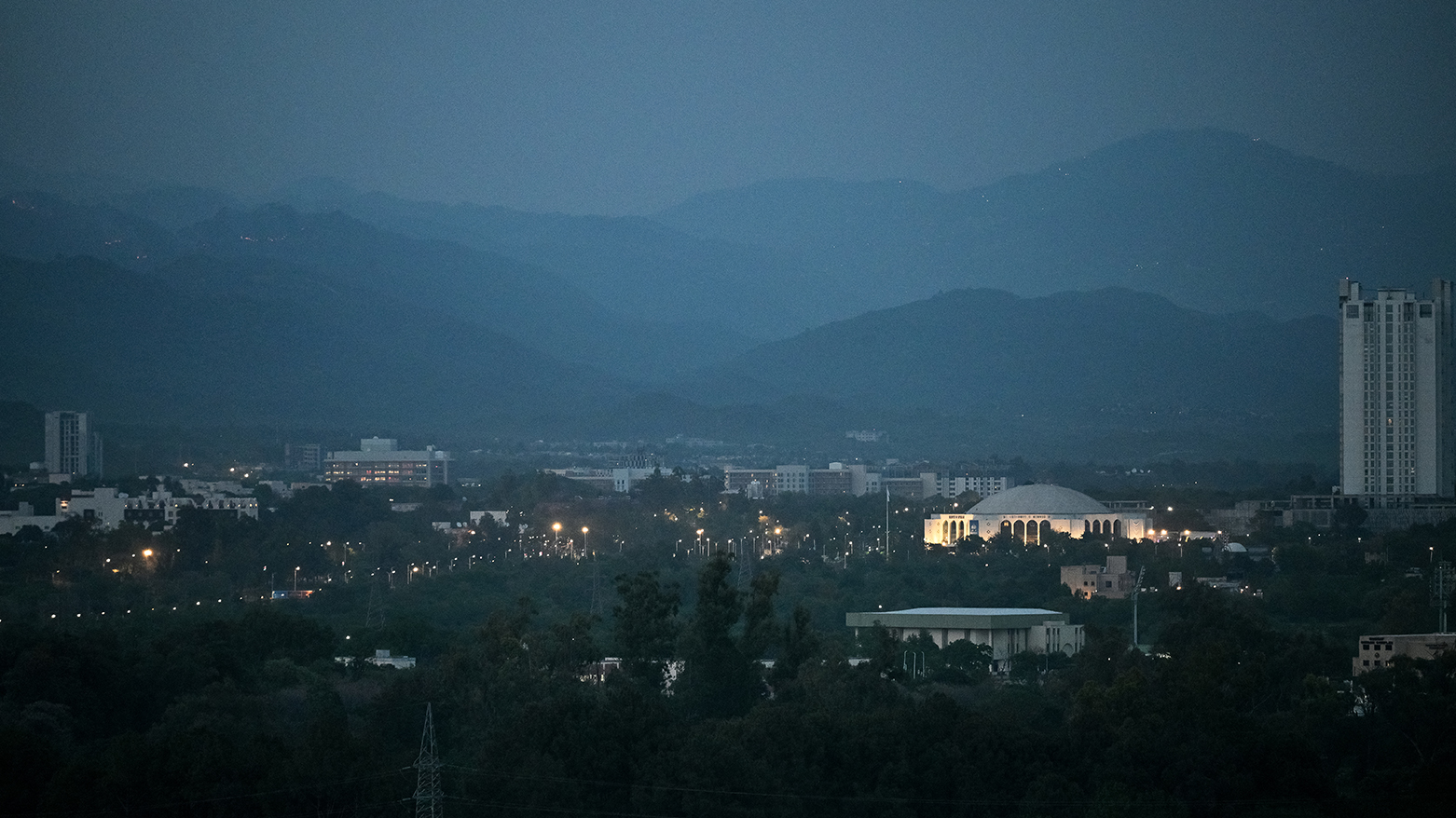
In Islamabad, where security personnel continue to stand guard at a checkpoint near the Serena Hotel—the facility that hosted the first round of the United States-Iran negotiations—the host government continues its diplomatic outreach in an attempt to salvage the planned proceedings.
Pakistani Information Minister Attaullah Tarar stated in a post on X that a formal response from the Iranian side regarding the confirmation of a delegation to attend the Islamabad peace talks is still awaited.
Tarar noted that his country has made sincere efforts to convince the Iranian leadership to participate in the second round of talks and affirmed that these efforts continue. The minister stated that Pakistan is remaining in constant touch with the Iranians while actively pursuing the path of diplomacy and dialogue.
The diplomatic standoff occurs against the backdrop of an expiring temporary cessation of hostilities between the involved nations.
Information Minister Tarar stated that the current ceasefire between Tehran and Washington ends at 4:50 a.m. Pakistan time on Wednesday, which correlates to 7:50 p.m. Eastern Time on Tuesday.
This timeline presents a discrepancy with statements made by the United States executive branch. President Trump stated yesterday that the ceasefire expires on Wednesday evening Washington time.
Addressing the critical nature of the impending deadline, Tarar noted that a decision from Iran to attend the talks before the end of the two weeks ceasefire is critical. In conjunction with these efforts, Pakistan’s Foreign Minister Mohammad Ishaq Dar has formally intervened, urging both the United States and Iran to consider extending the ceasefire.
According to a formal statement released from the ministry spokesperson’s office, Dar appealed to the respective governments to give dialogue and diplomacy a chance.