Erbil Advances 78-Kilometer Green Belt Project as Initial Phase Nears Completion
The Kurdistan Regional Government announced the imminent completion of the Green Belt’s first phase, planting 700,000 saplings across 4,200 dunams to reduce emissions and control urban expansion.
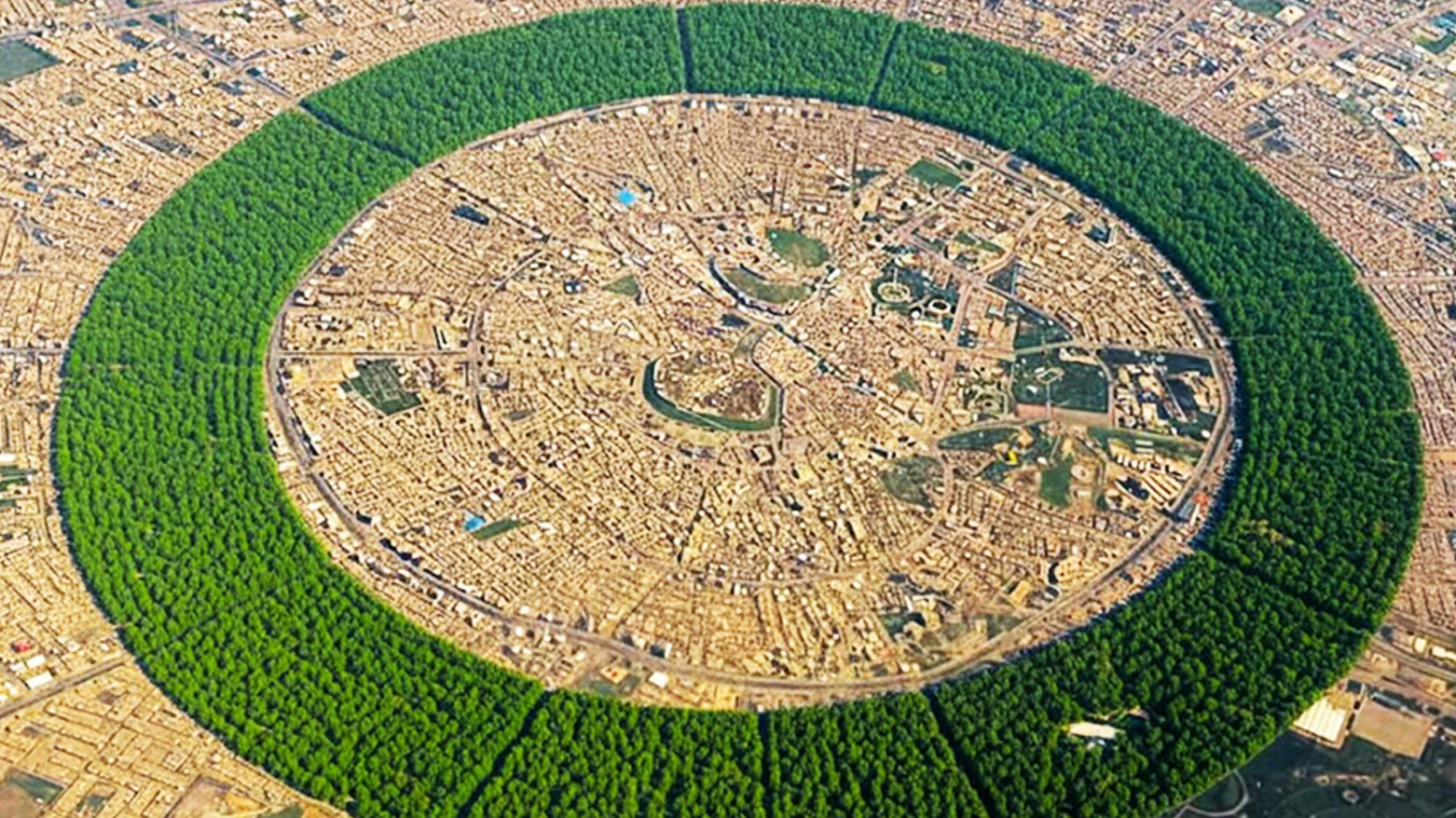
ERBIL (Kurdistan24) - Erbil Governor Omed Xoshnaw announced on Saturday that the initial phase of the Kurdistan Region’s strategic Green Belt project in capital city, Erbil, is nearing completion, with 700,000 saplings successfully planted across 4,200 dunams (approx. 1037 acres) of land.
Designed to encircle the regional capital with a 78-kilometer forested perimeter, the initiative forms the centerpiece of the Kurdistan Regional Government’s (KRG) long-term environmental strategy.
By planting millions of drought-resistant trees, the administration aims to establish a natural shield against desertification and dust storms while generating agricultural employment.
The project reflects a broader institutional effort by Erbil to independently fortify its climate resilience and public infrastructure, establishing a sustainable development model within federal Iraq.
Phased Agricultural Implementation
Governor Xoshnaw noted in a statement to Kurdistan24 that the nearing completion of this first phase marks a critical milestone in a massive developmental vision extending to 2050.
The complete master plan projects the planting of seven million trees across the capital's perimeter.
The agricultural selection prioritizes productive and climate-resistant species, specifically olive, pistachio, and orange trees, to combine ecological defense with long-term economic utility.
Once fully implemented, the municipal green belt will span 78 kilometers in length and maintain a depth of two kilometers.
Environmental assessments conducted by the regional government project that the fully realized infrastructure will eliminate up to 210,000 tons of harmful greenhouse gases annually, significantly improving air quality for the city's growing population.
The project aligns Erbil with historical global models of urban containment and environmental planning, mirroring initiatives such as London’s 1955 Green Belt, Beijing’s Great Green Wall, and Seoul’s urban environmental corridors.
For the Kurdistan Region, the project serves as a critical buffer against rising ambient temperatures and the increasing frequency of regional sandstorms.
Strategic Urban Planning and Infrastructure
The Green Belt operates as a regulatory boundary designed to curb random urban sprawl.
Originally drafted in 2010 but delayed by complex funding constraints, the initiative was revitalized under the direct directive of KRG Prime Minister Masrour Barzani, who officially inaugurated the development.
According to previous statements by Erbil Municipality Head Karzan Hadi, the comprehensive project will ultimately increase the capital’s total green space from its current baseline of 18 percent to 25 percent.
To sustain this vast expansion without depleting existing municipal water reserves, the initiative integrates advanced ecological management systems, including the construction of more than 10 large artificial ponds and the deployment of smart irrigation technologies.
Executing the project required navigating significant legal and administrative frameworks.
The designated lands, owned by the Ministry of Finance, previously contained residential encroachments and temporary investment contracts.
To secure the perimeter, the government formalized land ownership and provided statutory financial compensation to affected citizens, ensuring legal compliance and unobstructed development.
Economic and Real Estate Catalysts
The deployment of the Green Belt, operating in tandem with the KRG’s Emergency Water Project, has triggered a localized economic boom on the city's outskirts.
The extension of essential municipal services and the conversion of temporary property cards into official land deeds have rapidly escalated real estate values.
Local market data indicates that property prices in adjacent districts have surged.
In areas such as Baghamra, west of Erbil, land parcels that previously traded between $6,000 and $7,000 have increased to $16,000. Similarly, property values in the Krasor area have climbed from $12,500 to $23,000, reflecting broader market confidence in the formalized infrastructure.
The $480 million Emergency Water Project, completed in under 550 days, resolved a severe groundwater depletion crisis by supplying 240,000 cubic meters of water daily to 20 neighborhoods. Together, these capital projects aim to secure Erbil's environmental and resource requirements for the next three decades.
A Dual Climate Framework
Erbil’s visible afforestation efforts are reinforced by the Runaki Project, a parallel energy sector reform described by regional officials as an “invisible forest.”
Launched in 2024, the initiative focuses on decommissioning thousands of private diesel generators that have historically supplied backup power, aiming to provide 24-hour centralized electricity across the Kurdistan Region by the end of 2026.
As of mid-2025, the program had successfully phased out over 2,500 generators, benefiting more than 2.7 million residents across Erbil, Sulaimani, Duhok, and Halabja.
Upon reaching its target of eliminating 7,000 generators, the transition is projected to cut 600,000 tons of carbon dioxide emissions annually.
Combined, the dual forestry and energy strategies represent an exceptionally ambitious localized climate program within the Middle East.
While the federal government in Baghdad has frequently encountered structural and political hurdles in advancing nationwide climate initiatives, the Kurdistan Region continues to leverage its institutional stability to execute measurable reforms that enhance both ecological resilience and economic diversification.