Iran Signals Hormuz Control as “Definitive Strategy” Amid Rising Tensions with U.S.
IRGC warns of military response to naval blockade as Washington cancels planned diplomatic talks in Pakistan
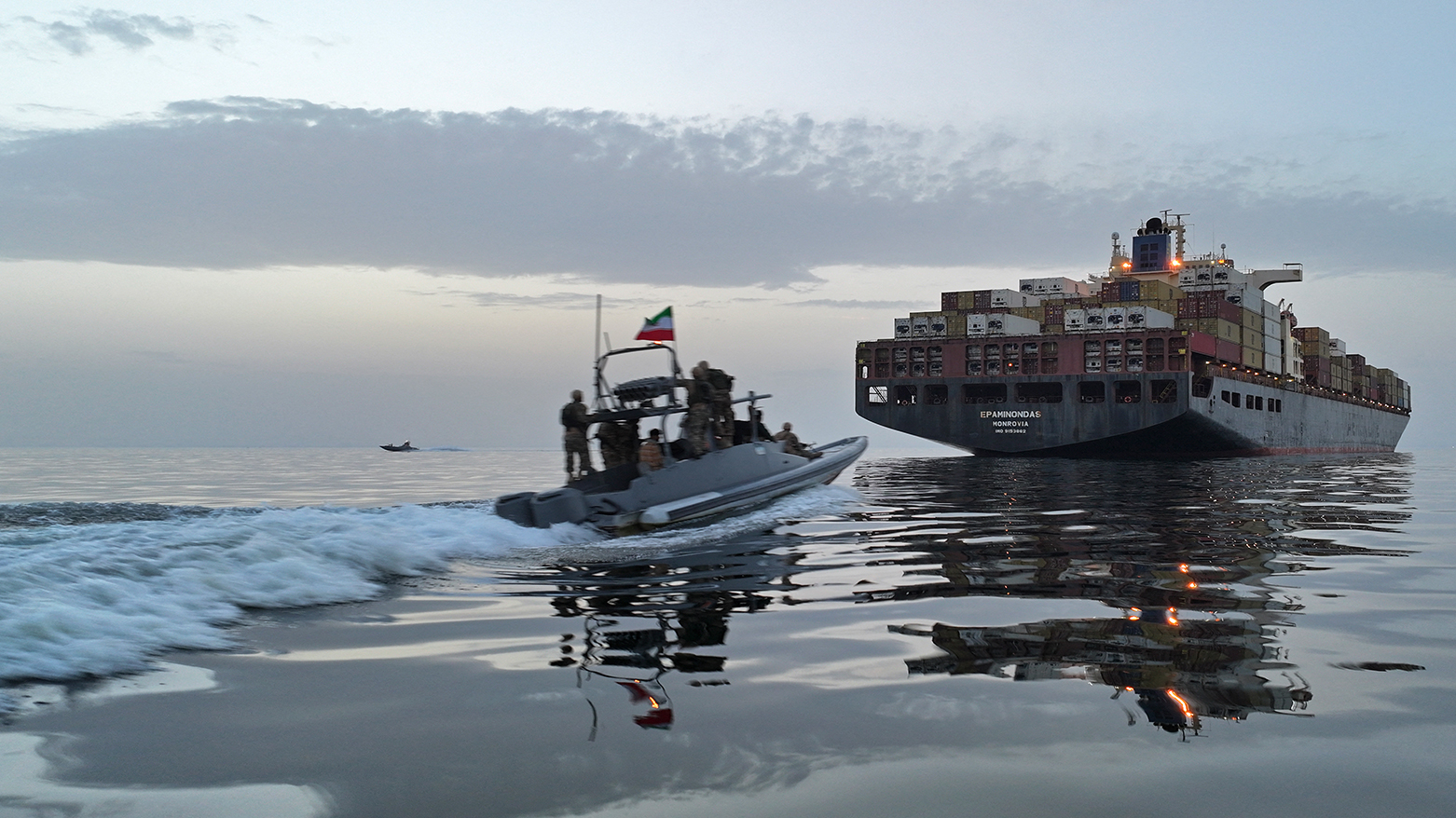
ERBIL (Kurdistan24) — Iran’s Islamic Revolutionary Guard Corps declared on Saturday that controlling the Strait of Hormuz remains a “definitive strategy” in its confrontation with the United States, underscoring escalating tensions over one of the world’s most critical oil transit routes.
In a statement published on its official Telegram channel, the Guards said Tehran aims to maintain the “deterrent shadow” of its control over the strategic waterway, warning Washington and its regional allies of the consequences of continued pressure.
The remarks came as Iran’s military issued a separate warning earlier in the day, vowing retaliation if the United States sustains its naval blockade of Iranian ports.
In a statement carried by state broadcaster Islamic Republic of Iran Broadcasting, the central command Khatam Al-Anbiya condemned U.S. actions as “banditry” and “piracy,” warning that continued operations would trigger a response from Iran’s armed forces.
“We are ready and determined, while monitoring the behavior and movements of enemies,” the statement said, signaling heightened military readiness.
Diplomatic efforts, meanwhile, appeared to falter. Iranian Foreign Minister Abbas Araghchi said it remained unclear whether the United States was genuinely committed to negotiations following his visit to Islamabad.
Writing on X after departing the Pakistani capital, Araghchi said he had outlined Iran’s proposal for a “workable framework” to end the conflict but had yet to see meaningful engagement from Washington.
Shortly after his departure, Donald Trump announced the cancellation of a planned U.S. delegation visit to Islamabad, where a second round of talks with Iranian officials had been expected.
The delegation was to include special envoy Steve Witkoff and senior adviser Jared Kushner.
Trump, speaking to Fox News and later posting on Truth Social, cited internal divisions within Iran’s leadership and dismissed the need for further travel. “We have all the cards; they have none,” he wrote, adding that Tehran could initiate talks if it wished.
As diplomatic channels narrowed, Iranian President Masoud Pezeshkian urged citizens to conserve electricity, warning of attempts by the United States and Israel to destabilize public confidence by targeting infrastructure and maintaining economic pressure.
“We do not need people to sacrifice for the time being, but we do need to control consumption,” Pezeshkian said in televised remarks, encouraging households to reduce energy use.
Despite ongoing tensions and the reported U.S.-Israeli strikes, no widespread power outages have been recorded in Tehran in recent days. However, Iran’s energy sector remains under strain due to aging infrastructure and chronic underinvestment.
According to the International Energy Agency, Iran generates nearly 80 percent of its electricity from natural gas, supplemented by heavy fuel oil at older facilities. Seasonal demand spikes have historically exposed vulnerabilities in the grid, leading to periodic outages.
As military rhetoric intensifies and diplomatic avenues stall, the situation around the Strait of Hormuz—through which a significant share of global oil supplies passes—remains a focal point of concern for international markets and regional stability.