Israel Strikes Iranian Defense and Missile Facilities in Major Escalation of Regional Conflict
The Israeli military said its fighter jets dismantled newly deployed Iranian strategic defense systems, aiming to preserve operational freedom as cross-border fire threatens to ignite a broader war.
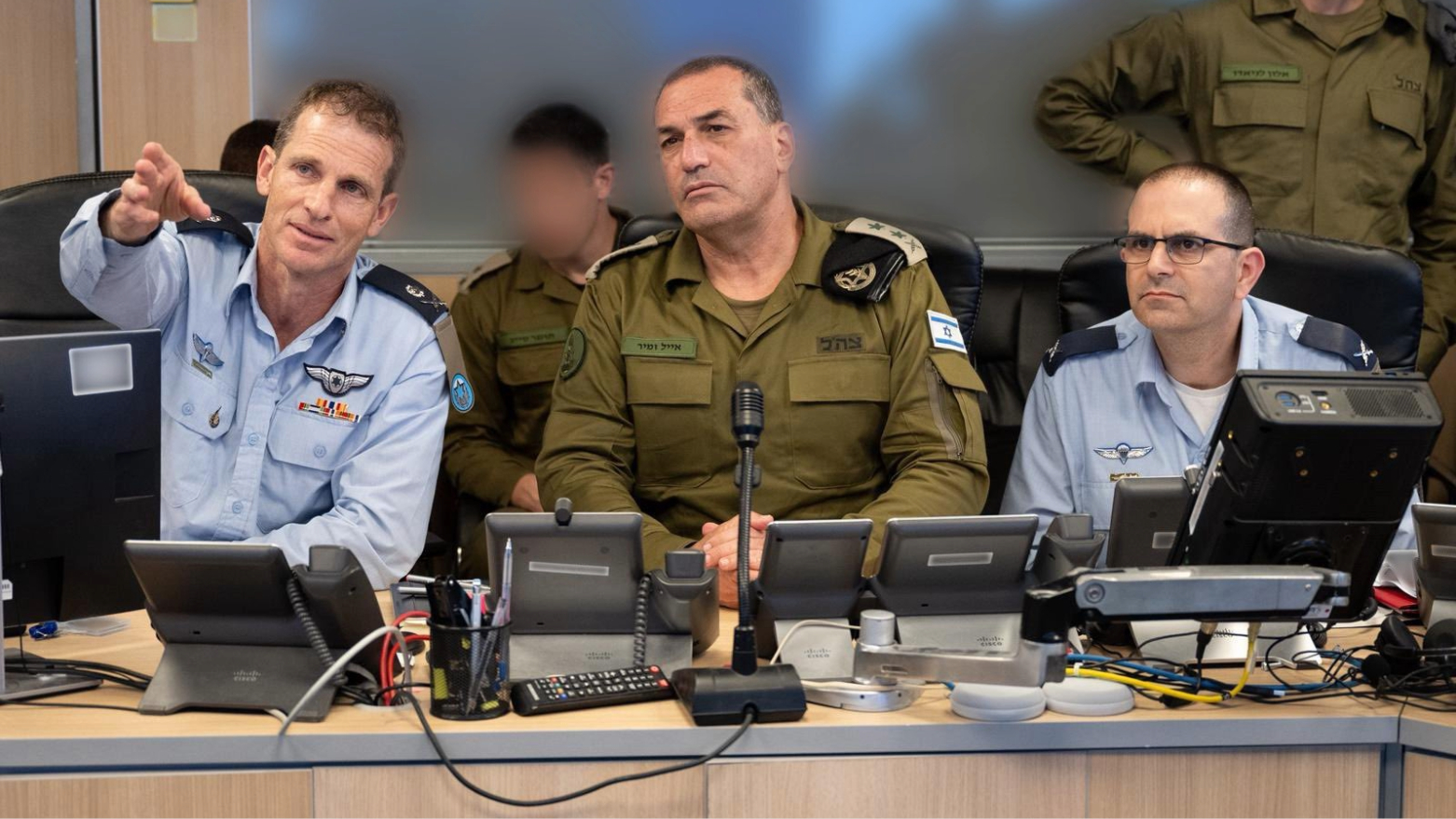
ERBIL (Kurdistan24) - The Israeli military announced on Monday that dozens of its fighter jets conducted a large-scale strike against strategic defense systems inside Iran, a major escalation in the rapidly expanding conflict between the two regional powers.
The Israeli Defense Forces (IDF) stated that the operation specifically targeted air-defense networks that Tehran had recently deployed to restore capabilities degraded during "Operation Roaring Lion", the intense, weeks-long conflict that erupted in late February.
In statements released on the social media platforms X and Telegram, the IDF claimed the operation successfully dismantled these systems.
"During Operation Roaring Lion, the IDF severely degraded the defense capabilities of the Iranian terror regime," the military stated. "These strikes further enhance the Israeli Air Force's freedom of action in Iranian airspace."
An Israeli military official also confirmed that the IDF struck a petrochemical complex in southwestern Iran, alleging the facility was used to produce ballistic missiles.
The targeted strikes underscore a fundamental doctrine of modern airpower: neutralizing an adversary's early-warning and surface-to-air missile networks is an essential prerequisite for sustaining a prolonged military campaign.
By systematically degrading Iran's defensive shield, Israel aims to ensure its fighter jets can operate with impunity during potential future missions.
The focus on the petrochemical complex also indicates a concerted Israeli effort to cripple Iran's domestic supply chain for the ballistic missiles currently being fired at Israeli territory.
A Widening Arena of Conflict
The Israeli operation follows a massive barrage of Iranian ballistic missiles fired toward Israel late Sunday and early Monday.
According to reporting by Emanuel Fabian of The Times of Israel, Iran has launched at least 20 ballistic missiles at Israel since Sunday night.
The IDF reported that the projectiles were either intercepted by advanced air-defense systems or landed in open, unpopulated areas.
The Iranian barrage was accompanied by a simultaneous attack from Yemen, where the Iran-backed Houthi rebel group fired two ballistic missiles at Israel on Monday morning.
The IDF stated that one missile was intercepted, while the second failed to reach Israeli territory.
Israel has so far carried out two waves of retaliatory strikes in Iran in response to these attacks.
Overnight, Israeli jets struck nine Iranian air defense systems in western and central Iran, followed by the morning strikes on the three factories at the petrochemical complex, according to The Times of Israel.
The IDF anticipates that the current cycle of retaliation will not end quickly.
The Times of Israel reported that the Israeli military is prepared for at least a few more days of fighting and acknowledges the potential for a full resumption of the war.
While the IDF believes the immediate combat will likely last for several days, it maintains it is fully prepared for a lengthy and protracted conflict.
U.S. Coordination and Regional Implications
While the IDF stressed that the strikes inside Iran were carried out exclusively by Israeli forces, the operation highlights the deep and ongoing integration of U.S. and Israeli military efforts in the Middle East.
According to The Times of Israel, the Israeli military confirmed there is "full coordination" with U.S. Central Command (CENTCOM).
American forces have actively participated in intercepting the missiles fired by Iran at Israel. Furthermore, IDF Chief of Staff Lt. Gen. Eyal Zamir has spoken with his American counterpart, CENTCOM commander Adm. Brad Cooper, three times since the escalation began.
This close coordination underscores the strategic reality of the conflict: while Israel is conducting the offensive strikes against Iranian territory, it relies heavily on the broader regional security architecture, heavily supported by the United States, to defend its own airspace against retaliatory Iranian and proxy missile fire.
Civilian and Economic Fallout
The escalating military confrontation is already producing significant civilian and economic repercussions, extending the impact of the war far beyond the immediate battlefield.
On Monday, the Hungarian low-cost carrier Wizz Air announced the temporary suspension of all flights to and from Tel Aviv's Ben Gurion Airport scheduled for Monday and Tuesday.
According to reporting by Sharon Wrobel of The Times of Israel, the airline's decision was made in direct response to the Iranian missile attacks.
"The safety and security of our passengers and crew remains the airline's highest priority," Wizz Air said in a statement. "Wizz Air continues to closely monitor the evolving situation in coordination with relevant authorities and will adjust operations accordingly."
The suspension occurred despite Israeli airspace remaining officially open and Ben Gurion International Airport operating as usual.
The airline's decision highlights the growing anxiety among international commercial entities regarding the safety of operating in a region increasingly defined by ballistic missile exchanges and contested airspace. The disruption to civil aviation threatens to further isolate the region economically and dampen international investor confidence.
The Calculus of Escalation
As the smoke clears from the latest Israeli strikes on Iranian defense infrastructure, the strategic calculus for both nations remains perilous.
For Israel, the degradation of Iranian air defenses and missile production facilities is framed as a necessary measure to protect its citizens and maintain operational superiority.
For Iran, the inability to defend its own airspace against Israeli incursions presents a significant strategic and domestic challenge, particularly following the heavy losses sustained during the recent war.
The coming days will test whether the systematic dismantling of Iranian defense systems deters further attacks from Tehran or provokes an even larger, desperate response.
With the IDF preparing for a prolonged conflict and U.S. forces deeply integrated into the region's defense, the risk of the current cross-border fire metastasizing into a broader, uncontainable Middle Eastern war remains acute.
|
Summary Dozens of Israeli fighter jets struck Iranian strategic defense systems and a petrochemical complex linked to ballistic missile production. The IDF says the strikes dismantled systems deployed to restore capabilities degraded during "Operation Roaring Lion," expanding Israel's freedom of action amid escalating regional hostilities. |