Global Oil Crisis Has Permanently Altered Fossil Fuel Industry, IEA Chief Says
The IEA chief said the global oil crisis, triggered by the Strait of Hormuz closure and the Iran war, has permanently reshaped the fossil fuel industry, accelerating the shift to renewables. The Strait of Hormuz closure has hit Iraq hard, which depends on oil for about 90% of its state budget.
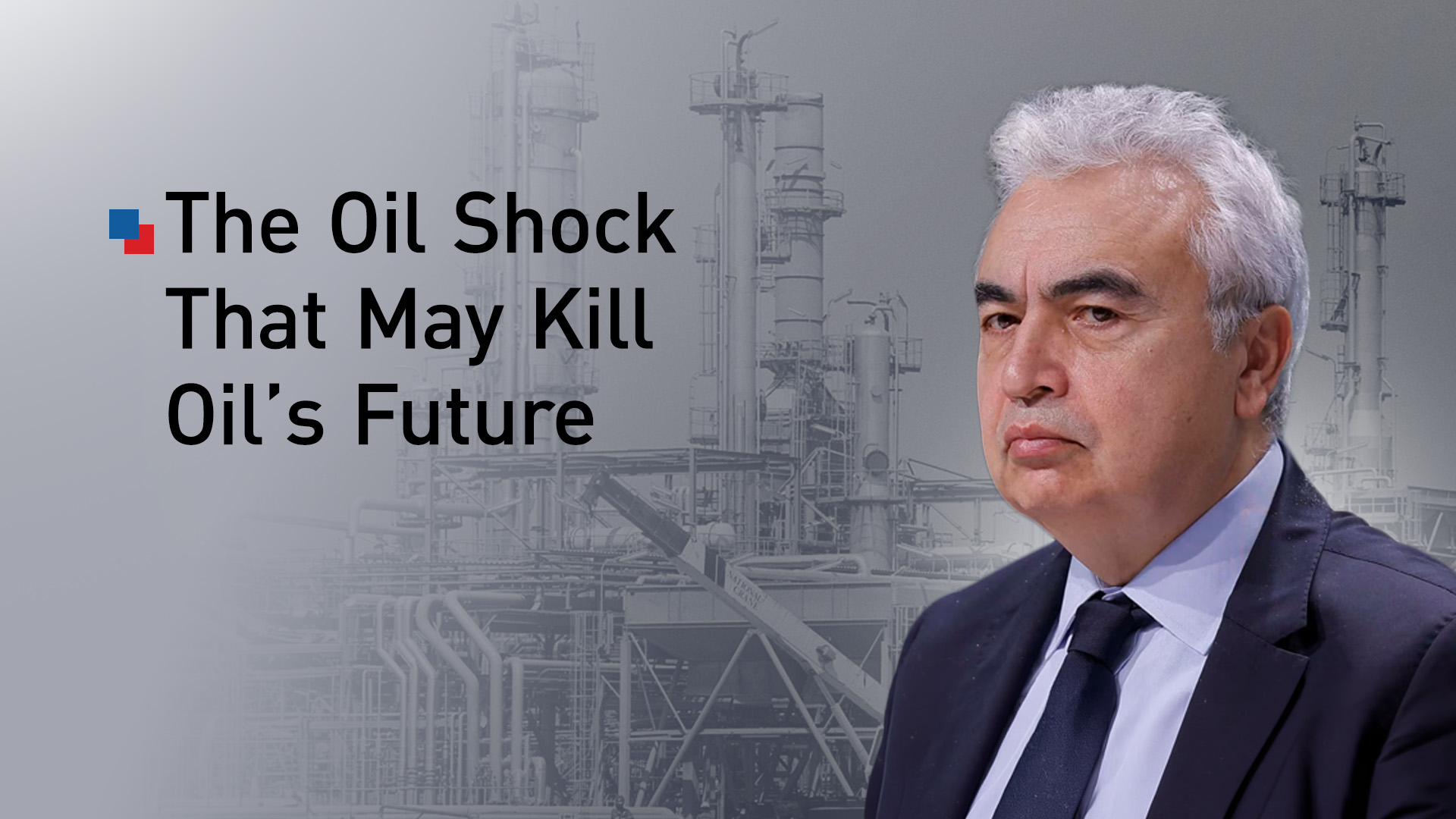
ERBIL (Kurdistan24) - The head of the International Energy Agency (IEA) has asserted that the global oil crisis triggered by the Iran war has permanently altered the fossil fuel industry, compelling nations to pivot toward alternative energy sources to secure their supplies, according to an exclusive report by The Guardian on Friday.
In an interview with the publication, Fatih Birol, the executive director of the IEA, stated that a key consequence of the U.S.-Israel war on Iran is a fundamental loss of trust in fossil fuels, which will lead to a reduction in demand.
"Their perception of risk and reliability will change. Governments will review their energy strategies," Birol said, as reported by The Guardian.
He noted that this shift would result in a significant boost to renewables and nuclear power, accelerating the transition toward a more electrified future and cutting into the main markets for oil.
"The vase is broken, the damage is done – it will be very difficult to put the pieces back together," Birol stated, framing the current disruption not as a temporary cyclical shock, but as a structural transformation with permanent consequences for global energy markets for years to come.
Supply Chain Disruptions and Escalating Transportation Costs
Birol's assessment of a structurally damaged global energy market aligns with immediate, severe disruptions across international shipping and supply chains. The de facto closure of the Strait of Hormuz, a vital maritime chokepoint, has paralyzed regional oil and gas exports.
The logistical crisis has inflicted heavy financial burdens on the international maritime transport sector.
Rolf Habben Jansen, CEO of Hapag-Lloyd, Germany's largest container shipping company, announced on Sunday that the conflict related to Iran is adding approximately $50 million (nearly €43 million) in extra costs to the company on a weekly basis.
Jansen attributed this massive financial impact primarily to the significant increase in global fuel prices.
According to Hapag-Lloyd, the company currently has six cargo ships stranded in Gulf waters, unable to transit the Strait of Hormuz. "Currently, there is no opportunity to pass, and we are waiting for an appropriate moment," the CEO stated.
The company previously reported that its container ship "Source Blessing" was struck by explosives and caught fire in March due to Iranian attacks, though the crew managed to control the blaze.
The IEA chief warned in his interview with The Guardian that the systemic impacts of the crisis, affecting industries ranging from fertilizer and food to software and helium, will persist even if the Strait of Hormuz is eventually reopened.
Birol described the current situation as "bigger than all the biggest crises combined," expressing disbelief that the global economy could be "held hostage to a 50km strait."
Iraq Faces Economic Recession Amid Historic Production Drop
The closure of the Strait of Hormuz has severely impacted Iraq, which relies on oil revenues to fund approximately 90 percent of its state budget.
According to statistics published on Sunday by the Eco Iraq Observatory for Economic Affairs, Iraq's oil production plummeted to its lowest level last month.
While the country produced 4.15 million barrels daily in January and 4.18 million in February, production dropped dramatically in March to just 1.62 million barrels per day.
The Observatory reported that the total oil production for the first quarter of 2026 reached approximately 302 million barrels.
The severe drop in exports has prompted urgent economic warnings. The Trade and Economic Research Center (TREC) indicated in its latest report that Iraq's economic activities are expected to experience a recession in 2026 due to the decline in oil production and exports.
The center warned that the crisis will generate a cascade of systemic issues, including pressure on public revenues, rising import and transportation costs, increased inflationary pressure, and more expensive commodities in local markets.
Due to the paralysis of the energy market and export logistical failures, Iraq reportedly lost nearly $5 billion in revenue last month alone.
In response to the vulnerability of sea exports through the Gulf, both TREC and the Eco Iraq Observatory emphasized the urgent need for Iraq to diversify its trade gateways.
The Observatory proposed activating the "New Levant Road" project as a strategic alternative to reduce geopolitical risks and guarantee the continuity of oil exports to global markets during regional conflicts.
Despite the severe drop in national oil production and the broader global crisis, local fuel prices within the Kurdistan Region have seen a slight decrease.
On Sunday, Bahman Sheikh Qadir, spokesperson for Sulaimani gas stations, announced that the price of all types of fuel within the borders of Sulaimani province has dropped.
Diesel decreased by 100 dinars to 1,000 dinars per liter, while kerosene and gasoil dropped by 50 dinars. All three grades of gasoline dropped by 25 dinars per liter.
Global Market Shifts and the Resurgence of Russian Oil
As Middle Eastern crude supplies remain blocked by the conflict, major global consumers are fundamentally restructuring their import strategies, leading to a resurgence in the Russian oil market.
India, the world's third-largest oil buyer, which typically sources half of its crude oil through the Strait of Hormuz, has significantly increased its purchases of Russian oil to compensate for the severe regional shortage.
Ship tracking and import data reveal that New Delhi's oil imports from Russia reached 1.98 million barrels per day in March, nearly double the volume imported in December and February.
Nikhil Doubai, an analyst at Kpler, noted that this surge appears linked to temporary U.S. facilitation regarding Russian oil already at sea.
Alongside Russia, India has turned to African and South American markets, tripling its imports from Angola to 327,000 barrels per day in March, and reviving trade relations to import 276,000 barrels per day from Iran and 137,000 barrels from Venezuela.
However, Rokod Jodari, vice president of Rystad Energy, pointed out that the era of cheap oil for India has ended, with barrels now trading at $5 to $15 above the global Brent benchmark price.
Debate Over North Sea Expansion
Against the backdrop of the global shortage, the IEA chief explicitly urged caution regarding the expansion of domestic fossil fuel production in the UK.
According to The Guardian, the oil industry has heavily lobbied the UK government to increase North Sea drilling and grant production permits for the Jackdaw and Rosebank fields.
However, Birol argued that these fields "would not change much for the UK's energy security, nor would they change the price of oil and gas."
He cautioned against granting further exploration licenses on commercial grounds, stating that they would not provide significant quantities of oil and gas for years and would fail to lower domestic energy bills.
"I am not even talking about the climate change effects – just from a business point of view, making a major investment in exploration might not make business sense," Birol told The Guardian.
The IEA chief concluded that the vastly changed future outlook presents expanded opportunities for renewable energy, which he described as a "no-regrets alternative." He noted that while continuing high fossil-fuel prices could tempt developing nations to revert to coal, solar power remains competitive on cost and is growing at a faster rate.