Duhok Wheat Production Expected to Exceed 500K Tons Amid Improved Quality
Duhok’s wheat output is projected to surpass 500K tons, but disputes with Baghdad and declining prices are fueling concerns among farmers
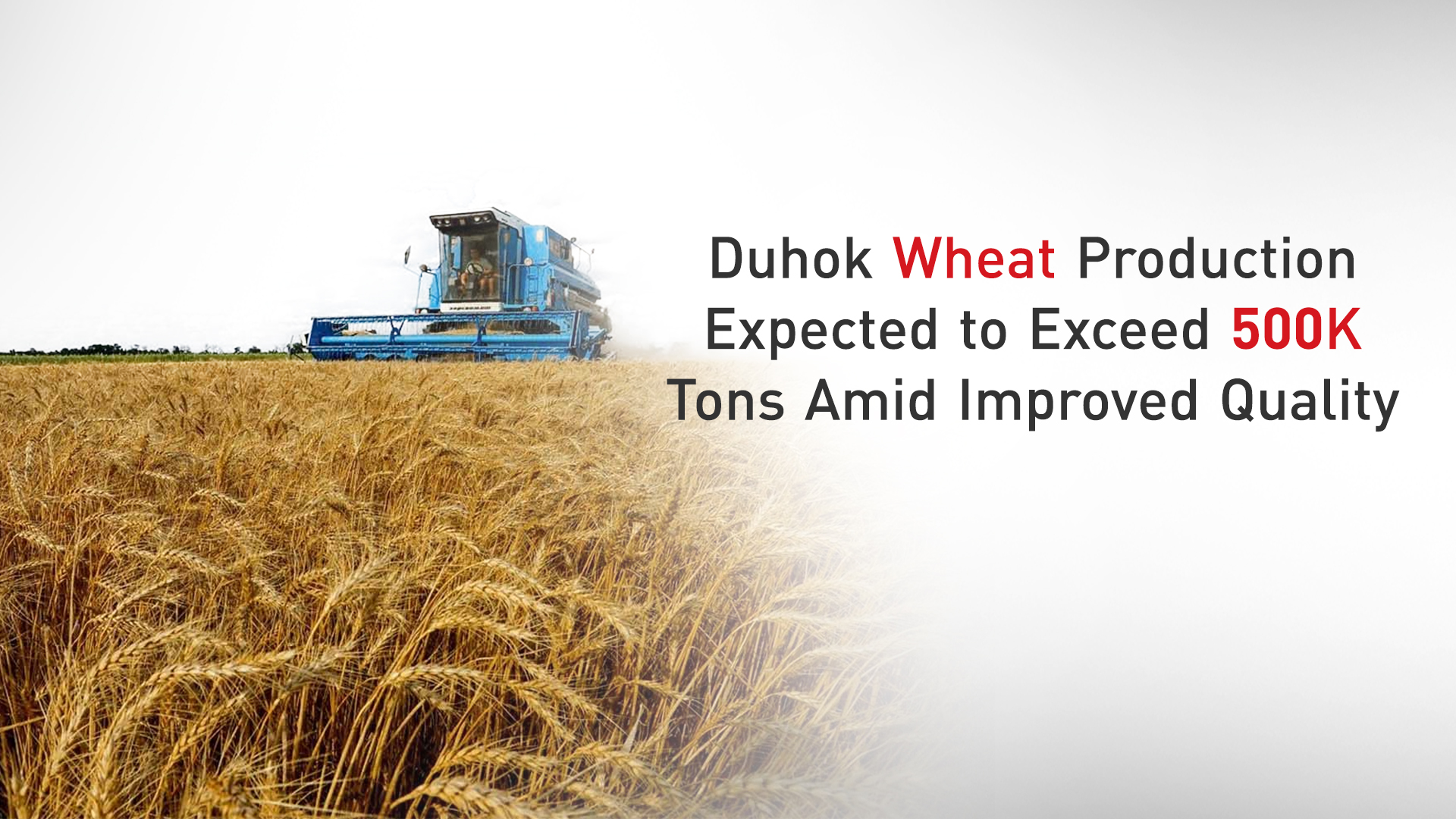
ERBIL (Kurdistan 24) - Wheat production in Duhok province is expected to exceed 500K tons this year, with officials reporting a significant quality improvement compared to last year.
On Monday, Ahmed Jamil, Director General of Agriculture in Duhok, told Kurdistan 24 that this year’s crop has benefited from better rainfall, particularly in rain-fed areas, marking a sharp contrast with last year’s drought-affected season.
He noted that regions such as Bardarash, Shekhan, and Semel had suffered from weak production in 2025 due to limited rainfall, while this year’s conditions have led to a much stronger and higher-quality yield.
Authorities confirmed that three major silos, Rovia, Shekhan, and Faidiya, have been prepared to receive farmers’ wheat. Officials expect the collection process to begin in early June, pending final approval from Iraq’s Ministry of Trade.
The Kurdistan Regional Government (KRG) recently rejected Baghdad’s decision to purchase only 292K tons of wheat from the region, calling the figure unscientific and illogical given the significantly higher production levels.
Officials emphasized that negotiations with the federal government are ongoing, with additional meetings expected to resolve the dispute.To protect farmers from potential losses, the Kurdistan Regional Government’s Ministry of Agriculture has signed agreements with major local firms, including Qaiwan Group and Khoshnaw Group, to purchase up to 500,000 tons of surplus wheat if Baghdad declines to accept the full harvest. The agreements, originally signed in May 2024, are being reactivated for the 2026 season as production rises and disputes over federal procurement persist. Under the arrangement, the private sector is expected to absorb roughly 200,000 tons from Erbil and 150,000 tons each from Duhok and Sulaimani, stepping in after the Iraqi government’s limited quota of around 290,000 tons is met. The mechanism is designed to stabilize prices and ensure farmers have a guaranteed buyer amid estimated production exceeding 1.5 million tons this year.
Officials reassured farmers that their crops will not go unsold, regardless of the outcome of talks with the federal government.
According to KRG estimates, total wheat production across the Kurdistan Region for the 2025–2026 season is expected to exceed 1.5 million tons, reflecting a major recovery from last year’s drought.
In 2025, which was classified as a dry agricultural season, only 400K tons were purchased from farmers in the region.
Despite higher production this season, farmers are facing lower prices, with the Federal Government of Iraq setting the official procurement rate at 700,000 Iraqi dinars per ton, down from 850,000 dinars per ton last year. The reduction, determined through Iraq’s federal wheat purchasing system, has raised concerns among farmers in the Kurdistan Region, who warn that declining prices could significantly reduce profits and increase financial pressure, particularly amid rising production costs and ongoing uncertainty over how much of their harvest Baghdad will accept.
While improved weather conditions have boosted both the quantity and quality of wheat production in Duhok and across the Kurdistan Region, ongoing disputes with Baghdad over quotas and lower pricing continue to pose challenges for farmers.