Iraqi PM-Designate, U.S. War Secretary Discuss Security Ties in First Official Call
Baghdad and Washington signal intent to revive military cooperation under strategic framework agreement
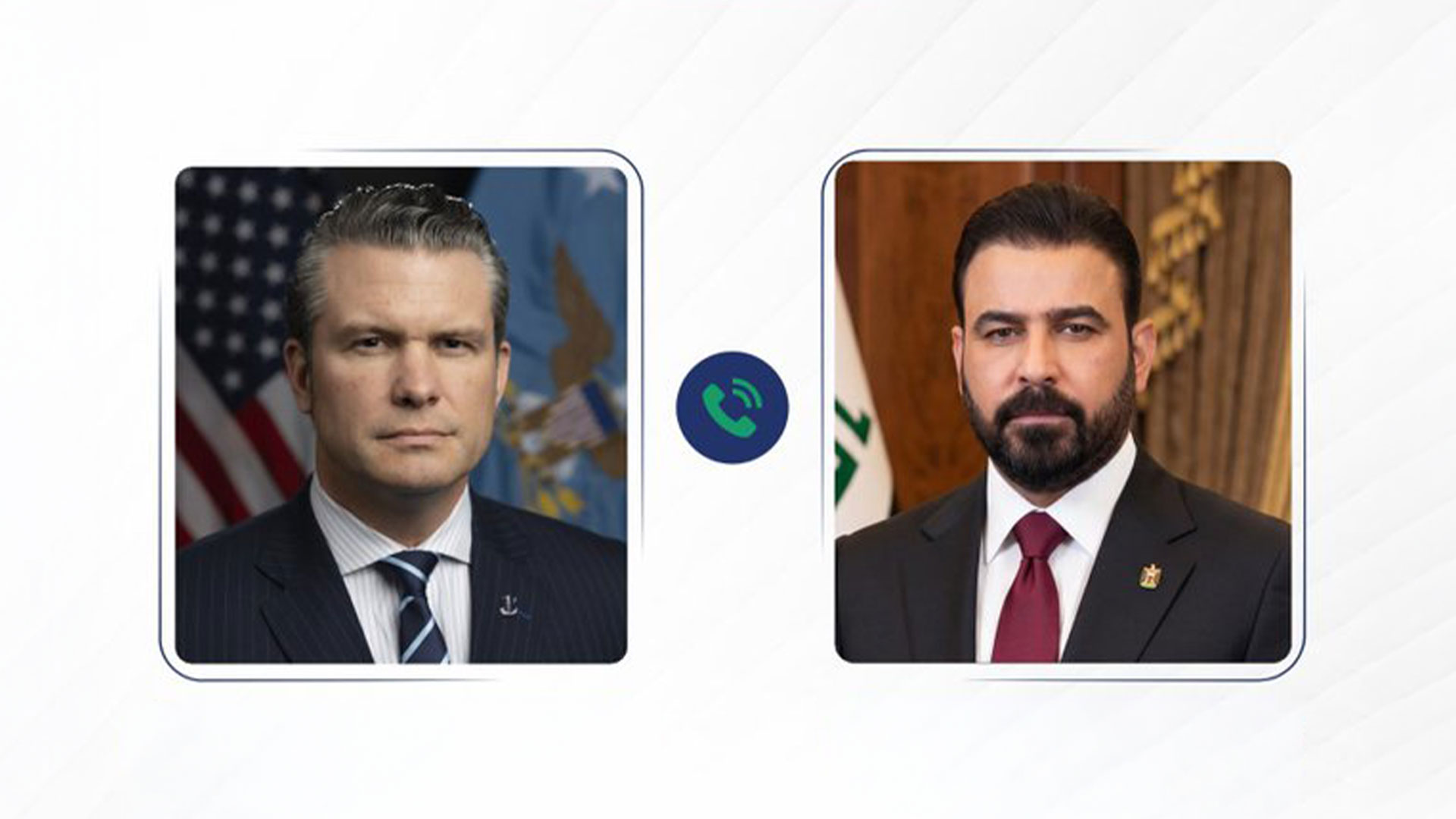
ERBIL (Kurdistan24) — Iraq’s Prime Minister-designate Ali Falih al-Zaidi held a phone call with U.S. Secretary of War Pete Hegseth, during which both sides reaffirmed the importance of bilateral relations, particularly in the field of security cooperation, according to a statement published on X.
Al-Zaidi said he received a congratulatory call from Hegseth following his designation to form a new Iraqi government, describing the conversation as focused on strengthening ties across multiple sectors, with emphasis on security coordination under the longstanding U.S.-Iraq strategic framework.
The statement underscored what both sides described as the “special nature” of relations between Iraq and the United States, highlighting the need to reactivate joint training programs aimed at enhancing the capabilities and operational efficiency of the Iraqi armed forces.
The call comes at a critical juncture for Iraq, as the country navigates a complex political transition alongside escalating regional tensions linked to the ongoing conflict involving Iran and U.S.-aligned forces.
Al-Zaidi, a political newcomer and businessman nominated in late April, has been tasked with forming a government within a constitutionally mandated timeframe following months of political deadlock after the 2025 parliamentary elections.
His appointment was widely seen as a compromise candidate backed by Iraq’s powerful Coordination Framework alliance, amid both domestic divisions and external pressures.
Washington has moved quickly to signal support for al-Zaidi’s leadership, with U.S. President Donald Trump previously expressing strong backing and emphasizing the importance of maintaining close ties with Baghdad.
Security cooperation remains the cornerstone of U.S.-Iraq relations, particularly since the 2008 Strategic Framework Agreement, which outlines collaboration in defense, economic, and political fields.
The agreement has served as the basis for continued U.S. military presence in Iraq, primarily focused on training, advising, and supporting Iraqi forces in counterterrorism operations.
In recent years, however, this cooperation has faced mounting challenges. Tensions have intensified due to repeated attacks by Iran-backed militias on U.S. interests in Iraq, as well as retaliatory American strikes targeting those groups.
These dynamics have placed Baghdad in a delicate position, balancing its partnership with Washington against internal political factions aligned with Tehran.
The renewed emphasis on training and capacity-building in al-Zaidi’s statement suggests an effort to recalibrate the relationship toward institutional military development, rather than direct combat engagement.
The exchange between al-Zaidi and Hegseth signals early alignment between the incoming Iraqi leadership and Washington on key security priorities, even as broader regional uncertainties persist.
As al-Zaidi works to form his cabinet, the direction of Iraq’s foreign policy — particularly its approach to the United States and neighboring Iran — will be closely watched.
The revival of structured military cooperation could play a central role in shaping both Iraq’s internal stability and its position within an increasingly volatile regional landscape.