Trump Says Iraq's Leadership Transition Is 'Very Good'
U.S. President Donald Trump backs Iraq's Prime Minister-designate Ali al-Zaidi while Washington pressures Baghdad to curb Iran-backed armed factions.
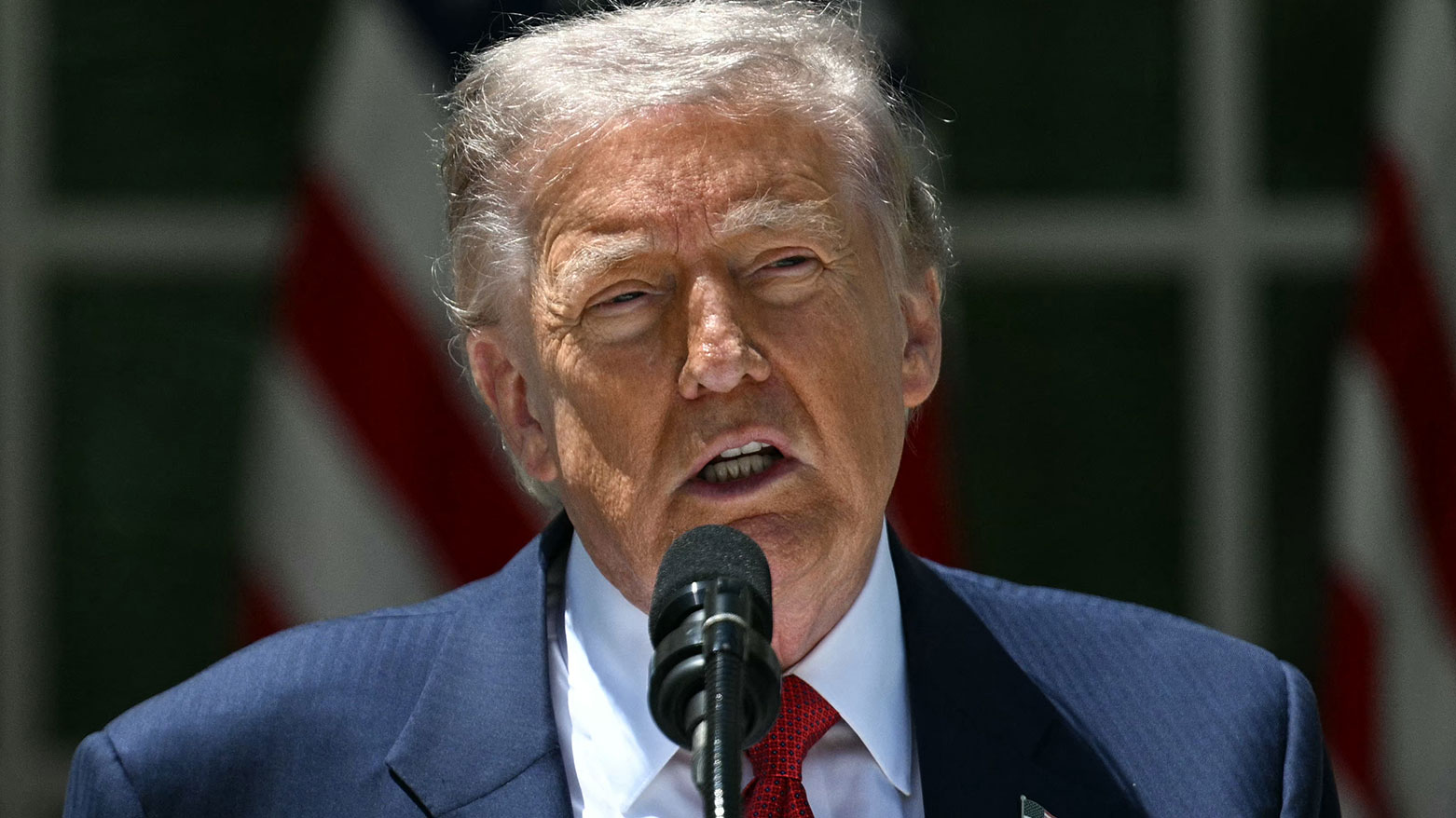
ERBIL (Kurdistan24) - United States President Donald Trump has expressed satisfaction regarding the recent political transition in Baghdad, specifically signaling his support for Iraq's Prime Minister-designate, Ali al-Zaidi.
In a significant diplomatic gesture toward the incoming administration, Trump told a Kurdistan24 reporter on Saturday that recent developments within the Iraqi political landscape have been viewed positively by Washington.
The remarks, delivered in front of the White House, represent the first direct confirmation from the U.S. executive branch regarding its stance on al-Zaidi's nomination.
According to the report, the president characterized the recent turnover in leadership as a favorable outcome for bilateral interests.
These comments are politically significant as they mark a definitive shift from Washington's previous opposition to alternative candidates and underscore the importance of Iraq's government formation process to U.S. regional strategy.
The stance of the United States toward Iraq's incoming cabinet remains a critical factor for regional stability, particularly as Washington maintains a rigorous "maximum pressure" campaign against Iranian influence in the Middle East.
While the president signaled personal approval of the Prime Minister-designate, senior U.S. officials have concurrently issued stern warnings regarding the inclusion of armed factions in the future government.
This diplomatic balance is further complicated by ongoing sanctions-related disputes, as Baghdad continues to deny American allegations involving senior oil officials and the facilitation of illicit energy networks.
Trump Signals Support Amid Leadership Shift
The endorsement from the U.S. president follows a period of intense political maneuvering in Baghdad.
Ali al-Zaidi was officially tasked by Iraqi President Nizar Amedi on April 27, 2026, to form a new federal cabinet.
This nomination emerged after constituent parties within the Coordination Framework reached a consensus on his candidacy, presenting him as a viable alternative to veteran political figures.
According to the report, Trump had previously voiced formal opposition to the potential return of Nouri al-Maliki to the premiership, demanding a different choice to lead the country.
The subsequent appointment of al-Zaidi appears to have met Washington's requirements for a transition away from figures with close ideological ties to Tehran.
The U.S. institutional support for al-Zaidi has been reinforced through multiple channels.
Last Wednesday, U.S. Secretary of WarPete Hegseth held a telephone conversation with the Prime Minister-designate to congratulate him on his new role.
Furthermore, the U.S. Embassy in Baghdad issued an official statement affirming its support for the assignment.
Trump told Kurdistan24 that the recent changes are "very good," suggesting that the Prime Minister-designate currently holds a degree of diplomatic goodwill in Washington as he attempts to assemble a functional government.
Washington Warns Against Armed Factions
Despite the president's optimistic tone regarding al-Zaidi, the broader U.S. policy toward Iraq is characterized by a demand for clear institutional separation between the state and paramilitary groups.
According to a senior U.S. State Department official cited by NBC News, Washington is demanding that the future Iraqi government exclude any role for armed groups operating outside of formal state authority.
U.S. officials warned that the division between legitimate state institutions and "outlawed armed groups" has become dangerously indistinct.
The State Department has specifically urged al-Zaidi to sever connections with these factions as a prerequisite for effective governance.
According to the report, Washington is seeking a "clear and public statement" from the incoming cabinet declaring that armed groups will not have a presence in the government in any capacity.
These demands are rooted in a volatile security environment.
According to U.S. officials, American interests and personnel in Iraq were targeted in more than 600 separate attacks between February 2026 and the implementation of a ceasefire on April 8.
U.S. officials said that many of these groups, while formally integrated into parts of the security framework, continue to operate independently of the Prime Minister's direct command.
Washington has repeatedly signaled that Iraq's economic stability and international relations could suffer if the influence of these Iran-backed factions is not effectively constrained.
Sanctions Dispute Adds Pressure
The bilateral relationship is also under strain due to the localization of the U.S.–Iran economic conflict.
The article noted that the U.S. Treasury Department recently expanded its "Operation Economic Fury" sanctions architecture, which targets what Washington describes as an interconnected network of oil smuggling and militia financing.
This campaign recently resulted in the designation of Iraq's Deputy Minister of Oil, Ali Maarij al-Bahadly.
The U.S. Treasury statement alleged that al-Bahadly used his official position to facilitate the diversion of Iraqi petroleum products for the benefit of Iran and allied militias.
U.S. officials claimed he helped provide forged documentation to disguise the provenance of oil, allowing Iranian products to be marketed as purely Iraqi.
Baghdad has moved aggressively to reject these claims.
The Iraqi oil ministry issued a formal denial, characterizing the U.S. accusations as unfounded.
According to a statement carried by the state news agency, the ministry emphasized the need for transparency based on evidence and noted that the procedures related to export operations and tanker loading were not part of the deputy minister's official duties.
The report noted that this friction reflects a complex balancing act for Baghdad.
While Iraq denies state complicity in sanctions evasion, the U.S. Department of the Treasury continues to target Iraqi oil and transport companies it believes are controlled by militia figures.
Treasury Secretary Scott Bessent accused the Iranian regime of "pillaging resources that rightfully belong to the Iraqi people," vowing that the U.S. would not remain idle as Iraqi resources are exploited to fund regional militancy.
Iraq's Government Formation Under Scrutiny
The incoming al-Zaidi administration faces a daunting domestic environment characterized by fiscal uncertainty and deep political fragmentation.
According to recent economic data obtained by Kurdistan24, Iraq's domestic debt has surpassed 96 trillion Iraqi dinars.
This financial burden raises serious questions about the state's ability to manage its obligations while navigating the current period of political transition.
The task of forming a cabinet requires al-Zaidi to balance the demands of powerful domestic blocs within the Coordination Framework against the strict conditions set by the United States.
According to the background material, various armed factions and political groups continue to seek influence over ministerial portfolios and security appointments.
U.S. officials have made it clear that their continued support for Iraq's sovereignty and economy is linked to the government's ability to limit the influence of these groups.
As al-Zaidi works to meet his constitutional deadlines, the pressure from Washington regarding militia integration and sanctions enforcement serves as a primary constraint on his administrative choices.
Regional and Diplomatic Context
The strategic importance of Iraq is magnified by the broader rivalry between the United States and Iran.
As described in official Iranian discourse, Tehran views the current U.S. economic pressure as an "imposed war," responding with a narrative of "economic jihad" and revolutionary resilience.
This ideological confrontation places Iraq on the front line of a hybrid conflict that encompasses finance, maritime security, and proxy warfare.
Washington’s strategy, as highlighted by analysts, is to prevent the further institutional integration of Iran-aligned groups into the Iraqi state apparatus.
The U.S. maintains significant military deployments and diplomatic pressure throughout the region, including operations focused on the Strait of Hormuz and the containment of further escalation with Tehran.
The report noted that for the Prime Minister-designate, the president's expression of happiness provides a momentary diplomatic opening.
However, the accompanying warnings from the State Department and the ongoing "Economic Fury" campaign suggest that U.S. support remains conditional on Baghdad's willingness to distance itself from Tehran's regional objectives and enforce a stricter boundary between state institutions and armed non-state actors.