Lebanon Says Israeli Forces Control 68 Villages in South
Lebanese Prime Minister Nawaf Salam said Israeli forces now control 68 villages in southern Lebanon, describing parts of Bint Jbeil as resembling Gaza, as clashes with Hezbollah intensify despite a fragile ceasefire and ongoing withdrawal negotiations.
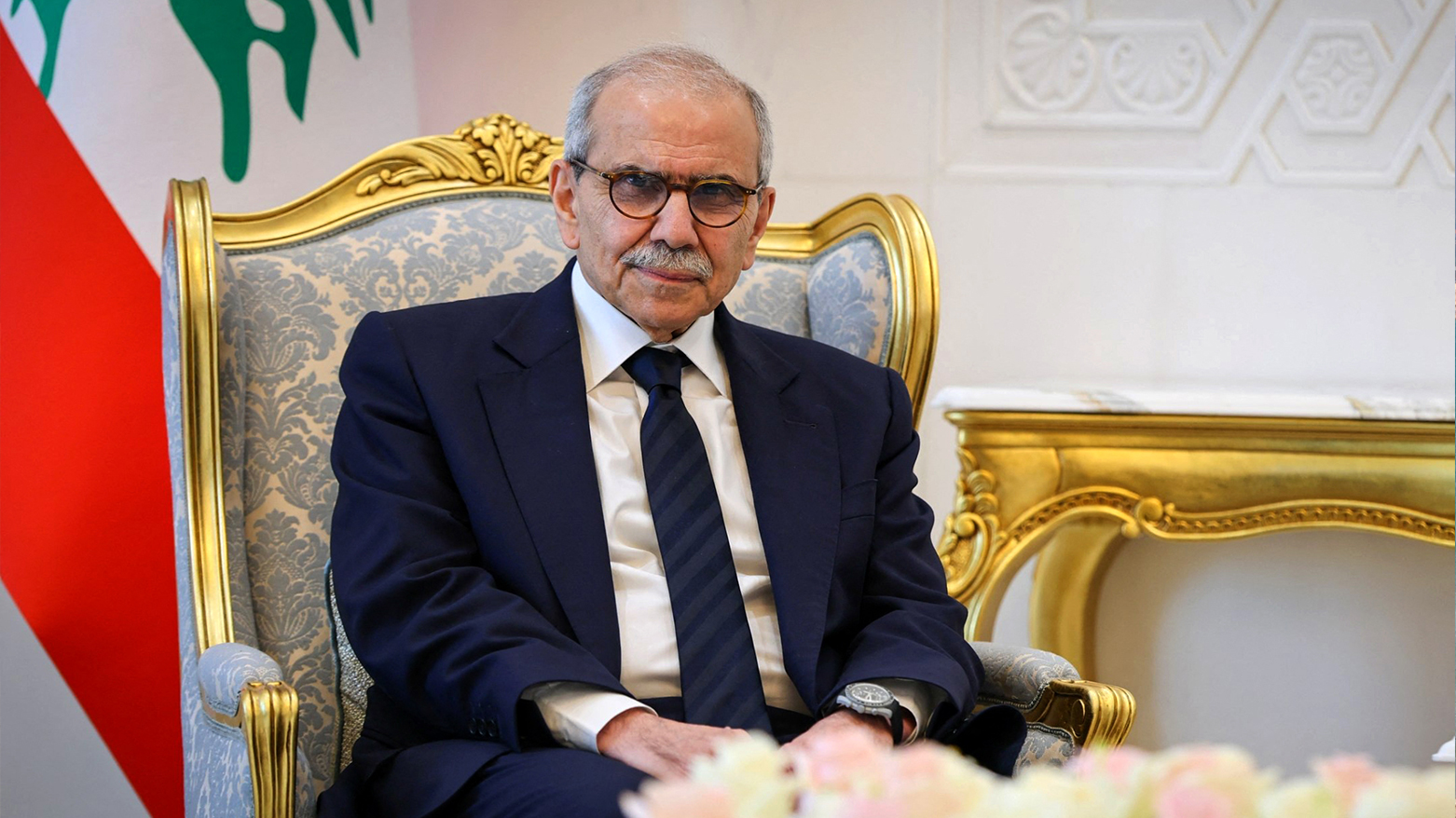
ERBIL (Kurdistan24) - Lebanese Prime Minister Nawaf Salam announced that Israeli military forces have established control over 68 villages in southern Lebanon, characterizing the humanitarian and physical condition of certain areas as comparable to the destruction observed in the Gaza Strip.
The statement, delivered during a press briefing, highlights a significant shift in the territorial dynamics of the conflict, suggesting that Israeli operations have achieved substantial depth within Lebanese territory despite an active, though frequently violated, ceasefire framework.
According to the report, Salam emphasized that the city of Bint Jbeil has been particularly devastated, describing it as having become "a piece of Gaza."
The Prime Minister's remarks arrive at a critical juncture in the regional security environment, where the technical cessation of hostilities has failed to halt kinetic engagements.
Salam clarified that Lebanon has utilized ongoing negotiations to demand a definitive timeline for an Israeli military withdrawal, asserting that Beirut's current priority is the cessation of acts of aggression and a formal conclusion to the war.
The escalation along the Lebanon-Israel frontier has been marked by intensified combat operations and strategic maneuvers.
Reporting from Agence France-Presse (AFP) indicates that Hezbollah has responded to continued Israeli strikes by targeting military personnel and installations in northern Israel using unmanned aerial vehicles (UAVs) and rocket salvos.
Simultaneously, L'Orient Today reported that the Israeli military has attempted to advance beyond the de facto "buffer zone" it previously established in southern Lebanon, prompting fierce resistance and raising concerns among international observers about a broader regional destabilization.
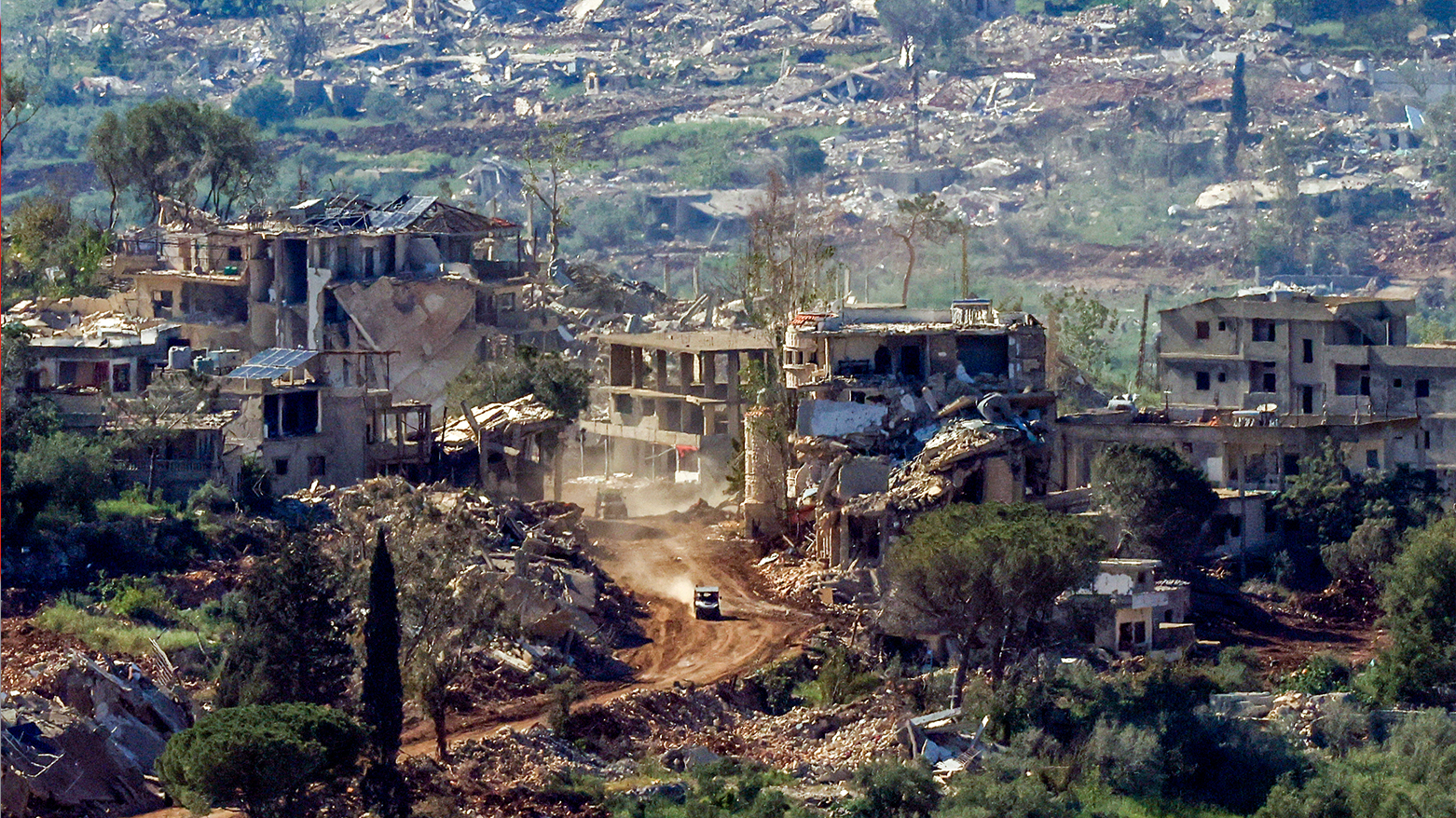
Israel has repeatedly bombed Lebanon, particularly the south, since a truce came in force since April 17, with Hezbollah retaliating by launching attacks on Israeli troops. Israeli strikes on Lebanon have killed more than 2,700 people and displaced more than a million, particularly from southern and eastern Lebanon and Beirut's southern suburbs, since March 2. (AFP)
Nawaf Salam's Statement and Diplomatic Stance
In his address to the media, Prime Minister Nawaf Salam provided a candid assessment of the geopolitical pressures facing the Lebanese state.
Salam stated that Lebanon did not choose to enter the conflict but was instead "dragged into the confrontation between Iran and America."
This characterization suggests a view of Lebanon as a secondary theater for a wider strategic contest, noting that a majority of the Lebanese populace currently favors a negotiated settlement to terminate the hostilities.
Salam reiterated Lebanon's openness to a formal peace agreement with Israel, provided that specific Lebanese demands, primarily centered on a full military withdrawal and the cessation of strikes, are satisfied.
According to the report, the Prime Minister's announcement regarding the 68 occupied villages serves as a baseline for current Lebanese diplomatic efforts to restore national sovereignty over the southern border regions.
Despite the Prime Minister's focus on diplomacy, the report noted that Israeli airstrikes have continued to impact various sectors of southern Lebanon.
These ongoing operations have created a cycle of retaliation, where Hezbollah continues to engage Israeli defense positions with sophisticated weaponry, further complicating the prospects for a durable truce.
Military Escalation Along the Southern Border
The tactical environment in southern Lebanon has deteriorated as Israeli forces seek to expand their operational footprint.
L'Orient Today reported that Israeli troops conducted a nighttime infiltration attempt into the area of Bouyout al-Sayyad, located near the city of Tyre (Sour).
This maneuver originated from the occupied village of Bayyada, a location that serves as the current limit of Israel's self-declared buffer zone.
According to the report, this zone represents a de facto occupation of more than 600 square kilometers of Lebanese territory.
The infiltration attempt resulted in direct clashes.
L'Orient Today noted that Hezbollah fighters engaged the advancing Israeli units with rocket salvos and automatic gunfire, eventually repelling the attempt.
In retaliation, Israeli forces reportedly directed bursts of gunfire at the neighboring village of Mansouri.
These skirmishes illustrate the fragility of the current lines of control and the persistent efforts by the Israeli military to secure high-ground positions beyond their existing perimeters.
Operational shifts have also been signaled through formal military directives.
According to L'Orient Today, the Israeli army's Arabic-language spokesperson, Avichay Adraee, issued forced evacuation orders for residents of seven additional villages in the south.
These villages, including Nmeirieh, Tayr Filsey, Halloussiyeh, and Abbasieh, are notable because they are situated outside the established buffer zone.
The issuance of these orders is often viewed by military analysts as a precursor to expanded ground operations or intensified aerial bombardment.
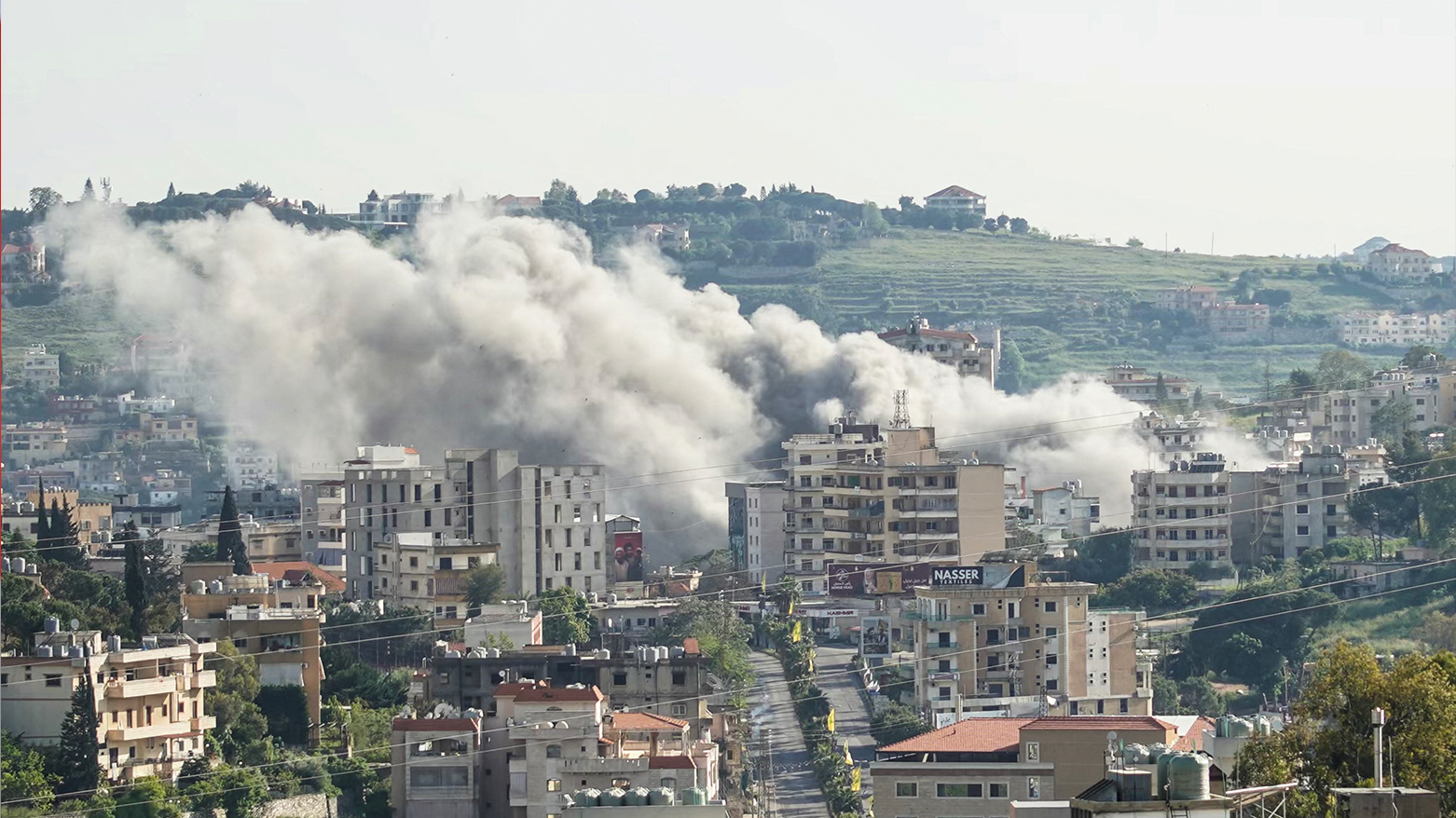
Lebanon said at least one person was killed in Israeli strikes on the country's south on May 9, despite a ceasefire with Hezbollah, after Israel's army issued an evacuation warning to several villages. Israeli forces and Iran-backed Hezbollah have traded fire daily, mostly in southern Lebanon, despite the ceasefire agreement in effect since April 17. (AFP)
Hezbollah and Israeli Forces Exchange Fire
The response from Hezbollah has focused on inflicting costs on Israeli deployments both inside Lebanon and across the shared frontier.
Hezbollah stated that it successfully targeted a gathering of Israeli soldiers near Misgav Am, according to AFP. The group framed the attack as a direct retaliation for what it described as persistent violations of the ceasefire by the "Israeli enemy."
AFP reported that the exchange of fire involved a series of explosive drone launches. One such drone reportedly struck an unmanned engineering vehicle belonging to the Israel Defense Forces (IDF) operating in southern Lebanon.
While no injuries were reported in that specific incident, a subsequent drone attack in northern Israel resulted in the severe wounding of one army reservist and moderate injuries to two others.
Hezbollah also claimed a drone strike on a helicopter landing pad in Shlomi, demonstrating a capacity to target specific Israeli military logistics hubs.
On the defensive front, the Israeli military reported striking over 85 Hezbollah infrastructure sites within a 24-hour period.
According to the Israeli military account cited by AFP, these targets included weapon storage facilities, missile launchers, and an underground weapons production site located in the Bekaa Valley in eastern Lebanon.
The IDF maintained that these strikes were necessary to neutralize militants "advancing terrorist activities" against its personnel.
Regional Stability Concerns and Humanitarian Toll
The human cost of the ongoing hostilities continues to mount, with civilian infrastructure and emergency services frequently caught in the crossfire.
L'Orient Today reported that an Israeli drone strike killed a Civil Defense worker near Kfar Shuba on Friday morning.
In another incident, four people, including a paramedic affiliated with the al-Rissala Scout Association, were killed in a strike on Deir Antar. These casualties highlight the dangers faced by first responders attempting to operate in the contested southern regions.
The overall death toll in Lebanon has surpassed 2,750 people since March 2, according to the Lebanese Health Ministry. The ministry also noted that more than 8,500 people have been wounded during the same period.
The report by L'Orient Today detailed specific strikes on residential homes, including one in the village of Zrarieh that killed a father and his son, and another in Toura that claimed the lives of four individuals, including two women.
These developments have led to a heightening of regional stability concerns.
AFP noted that despite a ceasefire agreement being technically in effect since April 17, daily exchanges of fire remain the norm. The continued use of forced evacuation orders and the targeting of villages previously considered relatively secure suggest a conflict that is expanding rather than contracting.
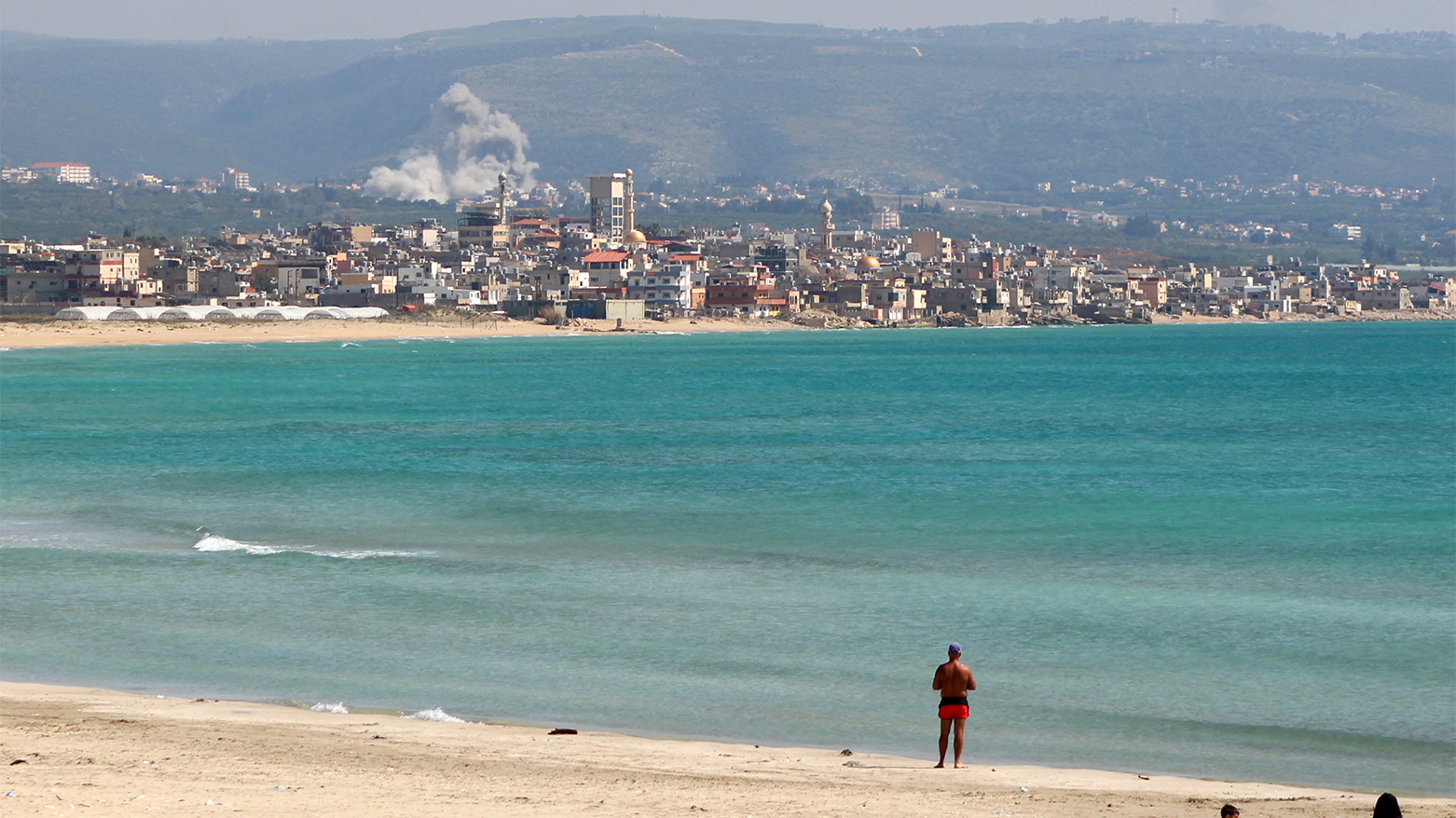
More than half of Lebanon's population depends on humanitarian aid, a European Union official said on May 8, as Israel continues its attacks on the country despite a ceasefire in the two-month-long war with militant group Hezbollah. Israeli strikes in Lebanon have killed more than 2,700 people and displaced over one million since early March, according to authorities. (AFP)
Strategic and Political Implications
The strategic implications of the 68 occupied villages and the expanded Israeli evacuation orders point toward an attempt to create a permanent or semi-permanent security architecture in southern Lebanon.
L'Orient Today noted that the de facto occupation of over 600 square kilometers represents a significant challenge to the pre-war territorial status quo.
Politically, the situation places the Lebanese government in a precarious position.
While Prime Minister Salam emphasizes a desire for peace and a reliance on negotiations, the reality on the ground is dictated by the ongoing combat between the IDF and Hezbollah.
The report noted that Lebanese authorities are essentially navigating an "impossible equation," where the state must call for a withdrawal of foreign forces while possessing limited control over the non-state actors engaged in the fighting.
As the conflict persists, the international community continues to monitor the potential for a wider regional conflagration.
The shift in Israeli tactics toward villages outside the buffer zone and the corresponding escalation in Hezbollah's drone and rocket technology suggest that the Lebanon-Israel frontier remains one of the most volatile flashpoints in the Middle East.