Netanyahu Says Iran War Incomplete Until Nuclear Stockpiles Removed
Israeli Prime Minister Benjamin Netanyahu said Iran's nuclear program remains the central unresolved front in the regional war, arguing that enriched uranium must be physically removed if diplomacy fails, while signaling Israel's readiness for renewed military action.
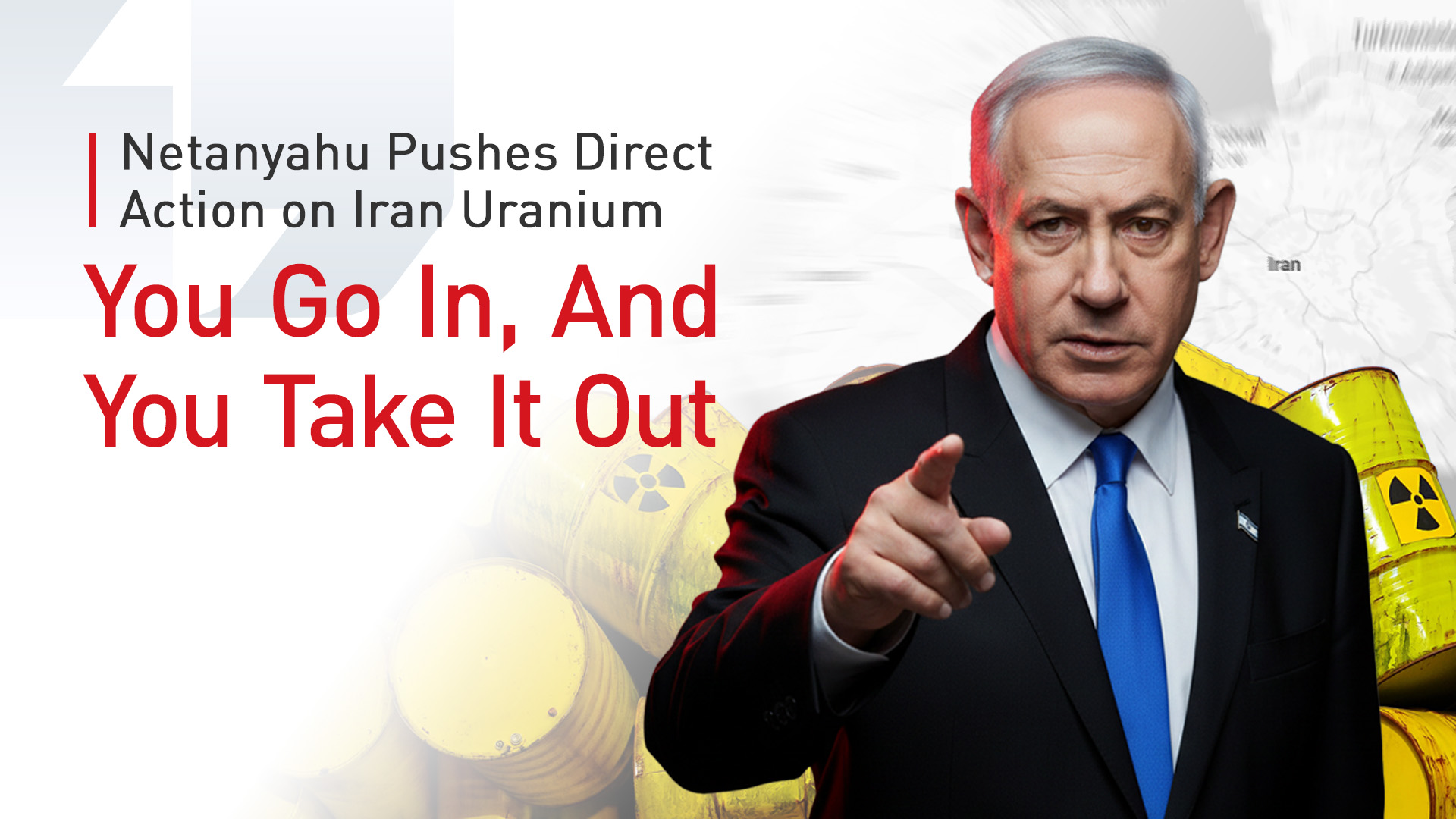
ERBIL (Kurdistan24) - Israeli Prime Minister Benjamin Netanyahu has asserted that the multi-front conflict involving the Islamic Republic of Iran remains unfinished, stating that the central objective of the war, the total neutralization of Tehran's nuclear capabilities, has yet to be achieved.
In a broadcast interview with CBS News, Netanyahu characterized the presence of enriched uranium on Iranian soil as a persistent threat that may eventually require direct physical intervention, suggesting a tactical shift from containment to active removal of nuclear material.
According to i24News, which analyzed the central tenets of the 60 Minutes interview, the Prime Minister advocated for a decisive approach to Iran's nuclear infrastructure.
Netanyahu told correspondent Major Garrett that while the military campaign has succeeded in degrading various components of the Iranian state, the mission remains incomplete as long as enrichment sites and stockpiles of highly enriched uranium exist.
"You go in, and you take it out," Netanyahu stated, according to CBS News, when questioned on how he envisioned the removal of nuclear material if diplomatic avenues fail.
The Prime Minister's assertive posture toward Tehran serves as the cornerstone for a broader strategic realignment.
Netanyahu linked the dismantling of the Iranian government to the inevitable collapse of its regional proxy network, which he described as a "scaffolding" that includes Hezbollah, Hamas, and the Houthis.
This focus on the Iranian center of gravity coincides with a period of intense diplomatic and military uncertainty.
As detailed by The Associated Press (AP), U.S. President Donald Trump has recently rejected Iran's latest ceasefire proposal as "totally unacceptable," while Israeli military planners are reportedly evaluating a specific window for potential strikes should negotiations reach a terminal impasse.
The Nuclear Threshold and Military Readiness
The core of the current regional tension is the status of Iran's nuclear material.
According to reporting by The Associated Press, the United Nations nuclear agency estimates that Iran possesses over 440 kilograms of uranium enriched to 60% purity, a level that is a short technical step from weapons-grade.
Netanyahu argued in his CBS interview that the war cannot be declared over while this material remains under the control of the Islamic Republic. He indicated that President Trump has expressed a similar willingness to "go in" to secure these assets.
This strategic intent is supported by a high state of military readiness within the Israeli Defense Forces (IDF). According to Israeli media reports, senior officials including the Ministry of Defense Director General, Eyal Zamir, have indicated that the military is prepared to resume active hostilities at any moment.
Information from the i24News channel suggested that the Israeli military has maintained this heightened alert status for several weeks, specifically monitoring Iranian efforts to protect their nuclear facilities.
Regarding the nature of a potential engagement, Israeli media reports suggested that any future action would likely be a "short and painful" strike designed to compel the Iranian leadership to accept Washington's requirements.
The reports emphasized that such an operation would involve full coordination between Israel and the United States, targeting not only nuclear sites but also the country's remaining energy infrastructure to ensure a "total paralysis" of the regime's authority.
Predicted Timing for Potential Strikes
Speculation regarding the timing of a renewed military effort has intensified following the breakdown of recent talks.
According to Israeli media reports, a predicted timeline for an attack has begun to circulate among security analysts.
The reports indicated that while immediate action is unlikely due to President Trump's high-profile summit with the Chinese leadership this week, a tactical window is expected to open shortly thereafter.
The predicted timing for a potential strike is slated between late next Monday and the commencement of the 2026 World Cup on June 11.
Security analysts cited in these reports believe that a military intervention during this period would serve to maximize strategic pressure on Tehran before global attention shifts toward major international events.
This military planning occurs against a backdrop of internal Iranian uncertainty.
According to i24News, Netanyahu expressed skepticism regarding the health and visibility of Iran's new Supreme Leader, Mojtaba Khamenei, who has not appeared in public since being wounded early in the conflict.
Netanyahu suggested that the Iranian leader is currently "holed up in some bunker," an assessment that adds a layer of psychological warfare to the ongoing kinetic and diplomatic standoff.
Stalled Ceasefire Negotiations
While military options are openly discussed, the diplomatic track remains deadlocked.
Associated Press journalists Jon Gambrell and Samy Magdy reported that Iran delivered its response to a U.S.-backed peace proposal on Sunday via Pakistani mediators.
However, the response was immediately dismissed by President Trump.
According to the AP, the U.S. President used social media to characterize the Iranian position as ""totally unacceptable," accusing Tehran of "playing games" with the international community.
Tehran's response, as reported by Iranian state television and cited by the AP, rejected the U.S. proposal as a demand for "surrender."
In its place, the Islamic Republic insisted on the payment of war reparations by the United States, full Iranian sovereignty over the strategic Strait of Hormuz, and the immediate release of all frozen assets.
The Wall Street Journal, as noted in regional reports, indicated that the Iranian counter-offer failed to meet any of Washington's baseline requirements, particularly regarding the rollback of its nuclear program.
The AP report also highlighted that the month-old ceasefire is being regularly violated by drone and missile incidents.
Recent attacks targeted a merchant vessel off the coast of Qatar and encroached upon the airspace of Kuwait and the United Arab Emirates.
These flare-ups, which the UAE blamed on Iran, have reinforced the perception in both Washington and Tel Aviv that the current truce is unsustainable without a comprehensive new agreement.
A Shift Toward Strategic Self-Reliance
In a significant strategic departure reported by CBS News, Netanyahu stated that he seeks to terminate Israel's long-standing reliance on American financial military support.
The Prime Minister told Garrett that he intends to "draw down to zero" the $3.8 billion in annual aid provided by the United States, proposing that the transition occur over the next decade.
This move toward financial independence is viewed as a necessary step for maintaining Israel's strategic autonomy. Netanyahu noted that his proposal had even surprised his own staff, but he emphasized that it is time for Israel to "wean" itself from international assistance.
This policy pivot appears aimed at insulating Israeli security decisions from the shifting political landscape in the United States, where public support for military aid has come under increased scrutiny.
According to the CBS News report, Netanyahu is keenly aware of declining favorability ratings for Israel in the U.S., particularly among younger voters.
By moving toward military self-reliance, the Prime Minister aims to ensure that the "watch" over Israel's survival is not subject to external budgetary or political constraints.
He framed this as part of a post-October 7 realization that Israel must be capable of acting alone to dismantle the "noose of death" represented by the Iran axis.
Regional Alignments and Economic Cooperation
Despite the ongoing conflict, Netanyahu remains optimistic regarding Israel's integration into the Middle East.
He told CBS News that there is a growing possibility for the "expansion and deepening" of alliances with Arab states, some of which he claimed are increasingly interested in a partnership with Israel as a deterrent against Iranian expansionism.
Netanyahu suggested that the degree of economic cooperation between Israel and several Arab nations is "more than you think," involving sensitive sectors such as energy, artificial intelligence, and quantum technology.
According to the Prime Minister, the sharing of these technological fruits is already occurring, even if much of it remains shielded from public view for diplomatic reasons.
However, this regional optimism is tempered by the continued closure of the Strait of Hormuz. According to AP reporting, Iran has moved to formalize its control over the waterway by establishing the "Persian Gulf Strait Authority" to vet and tax international shipping.
This move, which maritime experts say violates international law, remains a primary point of contention for global trade and energy security.
Diplomacy and Deterrence
The current geopolitical landscape is defined by a precarious balance between a failing diplomatic process and the preparation for renewed military conflict.
Netanyahu's remarks to CBS News and i24News emphasize that for Israel, the Iranian nuclear threat is a non-negotiable red line that remains the primary driver of regional instability.
As the U.S. continues its naval blockade and Tehran reiterates its "full readiness" to protect its nuclear sites, the strategic stalemate persists.
The convergence of Netanyahu's demand for the physical removal of nuclear material and his push for Israeli financial independence suggests a nation preparing for a long-term, autonomous struggle against its primary regional rival.
As the closing of the interview noted, regional tensions continue to place both deterrence and high-stakes negotiations at the center of Middle Eastern security calculations.