US Deploys Nuclear Submarine Near the Mediterranean
Washington publicly positioned one of its most powerful nuclear submarines near the Mediterranean as tensions with Iran intensified
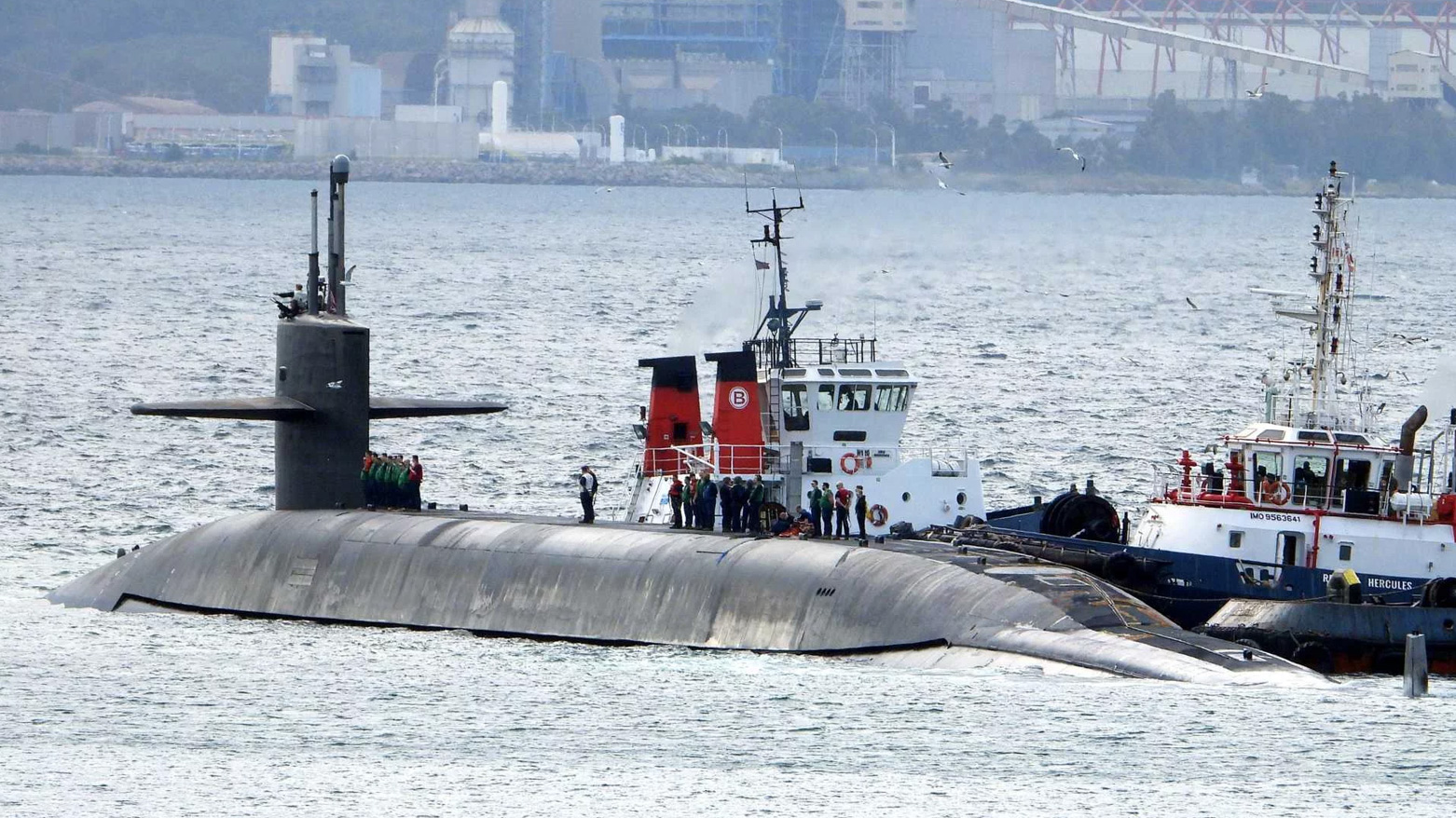
ERBIL (Kurdistan24) - The United States has deployed one of its most powerful nuclear submarines to the Strait of Gibraltar in a rare and highly visible strategic move, as tensions with Iran continue to escalate following the rejection of a new ceasefire proposal and mounting fears of a global energy crisis.
According to a report by Army Recognition, the US Navy positioned the Ohio-class ballistic missile submarine USS Alaska at Gibraltar’s South Mole naval facility after transiting through the Strait of Gibraltar under heavy security escort.
The public appearance of an operational ballistic missile submarine — assets typically designed to remain hidden during deterrence patrols — was widely interpreted as a direct strategic warning to Tehran amid growing confrontation over the Strait of Hormuz and Iran’s nuclear program.
USS Alaska carries up to 20 Trident II D5 ballistic missiles and forms part of the sea-based component of the US nuclear triad.
Its deployment to the strategic maritime corridor linking the Atlantic Ocean with the Mediterranean Sea gives Washington rapid operational access toward the Middle East during a period of severe regional instability.
The deployment came shortly after US President Donald Trump rejected Iran’s latest proposal aimed at ending the war and reopening the Strait of Hormuz, describing Tehran’s response as “totally unacceptable.”
Visible nuclear deterrence
According to the report, USS Alaska entered Gibraltar under escort from Gibraltar Squadron patrol vessels, Gibraltar Defence Police units, and Royal Marines protection detachments, while British authorities enforced a 200-meter exclusion zone around the submarine after its arrival.
Additional Royal Marines personnel were reportedly flown into Gibraltar ahead of the submarine’s docking, reflecting the extraordinary security measures surrounding the deployment.
Military analysts cited in the report described the move as an unusually visible form of strategic nuclear signaling, particularly because Ohio-class ballistic missile submarines rarely make public port calls during active deterrence operations.
The report noted that the Gibraltar stop marked only the third publicly observed visit by a US Ohio-class submarine to Gibraltar in roughly 25 years.
USS Alaska, commissioned in 1986, underwent major modernization upgrades between 2006 and 2009, including integration of Trident II D5 missile systems and advanced combat capabilities.
The submarine operates with a nuclear-powered propulsion system and can remain submerged for extended strategic patrols lasting between 70 and 90 days.
The submarine deployment unfolded as fears intensified over the future of shipping through the Strait of Hormuz, one of the world’s most critical maritime energy corridors.
Amin Nasser, CEO of Saudi Aramco, warned that a prolonged closure of the strait could trigger “the largest energy supply shock in history.”
According to Nasser, global markets have already lost one billion barrels of oil supply, while continued disruption in Hormuz could remove an additional 100 million barrels of oil from markets every week.
The deployment also coincided with increasing military coordination between Washington and London as both countries strengthened maritime security operations around Gibraltar and broader regional waterways.
At the same time, Iranian naval commander Shahram Irani confirmed the deployment of Iran’s domestically produced Ghadir-class mini submarines inside the Strait of Hormuz during ongoing naval exercises on May 10.
The small submarines, often referred to inside Iran as the “dolphins of the Gulf,” are designed specifically for shallow Gulf waters and asymmetric naval warfare.
According to Iranian military officials, the submarines are capable of ambush operations against larger naval vessels using torpedoes and missiles while remaining concealed beneath seabed mud and coastal terrain.
Iranian commanders additionally claimed the submarines can shift into full operational status within 30 seconds after departing port facilities.
Strategic signaling amid widening confrontation
The deployment comes amid a broader escalation cycle between Washington and Tehran following the collapse of negotiations surrounding uranium enrichment, sanctions relief, and maritime access in the Strait of Hormuz.
According to the report, Iran continues to reject demands related to dismantling parts of its uranium enrichment infrastructure and insists on maintaining portions of its nuclear program.
The United States, meanwhile, continues to demand restrictions on enrichment activity and the restoration of unrestricted commercial navigation through Hormuz.
The report noted that USS Alaska’s highly visible deployment differs from conventional naval power projection, as ballistic missile submarines primarily serve as survivable second-strike nuclear deterrence assets rather than frontline combat platforms.
Analysts cited in the report said the move may represent a calibrated escalation signal intended to reinforce Washington’s strategic posture without immediately shifting toward direct large-scale conventional military operations.
The current confrontation has also heightened concerns regarding regional maritime security after reports of drone incidents across Kuwait, Qatar, the United Arab Emirates, and northern Iraq.
Iran has simultaneously increased reliance on smaller submarines and fast naval craft after reportedly losing several major warships during recent confrontations with the United States and Israel.
According to Iranian records cited in the report, vessels including Dena, Alvand, Sabalan, Sahand, Jamaran, and Deylaman were either sunk or severely damaged during the conflict.