WHO Declares Ebola Outbreak in Congo and Uganda a Global Health Emergency
The WHO on Sunday declared the Ebola outbreak linked to the Bundibugyo virus in the DR Congo and Uganda a Public Health Emergency of International Concern, citing cross-border transmission risks and the absence of approved vaccines or targeted treatments for the strain.
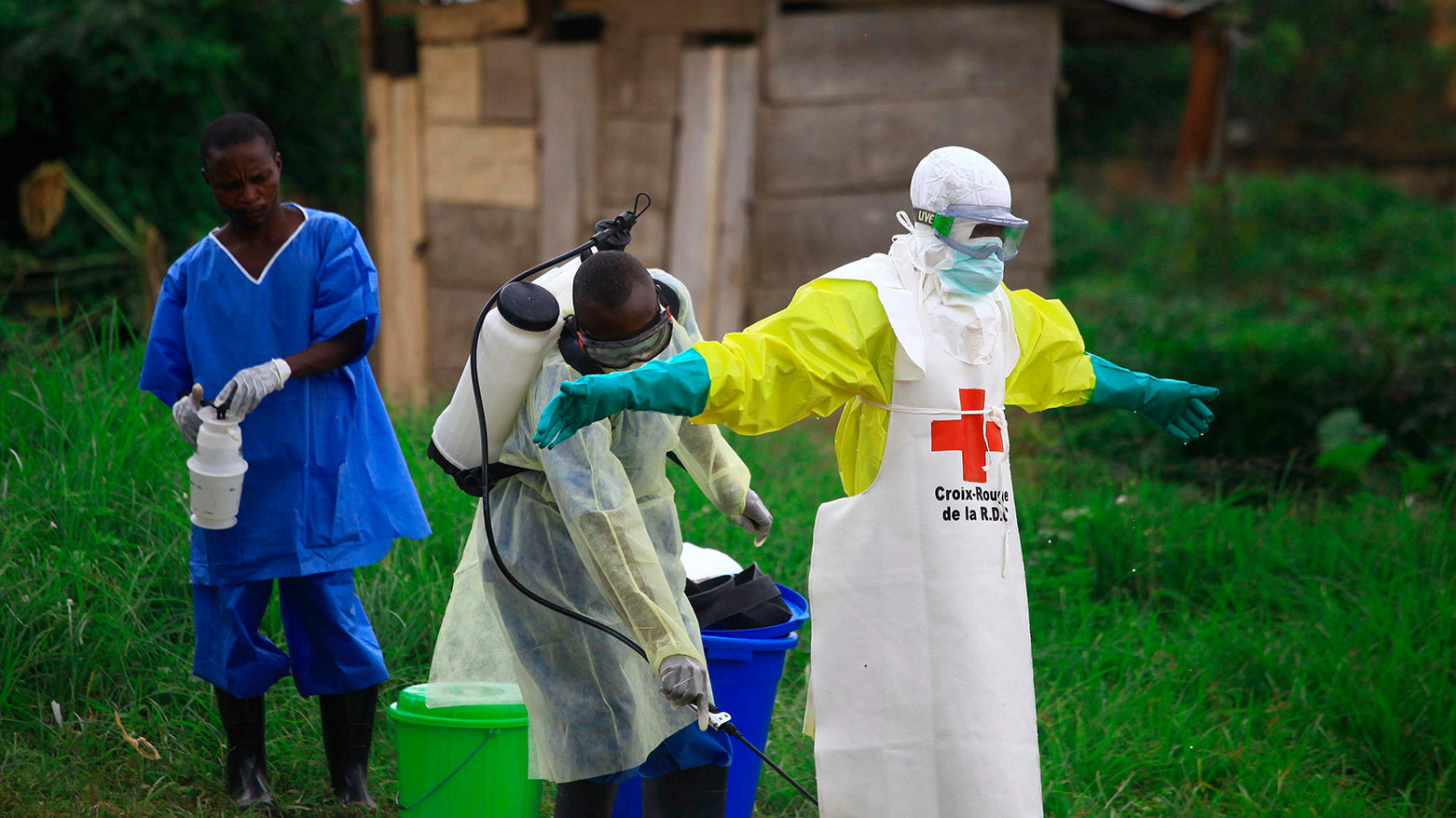
ERBIL (Kurdistan24) - The World Health Organization officially declared on Sunday that the ongoing outbreak of Ebola disease, specifically the strain caused by the Bundibugyo virus, in the Democratic Republic of the Congo and Uganda is a Public Health Emergency of International Concern (PHEIC).
According to the World Health Organization, the determination was made by the agency's Director-General after extensive consultations and risk assessments regarding the rapid emergence of cases and the documented cross-border spread of the virus.
The declaration serves as the highest level of global health alert issued by the WHO under the International Health Regulations. Health officials stated that while the outbreak does not currently meet the technical criteria for a pandemic, the extraordinary nature of the event requires immediate international coordination.
The agency determined that the outbreak presents a significant public health risk to other nations, necessitating a comprehensive response to monitor, isolate, and treat cases while securing borders against further uncontrolled transmission.
The Nut Graph of the current health crisis centers on the specific nature of the Bundibugyo strain and the operational challenges it presents.
A Public Health Emergency of International Concern signifies an extraordinary event that constitutes a public health risk to other states through the international spread of disease.
According to the WHO, the Bundibugyo strain has prompted heightened international concern because, unlike the more common Zaire ebolavirus strains, there are currently no approved specific therapeutics or vaccines available for its treatment.
This absence of medical countermeasures elevates the importance of rigorous cross-border monitoring, robust infection prevention, and coordinated international health responses to prevent the virus from overwhelming regional healthcare infrastructure.
WHO Emergency Declaration
The World Health Organization's decision to classify the outbreak as a PHEIC was driven by the increasing geographical spread and the high positivity rate of initial testing.
The declaration noted that the Director-General assessed the risks to human health alongside the potential for interference with international traffic.
According to the WHO, the outbreak is considered "extraordinary" due to significant uncertainties regarding the true number of infected individuals and the lack of clear epidemiological links between currently known cases.
The agency determined that the combination of high population mobility, ongoing humanitarian crises, and the urban nature of the current hotspots compounds the risk of a much larger outbreak than what is currently being detected.
The Ebola Outbreak
The outbreak originated in the Ituri Province of the Democratic Republic of the Congo, where the WHO reported multiple laboratory-confirmed cases, hundreds of suspected cases, and numerous suspected deaths across several health zones, including Bunia and Mongbwalu.
The public health risks escalated dramatically when the virus crossed international borders. Health officials stated that laboratory-confirmed cases, including at least one death, were reported in Kampala, Uganda. These cases involved individuals who had recently traveled from the Democratic Republic of the Congo.
Furthermore, the WHO noted unusual clusters of community deaths and fatalities among healthcare workers, raising severe concerns about transmission within healthcare facilities and gaps in infection prevention protocols.
Public Health and Containment Measures
In response to the emergency, the WHO has outlined a series of rigorous containment measures for the affected states.
The agency advised that national disaster management mechanisms be activated to establish emergency operation centers capable of coordinating a comprehensive response.
According to the World Health Organization, containment efforts must focus on enhanced surveillance, contact tracing, and decentralized laboratory diagnostic testing.
Health officials stated that suspected cases must be safely transferred to specialized treatment units for isolation. The declaration noted the critical need to strengthen infection prevention and control (IPC) in health facilities, ensuring that healthcare workers receive adequate training, personal protective equipment (PPE), and hazard pay.
Cross-border coordination is also a primary focus.
The WHO stated that exit screening must be implemented at all international airports, seaports, and major land crossings in the affected areas.
The agency determined that individuals with symptoms consistent with the Bundibugyo virus disease should be prohibited from international travel unless participating in an authorized medical evacuation. Furthermore, contacts of confirmed cases are advised to restrict national travel and halt all international travel for 21 days following exposure.
International Health Significance
The escalation of the WHO's response reflects deep concerns over regional spread. According to the WHO, neighboring countries sharing land borders with the Democratic Republic of the Congo are considered at high risk due to extensive trade and travel linkages.
The agency determined that unaffected neighboring states must urgently enhance their readiness capacity, establishing active surveillance and rapid response teams capable of investigating suspected cases within 24 hours.
The WHO stated that international coordination is required to scale up operations, secure supply pipelines for critical medical items, and initiate clinical trials to advance the development of candidate therapeutics and vaccines.
While emphasizing the need for robust internal containment, the WHO explicitly advised against international trade and travel bans.
Health officials stated that closing borders is typically driven by fear rather than science and often exacerbates the spread of disease by pushing the movement of people and goods toward unmonitored, informal crossings.
The agency determined that national authorities should work with the transport industry to ensure that WHO travel advisories are not exceeded.
Historical and Regional Context
The current crisis evokes memories of previous severe outbreaks in the region.
The WHO declaration noted that the large network of informal healthcare facilities and the protracted humanitarian crisis in Eastern DRC parallel the conditions witnessed during the massive Ebola epidemic in North Kivu and Ituri provinces between 2018 and 2019.
The agency determined that community engagement remains central to the response strategy. Health officials stated that local, religious, and traditional leaders must be involved to address cultural norms and beliefs that may serve as barriers to early treatment and safe burial practices.
By integrating the response into the wider humanitarian needs of the population, authorities hope to build the trust necessary for effective contact tracing and case identification.
International and regional health authorities continue to monitor the progression of the Bundibugyo virus outbreak, emphasizing that coordinated containment, robust surveillance, and transparent public-health communication remain essential to preventing further cross-border transmission.