Aryan Burhan Says Lahur Sheikh Jangi Case Is Being Reframed
Lahur Sheikh Jangi's lawyer Aryan Burhan said the ongoing Lalezar trial is a political dispute "given a legal facade," alleging procedural violations, coerced testimony and threats against defense lawyers as scrutiny intensifies over the politically sensitive case tied to the 2025 Sulaimani clashes.
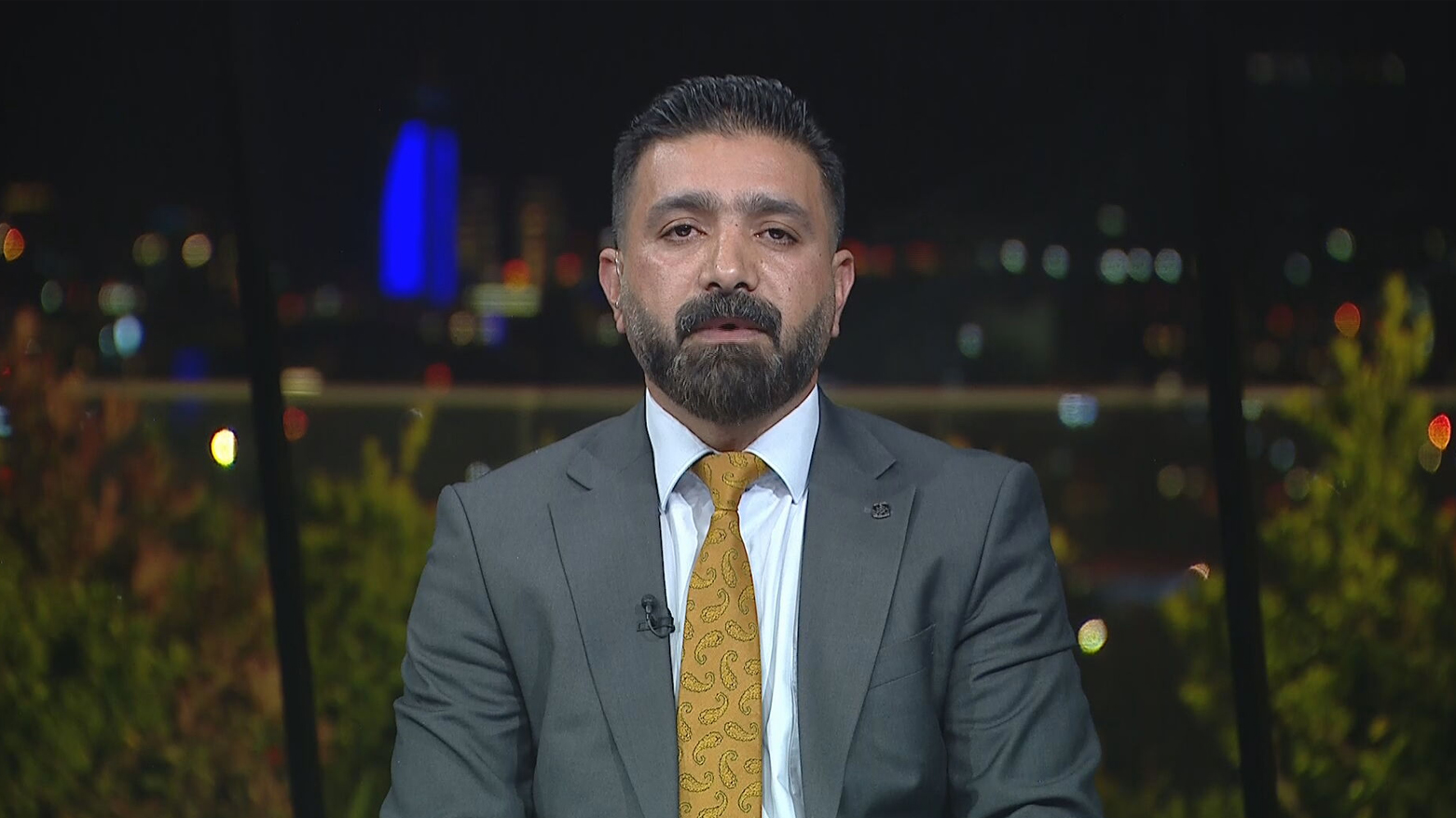
ERBIL (Kurdistan24) - Aryan Burhan, a defense attorney representing Lahur Sheikh Jangi, has publicly alleged that the ongoing trial involving his client and the Lalezar detainees is a fundamentally political dispute that has been given a legal facade. The statements, broadcast during the "Basi Roj" (Topic of the Day) program on Kurdistan24, reflect intensifying criticism from the defense team regarding the procedural integrity of the case and the institutional pressures surrounding the Sulaimani court.
According to Burhan, the proceedings are complicated not only by the sheer number of defendants but by the overarching political sensitivities attached to the charges.
He stated that the first two court sessions were largely procedural, focused on reading evidence and hearing specific witness testimony, and confirmed that the trial has now been postponed until Jun. 3, 2026.
The defense lawyer indicated that the legal team does not anticipate a swift resolution, emphasizing instead their objective to transfer the case to the Kurdistan Region's Court of Cassation for an impartial general audit.
The current Lalezar trial has become highly politically sensitive due to its origins in a deep factional dispute within the Patriotic Union of Kurdistan (PUK).
Critics of the proceedings, including a former security official cited in related reports, argue that the trial is a politically motivated effort to consolidate power.
The allegations of torture, coerced confessions, and intimidation have consequently drawn wider public and political attention, prompting involved parties to escalate their concerns to international human rights observers and diplomatic missions in the Kurdistan Region.
Political Debate Surrounds Proceedings
During his television appearance, Burhan detailed several claims regarding the handling of the case.
He alleged that the fundamental nature of the charges is flawed, arguing that the detainees acted in legitimate self-defense after their residences were attacked during the Aug. 2025 clashes.
According to the lawyer, after a nine-month delay, the file reached the court in a "scattered manner full of legal deficiencies," which he claimed severely harmed the defendants' rights.
Burhan also raised significant procedural objections regarding Lahur Sheikh Jangi's legal status.
According to his interpretation, Sheikh Jangi's position as a member of the Security Council grants him immunity from standard arrest warrants, requiring instead the formation of a special investigative committee. Burhan characterized the failure to follow this specific procedure as a major legal violation within the ongoing process.
The lawyer's remarks extended to allegations of severe intimidation.
Burhan stated that four members of the defense team received threats demanding they withdraw from the case, warning them that continuing their representation was "not good for them."
While Burhan noted he had not been personally threatened, he affirmed the legal team's commitment to providing professional, lawful representation.
Critics Raise Concerns Over Trial
These legal objections align with fierce political criticism from other regional figures.
According to a Kurdistan24 report, former security official Azhi Amin issued a statement condemning the trial of the Lalezar detainees as a "farce."
Amin alleged that the current PUK leadership, specifically Bafel and Qubad Talabani, are utilizing the judicial system to impose an oppressive administrative environment and undermine the sanctity of the courts in Sulaimani.
The former security official criticized the structural logic of the trial, suggesting that the court was prosecuting the victims of the initial violence rather than the perpetrators.
Amin alleged that the forces responsible for the August attack utilized prohibited explosives, artillery, and drones in the city center.
He claimed that rather than holding the attackers accountable, the judicial process was being manipulated to secure false confessions from the detainees.
Legal and Political Dimensions
The most explosive claims surrounding the trial involve allegations of physical abuse and coerced testimony.
Burhan highlighted a sensitive portion of the second court session, during which a witness identified as "Hama Rash" testified before the judge.
According to Burhan's account of the hearing, the witness courageously detailed facing severe physical and psychological torture during his detention, alleging injuries that included a cracked skull, stab wounds, broken teeth, and sexual assault.
Burhan criticized the presiding judge's response to this testimony.
The lawyer argued that upon hearing these claims, the court should have immediately halted the session and referred the witness to a specialized medical committee to verify the allegations of inhumane treatment.
The defense team's primary objective, according to Burhan, is to remove the case from the current jurisdiction, which they allege is compromised by political influence, and to secure a review by the Court of Cassation.
Institutional Questions Emerge
The allegations of torture and witness tampering, as well as the reported threats against defense lawyers, have amplified the public and political reactions to the trial.
According to previous Kurdistan24 report, the People's Front (Berey Gel) has taken active steps to internationalize the issue, holding press conferences to announce that they have formally notified the United Nations and foreign consulates regarding the "Hama Rash" case.
As noted in previous reports, political figures warn that human rights violations within the judicial process severely damage the Kurdistan Region's international reputation.
The involvement of the Human Rights Board and the Public Prosecution, as demanded by political actors aligned with the defense, underscores the significance of high-profile legal disputes in regional politics.
As the Jun. 3 hearing approaches, the tensions between formal legal procedures and deep-seated political perceptions continue to place the Sulaimani court under intense public scrutiny.
The trial of Lahur Sheikh Jangi and the Lalezar detainees continues to generate significant political and legal debate as the defense team challenges the procedural integrity of the case ahead of the next scheduled court session.