Prime Minister Barzani, Najaf Governor Discuss Expanding Cooperation and Sharing KRG Governance Experience
Najaf delegation visits Erbil to study Kurdistan Region reforms in digital services, infrastructure, energy, and economic development
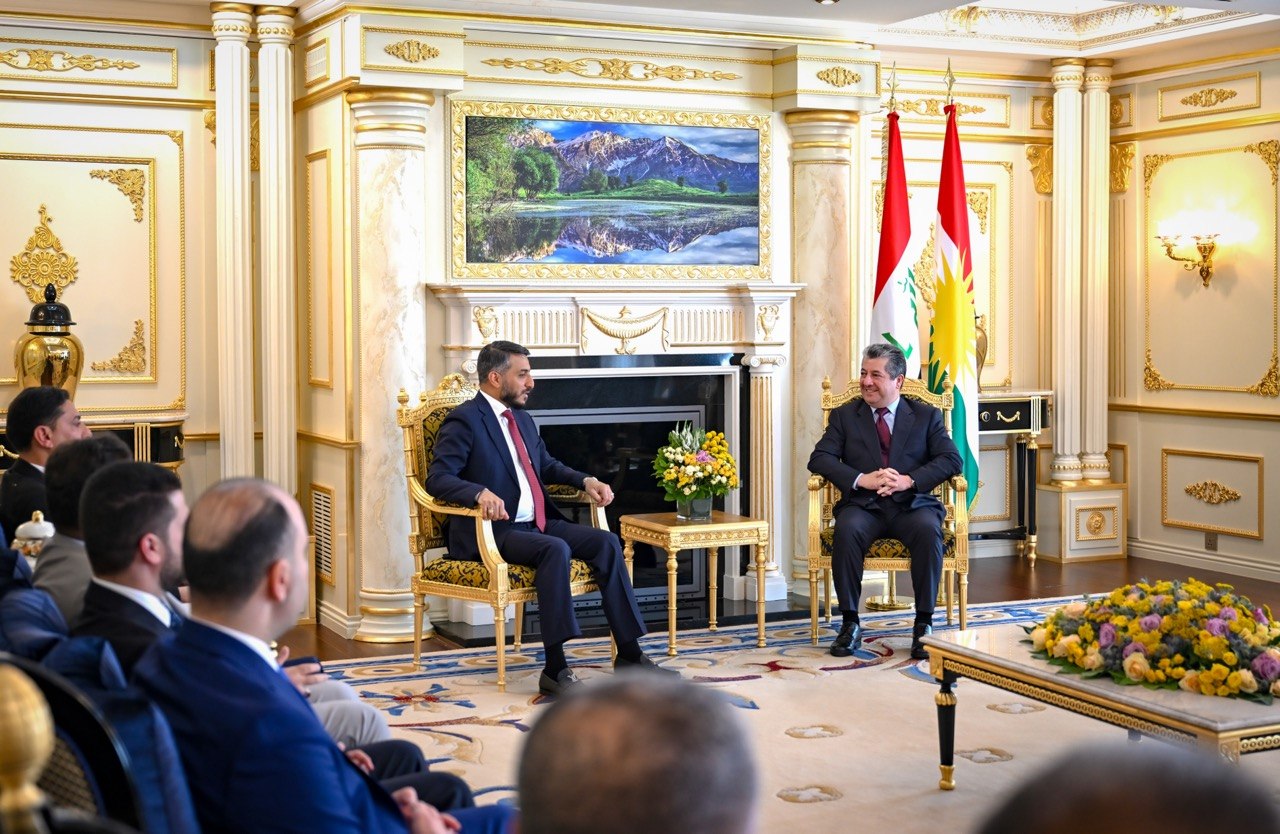
ERBIL (Kurdistan24) — Kurdistan Region Prime Minister Masrour Barzani met Monday with Najaf Governor Yousef Makki Al-Ghannawi and an accompanying delegation in Erbil to discuss strengthening cooperation between the Kurdistan Region and Iraqi provinces and expanding coordination across multiple sectors.
According to an official statement from the Kurdistan Regional Government (KRG), Barzani reaffirmed the KRG’s readiness to further develop cooperation and coordination with Iraqi provinces, particularly Najaf, in a range of fields.
During the meeting, Al-Ghannawi said the purpose of the delegation’s visit to the Kurdistan Region capital was to deepen bilateral relations and benefit from the KRG’s reform initiatives and successful governance experience, especially in the field of digitalizing public services and government administration.
The visit reflects growing interest among Iraqi provincial administrations in the Kurdistan Region’s governance model and development strategies, particularly as Erbil and other Kurdistan Region cities continue to experience rapid urban and economic growth.
Over the past decade, Erbil and other provinces in the Kurdistan Region have undergone major transformations across infrastructure, investment, energy, tourism, and public administration sectors through large-scale government reforms and private-sector expansion.
The Kurdistan Region has witnessed extensive development of urban centers, including the construction of modern residential complexes, commercial towers, hotels, business districts, and mixed-use developments that have significantly reshaped the skylines of Erbil, Duhok, and Sulaimani
At the same time, the KRG has increasingly emphasized modernization of governance and administrative systems through digitalization initiatives aimed at improving transparency, reducing bureaucracy, and facilitating public services for citizens and businesses.
One of the most significant initiatives has been the KRG’s “Runaki Project,” a long-term electricity reform program designed to provide 24-hour electricity service across the Kurdistan Region. The project seeks to modernize the energy sector, reduce reliance on private generators, and improve service stability for households and businesses.
The Kurdistan Region has also expanded investment in sewage systems, sanitation infrastructure, water projects, road construction, and broader public utility networks to support continuing population growth and urban expansion.
Alongside infrastructure modernization, the KRG has pursued economic diversification policies focused on strengthening agriculture and agro-industry. Authorities have supported domestic agricultural production while encouraging the establishment of food-processing and manufacturing facilities utilizing locally produced poultry and agricultural products.
KRG officials say those efforts have helped increase local production, create employment opportunities, and reduce dependence on imported goods while strengthening the private sector’s role in the regional economy.
The Kurdistan Region’s development model has increasingly drawn attention from Iraqi provinces seeking to improve governance, infrastructure, and public service delivery, with delegations frequently visiting Erbil to study aspects of the KRG’s administrative and economic experience.