Asian Markets Rise as Oil Prices Climb Amid Prolonged Iran Conflict
Markets were supported by easing pressure in U.S. bond markets after Treasury yields declined on Thursday. Earlier in the week, sharply rising yields had rattled investors, threatening to slow global economic growth and weigh heavily on stocks, cryptocurrencies, and other risk assets.
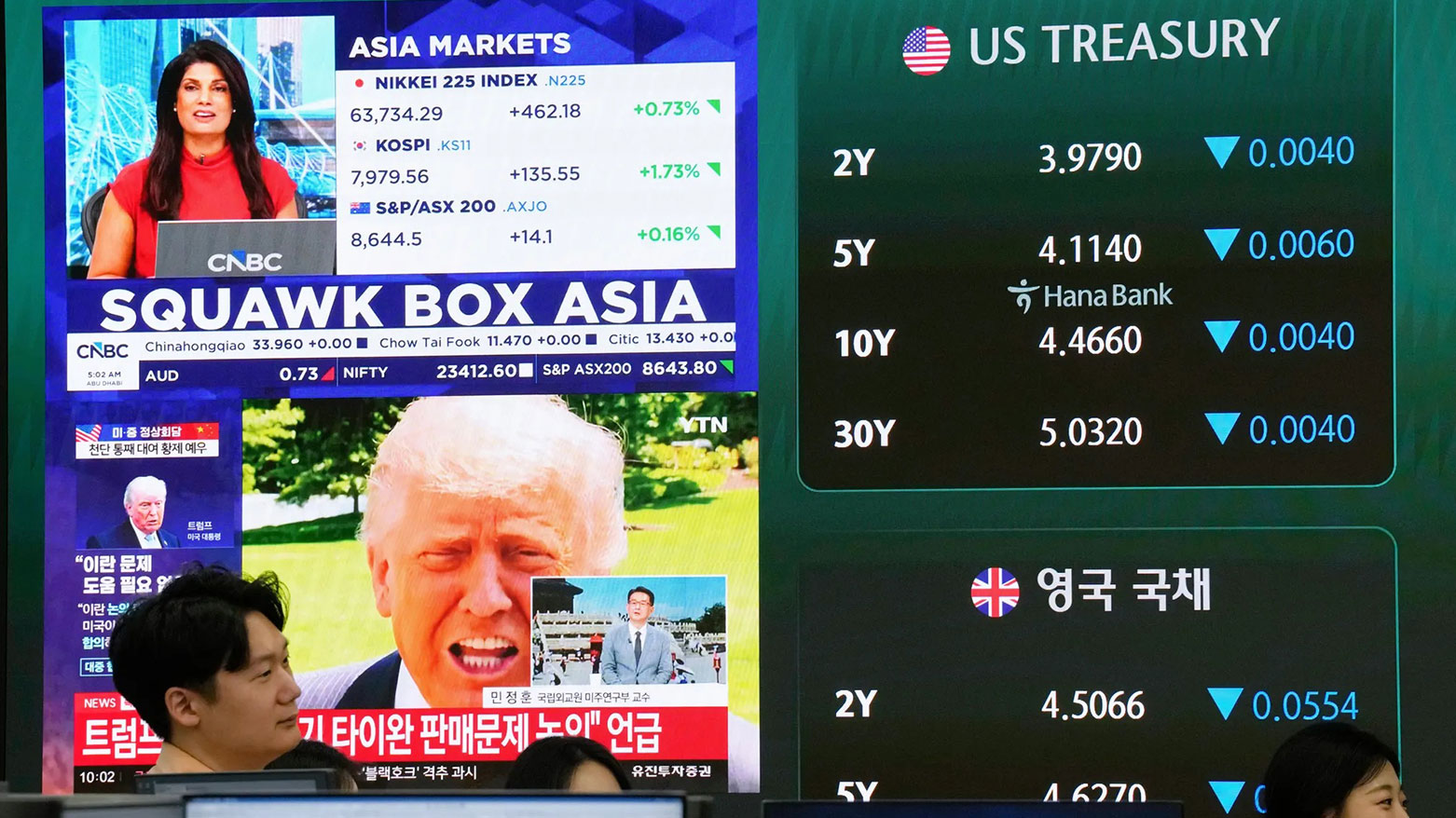
ERBIL (Kurdistan24) – Asian stock markets advanced on Friday following modest gains on Wall Street, while global oil prices continued to rise as diplomatic efforts to end the Iran war showed little progress, fueling concerns over energy supplies and global economic stability.
Tokyo led regional gains, with the Nikkei 225 surging 2.7% to 63,339.07 shares after new data showed Japan’s inflation rate slowed to a four-year low of 1.4% in April despite higher energy costs linked to the ongoing conflict.
Elsewhere in Asia, South Korea’s Kospi rose 0.4% to 7,847.71, while Hong Kong’s Hang Seng Index gained 0.9% to 25,612.40. China’s Shanghai Composite Index also climbed 0.9% to 4,112.90.
Australia’s S&P/ASX 200 added 0.4% to 8,657.00, while Taiwan’s Taiex jumped 2.2%. India’s BSE Sensex rose 0.6%.
Markets were supported by easing pressure in U.S. bond markets after Treasury yields declined on Thursday. Earlier in the week, sharply rising yields had rattled investors, threatening to slow global economic growth and weigh heavily on stocks, cryptocurrencies, and other risk assets.
Oil prices, however, remained elevated amid ongoing concerns over disruptions around the Strait of Hormuz, a vital shipping route for global oil and gas exports. Shipping activity through the waterway remains significantly below levels seen before the Iran conflict erupted in late February.
Diplomatic talks between the United States and Iran have continued without major breakthroughs, adding further uncertainty to energy markets.
Brent crude, the international oil benchmark, rose 2.3% to $104.97 per barrel, compared to around $70 before the war began. U.S. benchmark crude also gained 1.8% to $98.10 per barrel.
Meanwhile, political divisions in Washington added another layer of uncertainty. Republicans in Congress delayed until June a planned vote on legislation that would require President Donald Trump to withdraw U.S. forces from the conflict.
The U.S. House of Representatives had been expected to vote Thursday on a Democratic-led war powers resolution aimed at limiting Trump’s military campaign against Iran. However, Republican leaders postponed the vote after it became clear they lacked sufficient support to block the measure.