At Least 82 Killed After Blast at Northern China Coal Mine
At least 82 miners were killed and nine remain missing after a powerful gas explosion struck the Liushenyu coal mine in China's Shanxi province. President Xi Jinping ordered an "all-out effort" for rescue operations and called for stricter industrial safety measures.
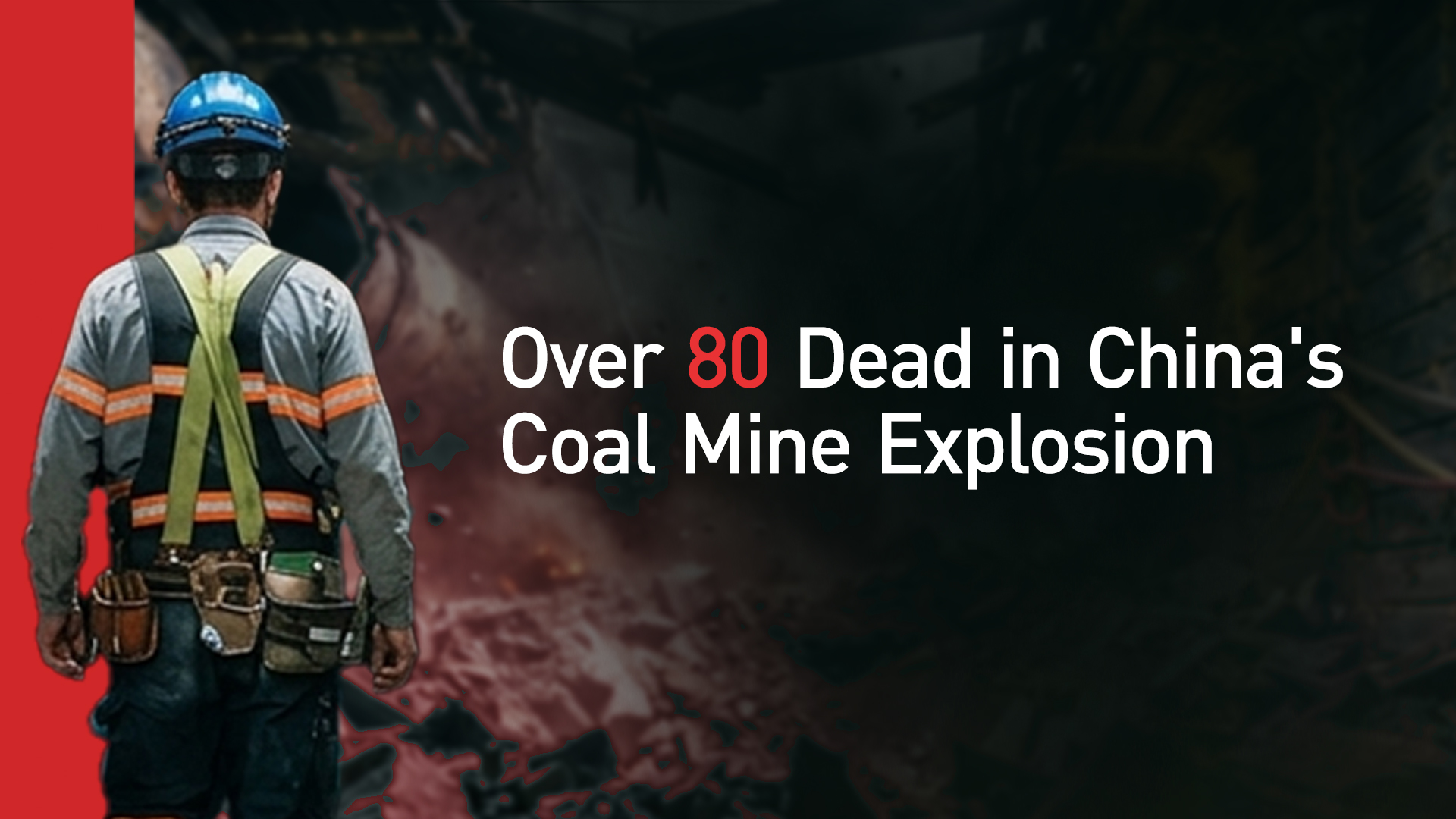
ERBIL (Kurdistan24) - A powerful gas explosion at the Liushenyu coal mine in northern China's Shanxi province on Saturday has killed at least 82 people, marking one of the country’s deadliest industrial accidents in recent years. Rescue operations remained intensive on Saturday as emergency crews searched for nine workers who were still missing following the blast.
The incident occurred at approximately 7:29 p.m. local time on Friday in Qinyuan County.
According to AFP reporting by Isabel Kua, there were 247 miners underground at the time of the explosion.
While the majority of the workers were successfully brought to the surface by Saturday morning, the death toll rose sharply as recovery efforts progressed throughout the day.
State broadcaster CCTV aired footage from the disaster site showing rescue teams wearing helmets and carrying stretchers through the mine complex, with a fleet of ambulances stationed nearby.
Early reports provided by state media indicated that toxic levels of carbon monoxide, a lethal, odorless gas, had significantly exceeded safety limits, hindering initial recovery efforts and leaving several trapped miners in critical condition.
Xi Orders Immediate Response
In the wake of the catastrophe, Chinese President Xi Jinping issued urgent instructions for an "all-out effort" to locate the missing and treat the injured.
As reported by China's Xinhua news agency, President Xi, who also serves as the General Secretary of the Communist Party of China, emphasized the need for a thorough investigation into the cause of the explosion and insisted on strict accountability.
A person identified as "responsible for" the company involved in the explosion has already been placed under official control by authorities.
President Xi further directed departments across the nation to learn from the tragedy, urging them to remain vigilant and implement stricter workplace safety measures.
He specifically called for the identification and elimination of potential risks to prevent similar "catastrophic accidents" in the future.
Premier Li Qiang also issued directives regarding the rescue, calling for a nationwide overhaul of safety protocols in key industrial sectors.
Vice Premier Zhang Guoqing has since led a specialized team to the site in Shanxi to oversee the rescue operations and the handling of the disaster's aftermath.
Chronic Safety Challenges
Shanxi province is recognized as China's primary coal-producing region, but it has long struggled with industrial hazards.
Although the national government has made efforts to improve mine safety over the past two decades, enforcement of regulations often remains inconsistent in high-output sectors where safety protocols can be lax.
The current disaster echoes previous tragedies in China's mining industry.
In 2023, a collapse at an open-pit mine in the Inner Mongolia region resulted in 53 deaths, and a 2009 explosion in Heilongjiang province claimed the lives of more than 100 miners.
China remains the world's leading consumer of coal, maintaining a heavy reliance on the fossil fuel for its energy needs despite a rapid expansion in renewable energy infrastructure.
Search Continues Underground
In addition to the mining investigation, President Xi noted that as China enters its flood season, emergency preparedness must be strengthened across all departments to safeguard lives and property.
As of Saturday afternoon, the fate of the nine missing miners remains unknown.
Search and rescue teams continue to navigate the damaged sections of the Liushenyu mine, where structural instability and residual gas levels remain primary concerns for the recovery units.
Authorities have pledged to provide transparent updates as the formal investigation into the origin of the blast proceeds.