Erbil Launches Major Green Park Project to Strengthen Climate Resilience
Erbil authorities in coordination with Kurdistan Foundation, launched a 42,000-square-meter park project in Krekaran on Sunday, transforming a former market site into a major green space aimed at improving air quality and climate resilience.
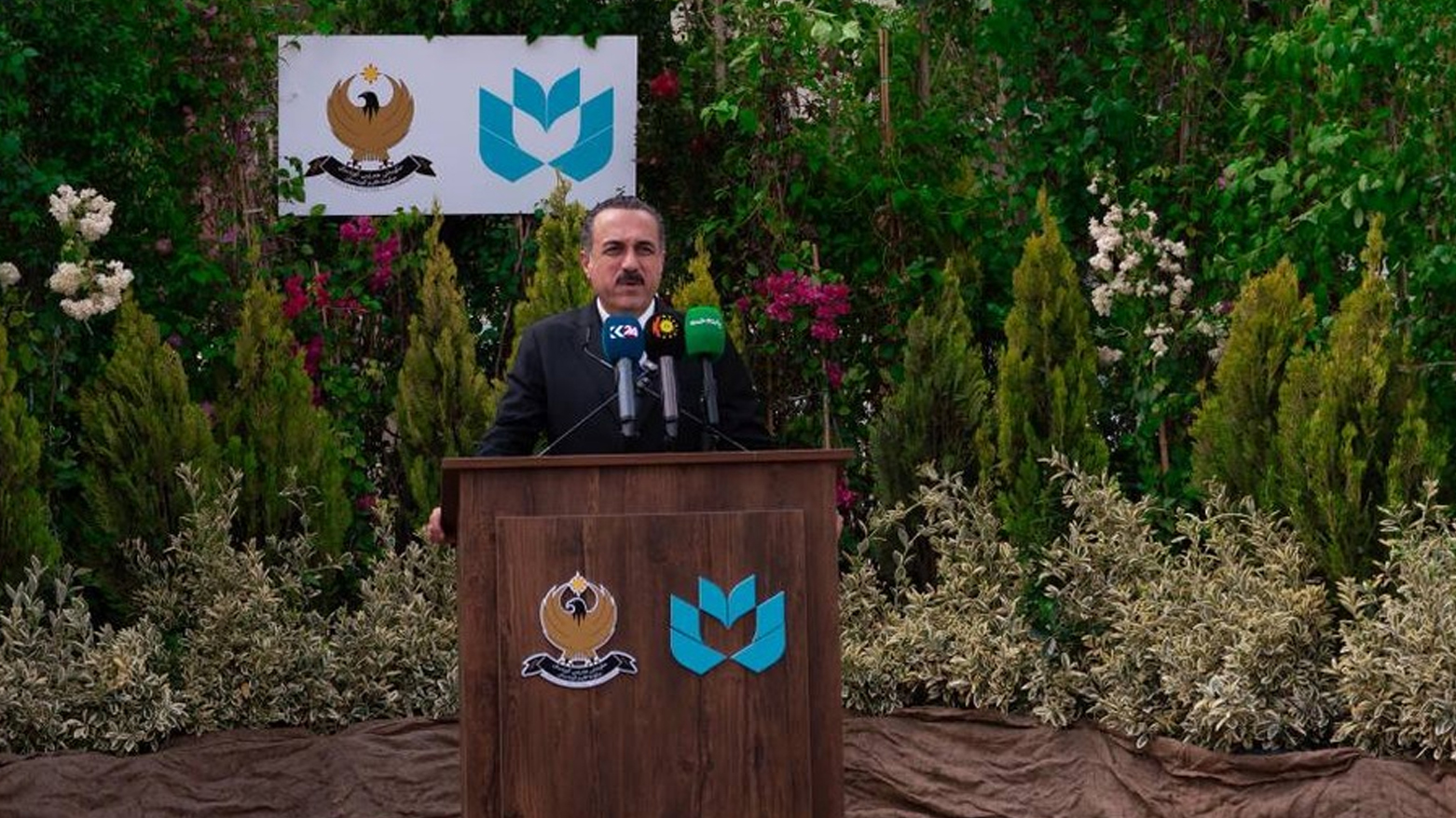
ERBIL (Kurdistan24) - Erbil provincial authorities on Sunday, in coordination with Kurdistan Foundation officially launched a major urban environmental project, laying the foundation stone for a 42,000-square-meter park in the Krekaran neighborhood. The initiative, located on the strategic Makhmur road, involves the transformation of a former local market site into a modern green space designed to bolster the city's climate resilience and public health infrastructure.
The project represents a significant shift in Erbil's urban planning, prioritizing the restoration of environmental balance in a rapidly developing district.
According to technical specifications released during the inauguration, the park will feature thousands of diverse saplings, including Sisoo, olive, and pine trees.
Beyond its aesthetic contribution to the capital, the project is engineered for a measurable environmental impact, with officials estimating that the new greenery will reduce carbon dioxide levels by more than 33 tons annually.
To ensure the sustainability of the vegetation in the Region's semi-arid climate, the project includes a sophisticated irrigation infrastructure.
This system is supported by a 100,000-liter water storage tank, highlighting a focus on efficient resource management as Erbil navigates rising regional temperatures and drought conditions.
Erbil Governor Omed Xoshnaw, speaking at a press conference during the ceremony, underscored that environmental protection and the pursuit of clean air are central pillars of the Kurdistan Regional Government's (KRG) Ninth Cabinet agenda.
He framed the Krekaran project as part of a broader, multi-layered strategy to confront the intensifying challenges posed by global climate change.
"The KRG's strategic objectives—ranging from increasing urban greenery rates and establishing green belts to the construction of dams and ponds—are all geared toward climate adaptation," Xoshnaw stated.
He further noted that the government has institutionalized these standards by making tree-planting and green-space requirements a mandatory component of private-sector development projects, ensuring that urban expansion does not come at the expense of environmental health.
The Governor also addressed Erbil's air quality, acknowledging that the capital has faced significant obstacles in recent years due to the dual pressures of regional crises and environmental degradation.
However, he indicated that consistent governmental efforts are yielding results, with air quality metrics trending toward improvement.
Xoshnaw emphasized that while the state is investing in large-scale infrastructure, the long-term success of the city's environmental modernization depends on the active cooperation of its residents in protecting public green spaces.
The development comes at a time when major cities across the Kurdistan Region are grappling with the repercussions of rapid urbanization and the broader environmental pressures affecting Iraq.
The Krekaran park is seen as a vital intervention in Erbil's urban landscape, providing a model for how repurposed commercial land can be used to mitigate the "heat island" effect and lower carbon emissions.
By integrating modern water management with carbon-sequestration goals, the project reflects a growing sophistication in the KRG's approach to urban governance.
Authorities view the new park as an essential component of a long-term modernization effort intended to improve the capital's appearance while safeguarding the well-being of its citizens through expanded green infrastructure.
As construction commences, the project stands as a tangible commitment to the KRG's stated goal of creating more sustainable and livable urban environments in the face of persistent climate challenges.