Trump Rules Out Sanctions Relief for Iran's Uranium as Rubio Says Deal is Within Reach
In the same cabinet meeting, War Secretary Hegseth declared Iran's military capacity fully destroyed while Trump drew laughs by calling him a man who 'loves war.'
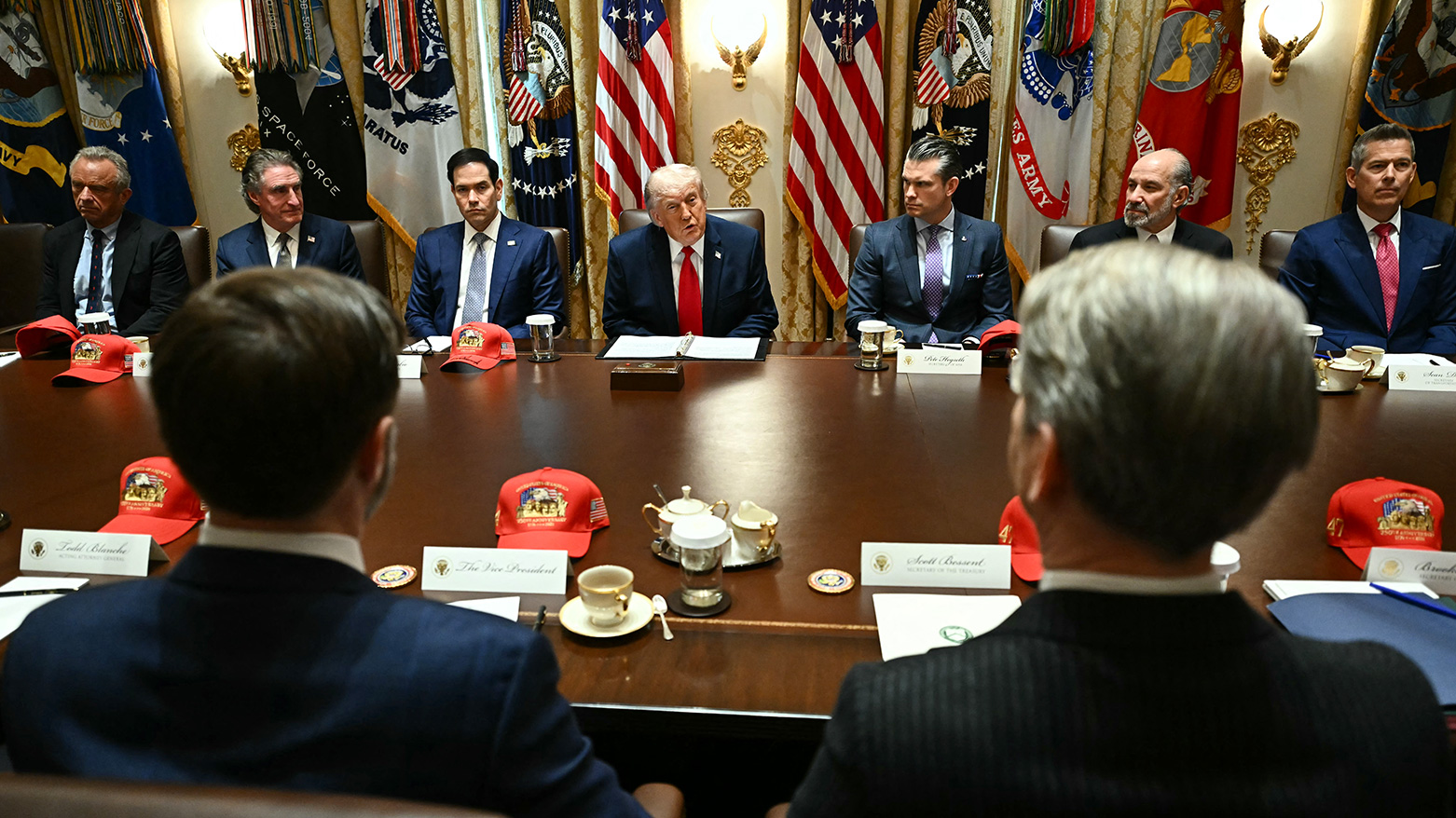
ERBIL (Kurdistan24) - President Donald Trump on Wednesday drew a firm line on one of the most contested issues in ongoing US-Iran negotiations, declaring that Washington would not offer Tehran any sanctions relief in exchange for surrendering its highly enriched uranium stockpile, even as Secretary of State Marco Rubio told the same cabinet meeting that a deal was closer than ever.
The remarks, made during the 12th cabinet meeting of Trump's second term on Wednesday, offered a rare simultaneous glimpse of American diplomatic ambition and the hard limits shaping it.
Speaking to PBS News, Trump described Iran's highly enriched uranium as a "red line" that could not be crossed, insisting Tehran would have to relinquish the stockpile, but not in exchange for any easing of economic pressure.
"Tehran wants a deal because it has no other choice," Trump said, adding that he was not satisfied with Iran's current proposals and that no final agreement had been reached.
The White House confirmed that Trump had set clear parameters for the negotiations, while characterizing the overall trajectory of talks as "good." Trump likened his current approach to Iran to the strategy his administration previously applied to Venezuela, suggesting a patient but unrelenting pressure campaign.
On Iran's domestic situation, Trump said the country had reached the "edge of the abyss," pointing to Tehran's recent decision to restore internet services as a sign of internal strain. He also dismissed Iranian calculations that US midterm elections might soften his stance.
"They are betting on my desire to end the war because of the elections, but I don't care about that," he said. "My decisions are tied exclusively to American interests and regional security."
Rubio: significant progress, results expected within hours or days
Secretary of State Marco Rubio, presenting the latest developments in both the war and diplomatic track, told the cabinet that "significant progress" had been made toward an agreement.
He reaffirmed that Iran would never be permitted to acquire a nuclear weapon and noted that recent events had once again demonstrated that Tehran remained the world's foremost state sponsor of armed groups.
"I believe progress toward an agreement has been made," Rubio said. "Our representatives are working intensively, and we will see results within the coming hours or days."
Hegseth: Iran's military is broken
War Secretary Pete Hegseth offered the starkest military assessment, declaring that the United States had brought Iran to its knees.
"Their naval forces are confined to the Persian Gulf basin, their air force and air defenses have been dismantled," Hegseth said, adding that while Iran still possessed some missiles, it could no longer produce new drones, ships, or missiles because its entire industrial infrastructure had been destroyed and it was operating under severe global sanctions.
Hegseth and Rubio also highlighted developments in Venezuela, noting that more than 10 million barrels of Venezuelan oil had reached the United States since January 3.
"This industry has been professionalized for the first time, and the profits go to the Venezuelan people — not to thieves," Rubio said. On Cuba, he described the island as "a failed state run by incompetent communists" that posed a threat to US national security.
The meeting also produced a lighter moment. When Trump introduced Hegseth to the cabinet, he drew laughter by describing his war secretary as "the perfect embodiment of a secretary of war," a man who was "competent and loves war."
The quip landed against a backdrop of sustained criticism of Hegseth from political opponents, who have accused him of adopting an excessively aggressive posture in military strategy and public messaging since the eruption of the conflict with Iran.
Wednesday's cabinet session, blending hard diplomatic lines, battlefield assessments, and presidential humor, reflected the high-stakes atmosphere surrounding the next phase of US engagement with Tehran, as negotiators on both sides work against the clock toward an agreement that could reshape the region.