IAEA Chief Reveals Kazakhstan's Willingness to Take Iran's Nuclear Stockpile
Rafael Grossi disclosed that Kazakhstan's president personally endorsed the idea of hosting Iran's near-weapons-grade stockpile
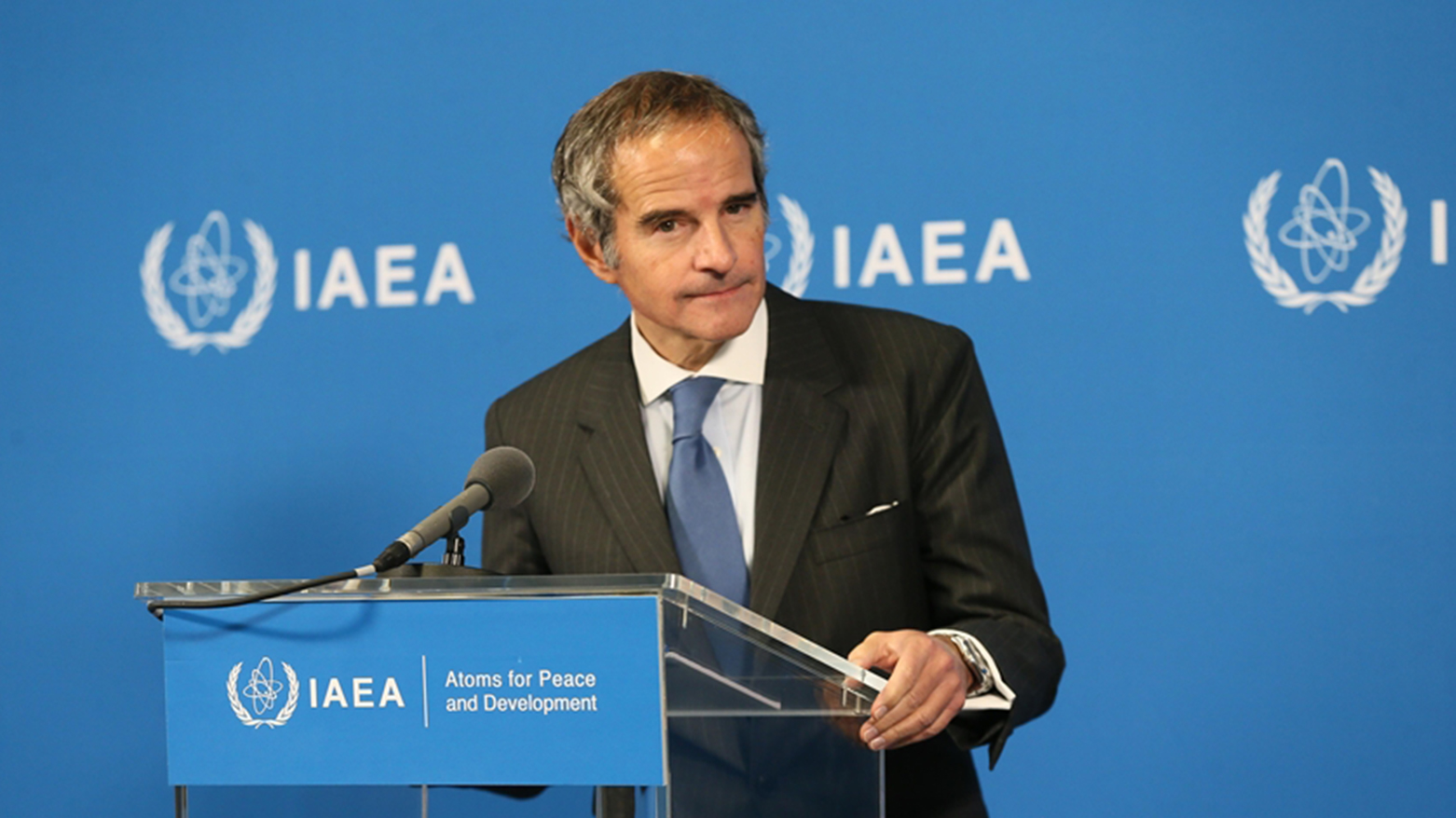
ERBIL (Kurdistan24) - The director general of the International Atomic Energy Agency (IAEA) has revealed that Kazakhstan has signaled its readiness to receive Iran's stockpile of highly enriched uranium — a disclosure that adds a concrete logistical possibility to one of the most intractable disputes in the ongoing US-Iran negotiations.
Rafael Grossi made the announcement in remarks to the British newspaper Financial Times on Friday, stating that Kazakhstan is prepared to host Iran's enriched uranium if Washington and Tehran reach an agreement on Iran's nuclear program.
Grossi added that during a meeting with Kazakhstani President Kassym-Jomart Tokayev in Astana, the president personally expressed support for the idea.
Kazakhstan is not without precedent for such a role. The Central Asian nation already hosts a low-enriched uranium bank operating under international supervision — a facility established in 2018 in coordination with the IAEA, designed to guarantee fuel supplies for member states' nuclear power plants and to prevent the proliferation of nuclear weapons.
The existence of that infrastructure makes Kazakhstan a natural candidate for any arrangement involving the transfer and storage of Iran's more sensitive material.
At the center of the dispute is approximately 440 kilograms of Iranian uranium enriched to 60 percent — a level that US and international officials regard as one of the most complex and sensitive issues in the back-channel negotiations between Washington and Tehran aimed at ending the war that the United States and Israel launched against Iran.
President Donald Trump had previously stated that the US, working in coordination with Iran and the IAEA, would excavate and transfer Iran's enriched uranium — buried beneath sites sealed by collapsed mountains following a B-2 bomber strike 11 months ago — to another location for destruction. Trump has demanded the material be moved out of Iran entirely.
Tehran, however, has publicly stated it will not surrender its nuclear stockpile, while simultaneously indicating a commitment to discussing reductions or transfers of nuclear material as part of any agreement extending the fragile ceasefire that has held until now.
The broader framework under discussion, as outlined by Trump earlier on Friday, includes the immediate opening of the Strait of Hormuz with unrestricted passage and no tolls, the lifting of the naval blockade, the clearance of mines from the strait, and Iran's permanent renunciation of nuclear weapons.
Iran's foreign ministry, however, pushed back sharply on Friday, with spokesman Esmaeil Baqaei telling state television that "there are no negotiations on the nuclear issue" at this stage, a denial that stood in direct contradiction to the terms Trump had publicly detailed hours earlier.
Kazakhstan's emergence as a potential custodian of Iran's enriched uranium offers one possible bridge between the two positions: a transfer that removes the material from Iranian soil without framing it as either surrender or destruction — and under the oversight of an international body both sides have historically engaged with.
Whether that formula is acceptable to Washington, Tehran, or both remains to be seen.