Kuwait Activates Air Defenses as Missiles and Drones Target Gulf State
The Kuwaiti military urged the public to heed safety warnings as air defense systems engaged incoming fire, following weekend strikes by U.S. forces on Iranian military sites.
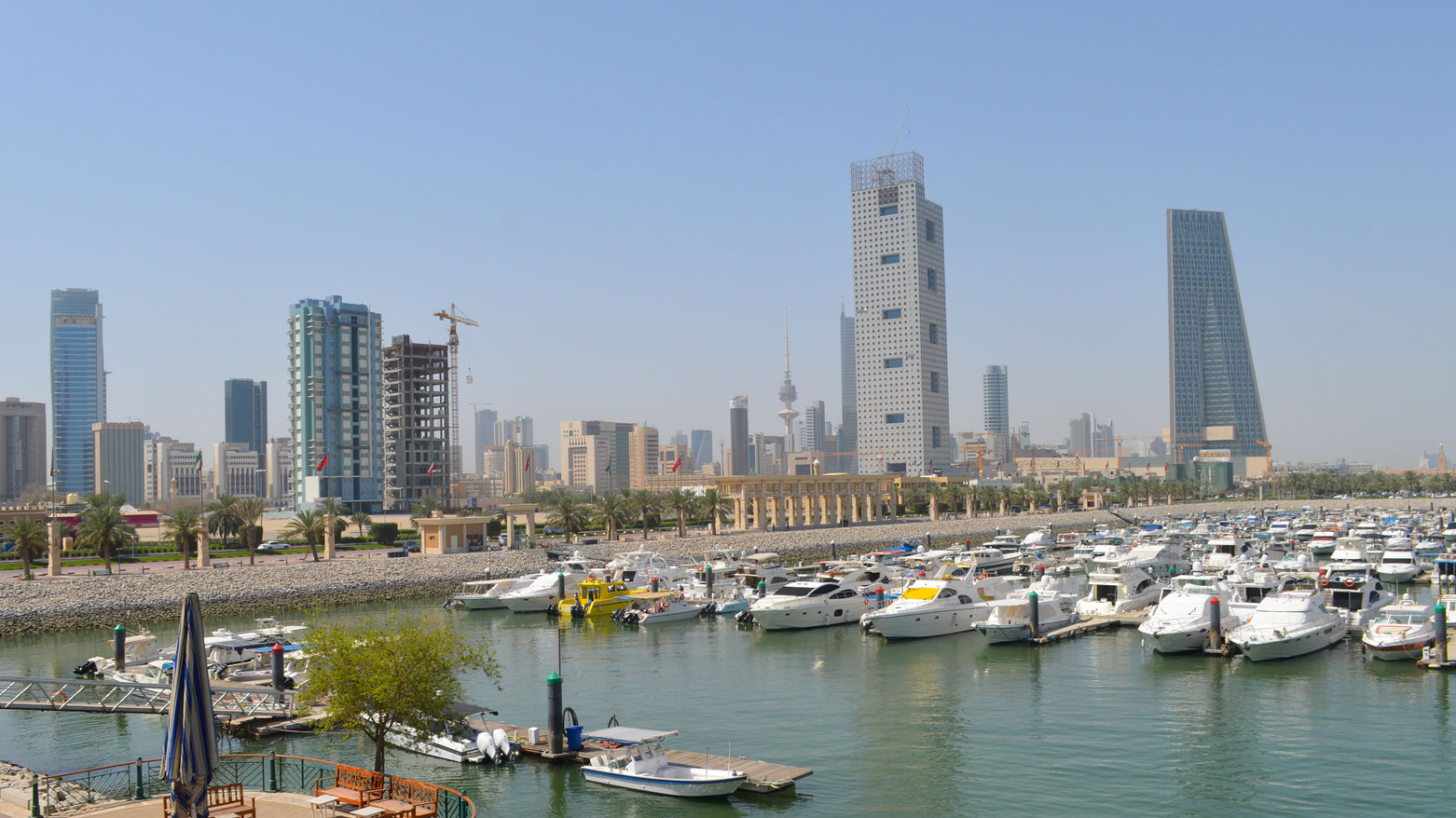
ERBIL (Kurdistan24) - Kuwait's armed forces announced early Monday that the country's air defense systems were actively intercepting a wave of hostile missiles and drones. The rare public alert urged citizens to prioritize their safety as the Gulf nation found itself abruptly caught in the escalating military confrontation between the United States and Iran.
In a statement issued on the social media platform X, the General Staff of the Kuwaiti Army confirmed the emergency deployment of its interceptor network. Military officials clarified that loud explosions echoing across parts of the country were the direct result of air defenses neutralizing incoming aerial threats mid-flight.
"The Kuwaiti Air Defenses are currently responding to hostile missile and drone threats. The General Staff of the Kuwaiti Armed Forces confirms that any explosions that may be heard are the result of air defense systems intercepting the hostile targets. The public is urged to adhere to the safety and security instructions issued by the relevant authorities," the military announced.
The announcement prioritized domestic readiness and public reassurance without immediately assigning direct blame for the launches.
The assault on Kuwaiti airspace, however, aligns directly with a sudden spike in regional hostilities. According to reporting by Jon Gambrell of The Associated Press, the barrage likely constitutes a retaliatory strike by Iran following U.S. military operations over the weekend.
Kuwait occupies a highly strategic yet vulnerable position in the Persian Gulf, hosting U.S. Army Central, the forward command for American ground forces in the Middle East. This presence frequently places the country in the crosshairs of regional proxy conflicts, despite the government's traditional role as a diplomatic mediator.
Iran's paramilitary Islamic Revolutionary Guard Corps (IRGC) acknowledged launching a counterattack, the AP reported.
A statement disseminated by the state-run IRNA news agency claimed the IRGC retaliated after U.S. forces targeted an Iranian telecommunications tower.
Underscoring the anti-American nature of the retaliation, Iranian state television broadcast footage of a ballistic missile launch featuring a graphic of a bruised U.S. President Donald Trump, overlaid on a closed Strait of Hormuz with a caption demanding that American soldiers leave the region.
The Catalyst: U.S. Strikes on Iran
The incoming fire over Kuwait followed targeted U.S. military action inside Iranian territory.
According to Gambrell's report, U.S. Central Command (CENTCOM) confirmed it struck Iranian radar installations and a ground control station around the city of Geruk and on Qeshm Island on Saturday and Sunday.
CENTCOM described the operations as a "measured and deliberate" response to the Iranian shootdown of an American MQ-1 Predator drone operating in international waters.
U.S. fighter aircraft neutralized the air defenses and two attack drones, with the military confirming no American casualties occurred during the sorties.
Navigating a Fragile Ceasefire
The dueling strikes highlight the extreme fragility of a weeks-long ceasefire between Washington and Tehran.
The AP notes that while back-channel negotiations to extend the truce continue, Iran has maintained a blockade on the Strait of Hormuz, causing severe disruptions to global energy supplies.
The blockade has also restricted the export of chemical fertilizers, of which the Gulf region produces 30 percent of the globally traded supply, sparking fears of international food shortages.
Despite the ongoing crossfire, President Trump expressed optimism about finalizing an agreement in a post on his Truth Social platform early Monday, stating that Iran wants to make a deal and advising his followers to "sit back and relax."
Yet, for Kuwait, the political optimism in Washington contrasts sharply with the immediate physical risks posed by hosting American military infrastructure.
As diplomatic efforts struggle to gain traction against the reality of tit-for-tat military strikes, Monday's interception of hostile fire serves as a stark reminder of the country's frontline position.
For Kuwaiti authorities, the primary focus remains managing domestic security and preventing the nation from becoming collateral damage in a broader regional war.