Child Labor in Iraq: Caught Between Family Poverty and Legal Gaps
As the world celebrates International Children's Day, Iraq faces an escalating child labor crisis. Driven by poverty, unemployment, and weak social protections, an estimated 900,000 Iraqi children are being forced out of classrooms and into the streets, raising alarms over lost futures.
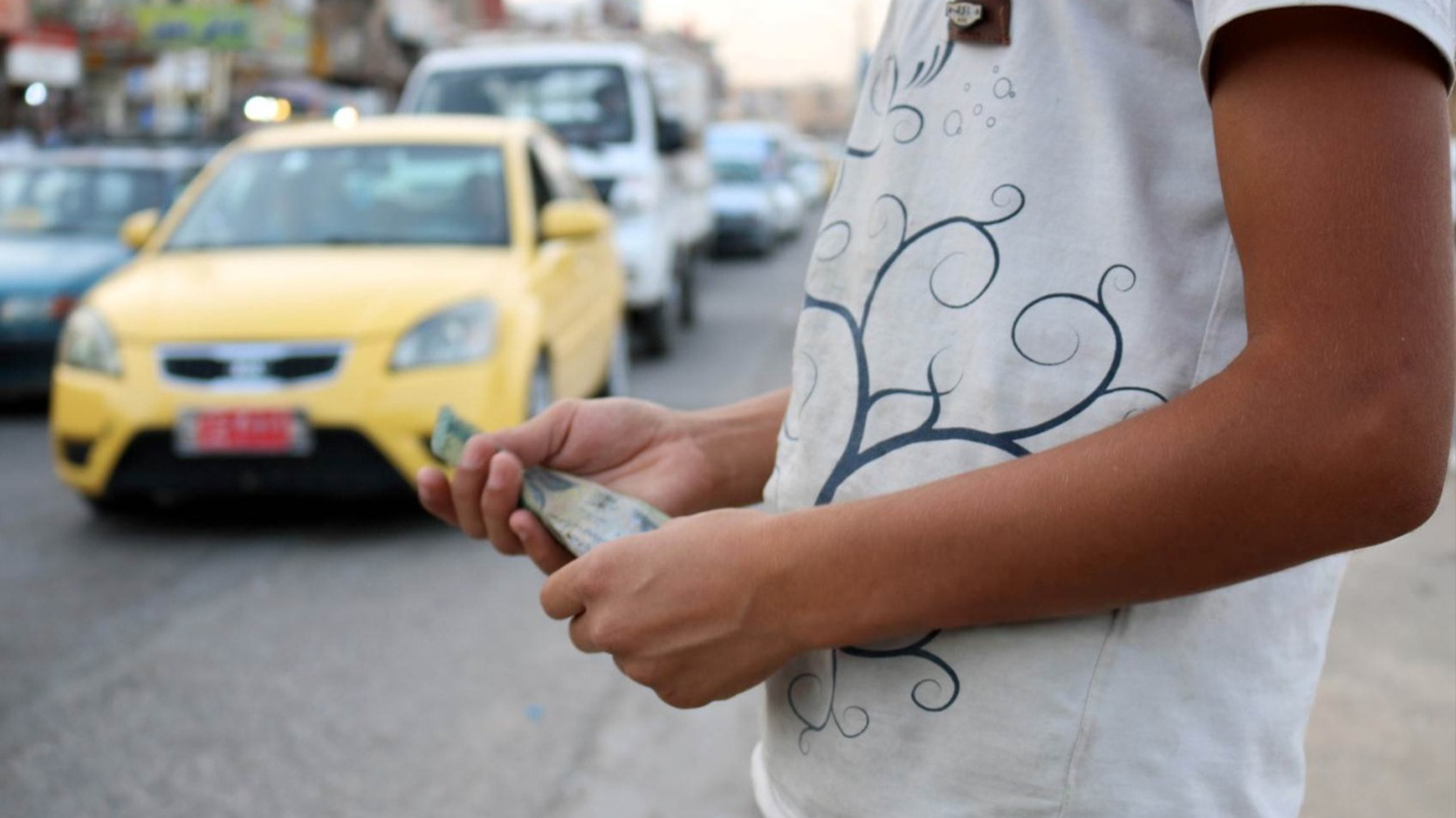
ERBIL (Kurdistan24) - The midday sun in central Iraq is unforgiving, radiating heat off the asphalt where Mohammed, a young boy clutching a handful of chewing gum, weaves through stalled traffic. He is one of the hundreds of thousands of children in Iraq for whom childhood has been reduced to a daily calculation of survival.
"The work is hard," Mohammed told Kurdistan24, shielding his eyes from the glare. "But since our monthly rent is 300,000 dinars ($230), I have no choice but to work. I've had to drop out of school, and I only earn between 5,000 and 10,000 dinars a day."
His story is a stark reality check.
As the globe observes International Day for Protection of Children, a date designated to champion the rights, education, and protection of the young, Mohammed's life underscores a profound contradiction.
In Iraq, a nation struggling to rebuild from decades of conflict, the weight of economic desperation is increasingly falling on the narrow shoulders of its children.
A Childhood Interrupted
Child labor has become one of the most visible and pressing issues across central and southern Iraq. Children between the ages of 5 and 17 are routinely seen shining shoes, peddling tissues, or scavenging in landfills.
While the Iraqi government lacks precise data, civil society organizations estimate that more than 900,000 children are currently working on the streets.
According to a recent Arab press report by Independent Arabia, highlighted by a previous Kurdistan24 report, approximately 13 percent of Iraqi children are engaged in labor deemed hazardous or exploitative.
Read More: Iraq's Lost Childhoods: Begging, Labor, and Broken Dreams
This reality stands in direct violation of the International Labour Organization's conventions and the UN Convention on the Rights of the Child.
Observers and activists point to a complex web of causes. Rapid, unplanned population growth, soaring adult unemployment, and gaping holes in the social safety net are the primary drivers.
"Unplanned births in impoverished families and high household sizes force children into the workforce to provide income," explained activist Asra Salman.
"Furthermore, social welfare payments are not only meager but, due to corruption, rarely reach those who truly qualify. All these factors have exacerbated the situation," she added.
International Day for Protection of Children and Iraq's Contradiction
The global observance of International Day for Protection of Children on June 1 serves as a bitter counterpoint to the scenes playing out at Iraqi intersections.
The day's origins date back to 1950, established in the aftermath of World War II to oppose child labor, guarantee education, and protect youth from violence.
Yet today, international organizations are issuing grim warnings. A recent report by Save the Children highlighted a disturbing global paradox: despite rising global security spending, violence and exploitation against children are escalating.
"The world is at a dangerous crossroads," warned Inger Ashing, CEO of Save the Children. "Violations have reached record levels, and child protection must be at the center of global attention."
For Iraq, these global warnings resonate deeply. UNICEF reports continually emphasize that chronic economic instability systemically deprives children of their fundamental right to education and safety.
Poverty's Grip
The economic mechanisms trapping children like Mohammed are detailed in the United Nations Development Programme's (UNDP) 2024 Analytical Report on Multidimensional Poverty in Iraq.
The report emphasizes that poverty in the country is not merely a lack of income, but a multidimensional crisis encompassing severe deprivations in education, health, and living standards.
When a household experiences a severe economic shock, such as the loss of a breadwinner, sudden unemployment, or surging inflation, the burden cascades down to the youngest members.
The UNDP identifies human capital development and poverty reduction as urgent national priorities.
However, when families cannot afford rent or basic necessities, the long-term value of education is sacrificed for the immediate need to survive.
Legal Protections, Weak Enforcement
The Iraqi government has acknowledged the severity of the crisis, launching a comprehensive national plan aimed at halving child labor rates by 2027.
Hassan Khawam, spokesperson for the Ministry of Labor, announced measures to double the number of labor inspectors and intensify raids on private workshops exploiting minors under the legal working age of 15.
Furthermore, the ministry's "school grant" program, which provides monthly stipends to families enrolled in the social protection network, has reportedly helped return 123,000 school dropouts to the classroom.
Yet, experts warn that legislative frameworks alone are insufficient. Fadel al-Gharawi, head of the Strategic Center for Human Rights, noted that Iraq ranks fourth among Arab countries in child labor rates.
Gharawi highlighted that the crisis is deeply intertwined with organized begging networks, revealing that a significant percentage of street children are controlled by organized crime syndicates.
He has urged the government to dismantle these networks under anti-terrorism laws, calling them "a threat to social and cultural security."
Human rights activists echo the need for profound structural change.
"No plan will achieve the desired change without providing genuine educational opportunities and psychological support programs for children," argued activist Ali al-Mayyahi, warning against relying on "seasonal or superficial campaigns."
The Cost of a Lost Childhood
The consequences of this epidemic extend far beyond the immediate physical dangers faced by working children.
When hundreds of thousands of youth are pushed out of the classroom, the country risks cementing a cycle of intergenerational poverty.
Academician Nahla Al-Enezi warned that the collapse of Iraq's social and legal order has turned begging and child labor into entrenched professions, fostering environments ripe for broader societal issues, including human trafficking and drug abuse.
For Mohammed, the geopolitical discussions and government plans are distant abstractions. His reality is the heat of the pavement and the daily quota of gum he must sell to help his family stave off eviction.
As the world marks International Day for Protection of Children with pledges to protect the vulnerable, Iraq stands at a critical juncture.
The true test for the government will be whether it can bridge the vast gap between its legal commitments and the harsh economic realities of its streets, and whether it can finally return children like Mohammed to the classrooms where they belong.