'Iran Is Playing With Fire': Netanyahu Pushes for Full Disarmament of Hezbollah
Israel's prime minister projects strategic confidence while Trump publicly admits pressuring Netanyahu to halt Lebanon operations he fears could derail diplomacy with Tehran.
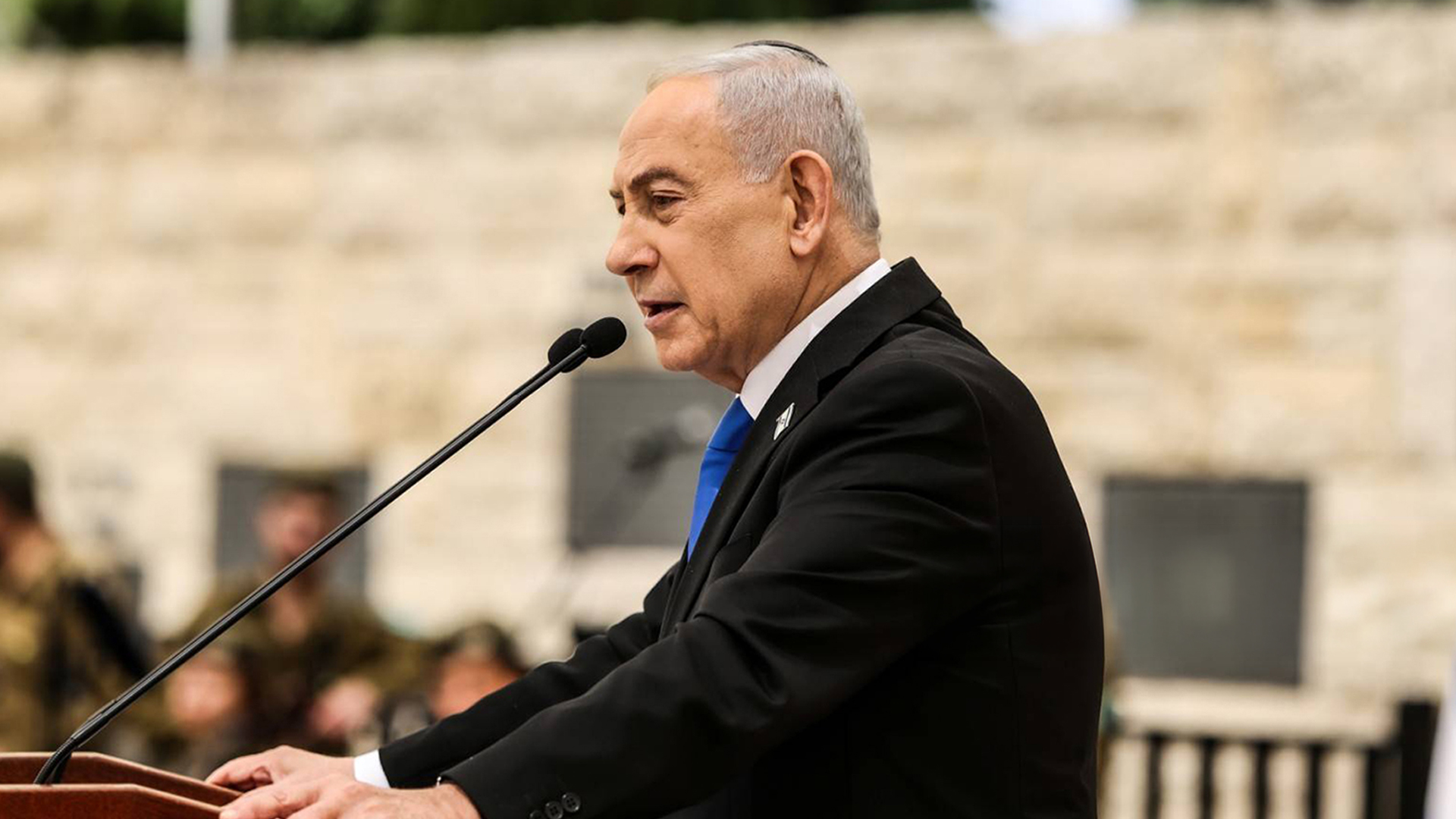
ERBIL (Kurdistan24) - Benjamin Netanyahu has a way of projecting certainty in moments of maximum uncertainty. On Wednesday, the Israeli prime minister sat for an interview with CNN and delivered a sweeping verdict:
Iran is fracturing from within, Israel has never been stronger, and the alliance with Donald Trump — whatever its turbulence — remains strategically sound. Hours later, Trump confirmed publicly that he had told Netanyahu to stop the war in Lebanon.
The juxtaposition was not incidental. It was the defining tension of the day.
Netanyahu's diagnosis of Iran was categorical. "We see cracks and fissures inside Iran," he said. "Israel has never been stronger, and Iran has never been weaker."
He reached for historical analogies to convey the magnitude of the moment, comparing a potential Iranian collapse to the fall of the Berlin Wall and the implosion of Romania's former government, changes, he noted, that tend to arrive suddenly and without warning.
His prescription was precise: all nuclear material must be removed from Iran and its uranium enrichment infrastructure fully dismantled.
He and Trump, he said, share that objective completely, with Trump believing it can be achieved through "diplomatic pressure and tough negotiations."
On Iranian drone and missile strikes against US forces in Kuwait and Bahrain, Netanyahu left little room for ambiguity. "Iran knows what Trump has said — if necessary, there will be a comprehensive military response."
Israel and the United States, he added, are at full operational readiness. "Iran is playing with fire."
On Lebanon, Netanyahu was equally unequivocal. He accused Hezbollah of holding the Lebanese people hostage and using the country as a launchpad against Israel.
"If we want to save Lebanon and achieve peace, Hezbollah must be disarmed and Lebanon must be cleared of that group's military forces," he said, describing full disarmament as a shared goal between himself and the American president.
He warned that if Hezbollah's strikes on Israeli cities continue, Israel will press on with targeted operations against the group's commanders inside Beirut.
The Call Trump Confirmed
That posture has placed Netanyahu on a direct collision course with Washington. In a separate interview relayed by Fox News, Trump confirmed a highly confrontational phone call with the Israeli leader over the Lebanon campaign.
"I was a little bit perturbed at his constantly fighting with Lebanon," Trump said. "At some point I said, 'Bibi, we gotta stop this.'"
Trump stressed that his personal relationship with Netanyahu remains strong, but made clear that his pressure to accelerate a ceasefire has intensified.
Earlier reporting by Axios described the call as among the worst between the two leaders since Trump returned to office, with the U.S. president furious that Israeli threats against Beirut were undermining sensitive American negotiations with Iran.
Following the call, Israel reportedly shelved immediate plans to strike targets in the Lebanese capital.
Netanyahu, asked directly whether the relationship had changed, pushed back. "No, our relationship is very good," he said.
He disclosed that the two speak on average every two days, acknowledged occasional "tactical differences," but insisted that on strategic objectives they are fully aligned, including efforts to expand the Abraham Accords and broaden the circle of regional peace.
The deeper friction the CNN interview revealed is not a rupture but a mismatch of urgency. Netanyahu is prosecuting a military campaign he frames as existential.
Trump is managing a diplomatic process he cannot afford to see collapse. For Washington, the Lebanon escalation is not a sideshow, it is a variable with the potential to unravel negotiations with Tehran and invite a wider regional confrontation that the administration has spent months trying to prevent.
Netanyahu also used the interview to disclose that the two countries are working toward a memorandum of understanding that would elevate the relationship from cooperation to full strategic "partnership," including a military dimension.
Whether that architecture holds through the Lebanon campaign, and whether Netanyahu's declaration of Iranian weakness proves prescient or premature, are the questions this crisis has not yet answered.