What 34 Boxes Reveal About Syria's Hidden Weapons Infrastructure
For years, inspectors suspected Syria's chemical weapons story was incomplete. Now, newly uncovered records could reveal what remained hidden.
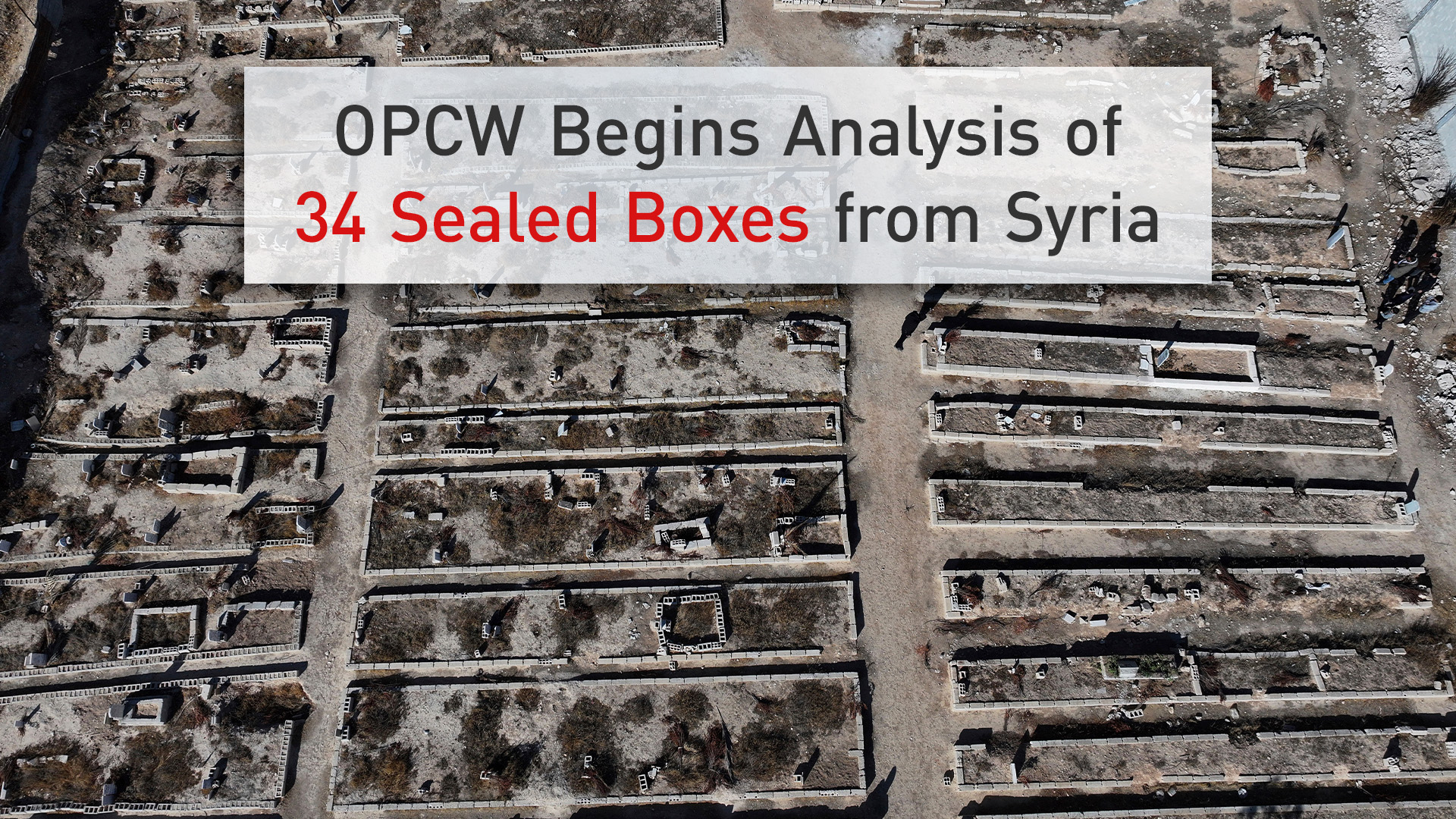
ERBIL (Kurdistan24) - International weapons inspectors have begun analyzing 34 sealed cardboard boxes containing critical documentation from Syria, a major development in the effort to uncover the hidden remnants of the country's chemical weapons program. The newly surrendered files are being processed in Damascus as investigators confirm the discovery of previously undeclared chemical munitions, rockets, and toxic agents across the country.
The analysis of the documents, handed over by current Syrian authorities to the Organization for the Prohibition of Chemical Weapons (OPCW), marks a significant turning point.
For years, international investigators have struggled to piece together the full scope of the chemical weapons infrastructure built under former President Bashar al-Assad, frequently citing incomplete disclosures and suspected concealment efforts.
The 34 boxes could prove as critical as the physical weapons themselves.
Access to these records may allow OPCW experts to cross-reference past declarations, trace the procurement networks that supplied the program, and identify additional hidden sites that have eluded detection for over a decade.
A Momentous Discovery
The document transfer aligns with dramatic new findings on the ground.
Briefing the United Nations Security Council on Thursday, Izumi Nakamitsu, the UN Under-Secretary-General and High Representative for Disarmament Affairs, announced that a "significant amount" of undeclared chemical weapons, related materials, and thousands of pages of documentation have been discovered.
Crucially, Nakamitsu revealed that inspectors located rockets matching the exact type used in the devastating August 2013 chemical attack on the Syrian region of Ghouta.
"These findings are a momentous discovery - not just for Syria, but for international security and the global disarmament regime," Nakamitsu told the Security Council, according to a report by Asharq Al Awsat.
She attributed the breakthrough to the OPCW's relentless efforts and the new Syrian government's compliance with international law.
The physical discoveries followed the deployment of an OPCW team earlier this month.
According to reporting by Agence France-Presse (AFP), the watchdog deployed experts to verify the accuracy of Syria's historical stockpile declarations.
With the backing of the current Syrian authorities, the team searched several "high-priority undeclared locations" in the northern coastal and central regions.
The OPCW reported finding dozens of undeclared chemical munitions, including aerial bombs and rockets, alongside separately stored chemicals and related equipment, AFP reported.
Dismantling a Hidden Legacy
The recent discoveries validate longstanding international suspicions.
Syria officially joined the OPCW in 2013, agreeing to surrender its toxic stockpiles to avert the threat of Western airstrikes following the Ghouta attack. At the time, the Assad government claimed that chemical weapons were stored at 26 specific locations.
However, the OPCW consistently maintained that the initial declaration was incomplete.
According to reporting by Molly Quell of The Associated Press, the watchdog group had reason to suspect the existence of an additional 100 undeclared sites scattered across the country.
Over the course of the 13-year civil war, the OPCW repeatedly found evidence that the Assad government utilized chemical weapons against civilian populations, despite vehement denials from Damascus.
Following the overthrow of the Assad government in 2024, the security of those hidden stockpiles became a source of intense global anxiety.
The interim government, led by President Ahmad al-Sharaa, moved quickly to address those fears, publicly pledging to eradicate any remaining traces of the program.
Addressing the OPCW in The Hague last year, Syrian Foreign Minister Asaad Hassan al-Shaibani formally requested international assistance to safely eliminate the illegal munitions, the AP reported.
Shaibani committed the new government to ending the "painful legacy" of the Assad era and bringing justice to the victims of chemical warfare.
Diplomatic Reactions and Accountability
The discoveries and the subsequent cooperation from Damascus have been widely praised at the UN Security Council, signaling a rare moment of diplomatic consensus regarding Syria.
Tammy Bruce, the Deputy U.S. Representative to the UN, welcomed the return of OPCW teams to the country and commended the Syrian government for its flexibility and determination to "turn the page on the past," according to Asharq Al Awsat.
Similarly, Jennifer MacNaughtan, the UK Minister Counsellor at the Security Council, highlighted how the recent discoveries expose the deception of the previous government.
She noted that the Assad regime had repeatedly claimed it possessed no active chemical weapons program after 2014, adding that the newly found munitions "demonstrates unequivocally that this claim was false."
Jerome Bonnafont, France's Permanent Representative to the UN, reminded the Council that the previous regime had deployed chemical weapons against its own people in at least nine confirmed instances.
He expressed hope that the remaining stockpiles would be rapidly secured and destroyed, characterizing the current cooperation as a "new chapter in the country's history."
Even nations that traditionally shielded the Assad government at the UN have acknowledged the need to finalize the disarmament process.
China's Deputy Permanent Representative affirmed that closing the chemical weapons file is essential to redirecting national resources toward reconstruction and development.
The Path Forward
While the diplomatic tone at the UN has been largely optimistic, the task ahead for the OPCW remains formidable. The chemicals and equipment discovered at the undeclared sites are currently undergoing rigorous analysis, and the physical search of suspected locations is ongoing.
“This cooperation will remain critical going forward, as the newly discovered elements now need to be declared and destroyed, under the OPCW Technical Secretariat's verification,” Nakamitsu stated.
For Syrian officials, the process of unearthing these hidden weapons is a necessary but grim undertaking. Ibrahim Olabi, Syria's Permanent Representative to the UN, described the discoveries as a decisive turning point for accountability and a crucial service to regional security.
Yet, he acknowledged the heavy emotional toll the findings carry for a population deeply scarred by chemical warfare.
"The recent progress is bittersweet as it brings back terrible memories of the previous government," Olabi told the Security Council, according to Asharq Al Awsat. "Syria suffered from chemical weapons for more than 12 years... Today, it is committed to rid itself of its legacy."
As OPCW experts continue to analyze the 34 sealed boxes of documents, the international community is watching closely.
The contents of those files hold the potential to not only map the final remnants of the Assad-era stockpiles but to permanently dismantle the infrastructure of one of the 21st century's most devastating chemical weapons programs.
|
Summary The OPCW is analyzing 34 sealed boxes of documents handed over by Syrian authorities as investigators uncover previously undeclared chemical weapons. The discoveries, which include munitions and rockets, represent a major breakthrough in dismantling the hidden legacy of the Assad-era program. |