Harvesting Resilience: How Displaced Sinjar Families are Transforming Duhok's Agricultural Landscape
Amid the hardships of long-term displacement, nearly 1,000 Ezidi families have turned to farming in Duhok, becoming a vital engine for local food production and a symbol of economic endurance.
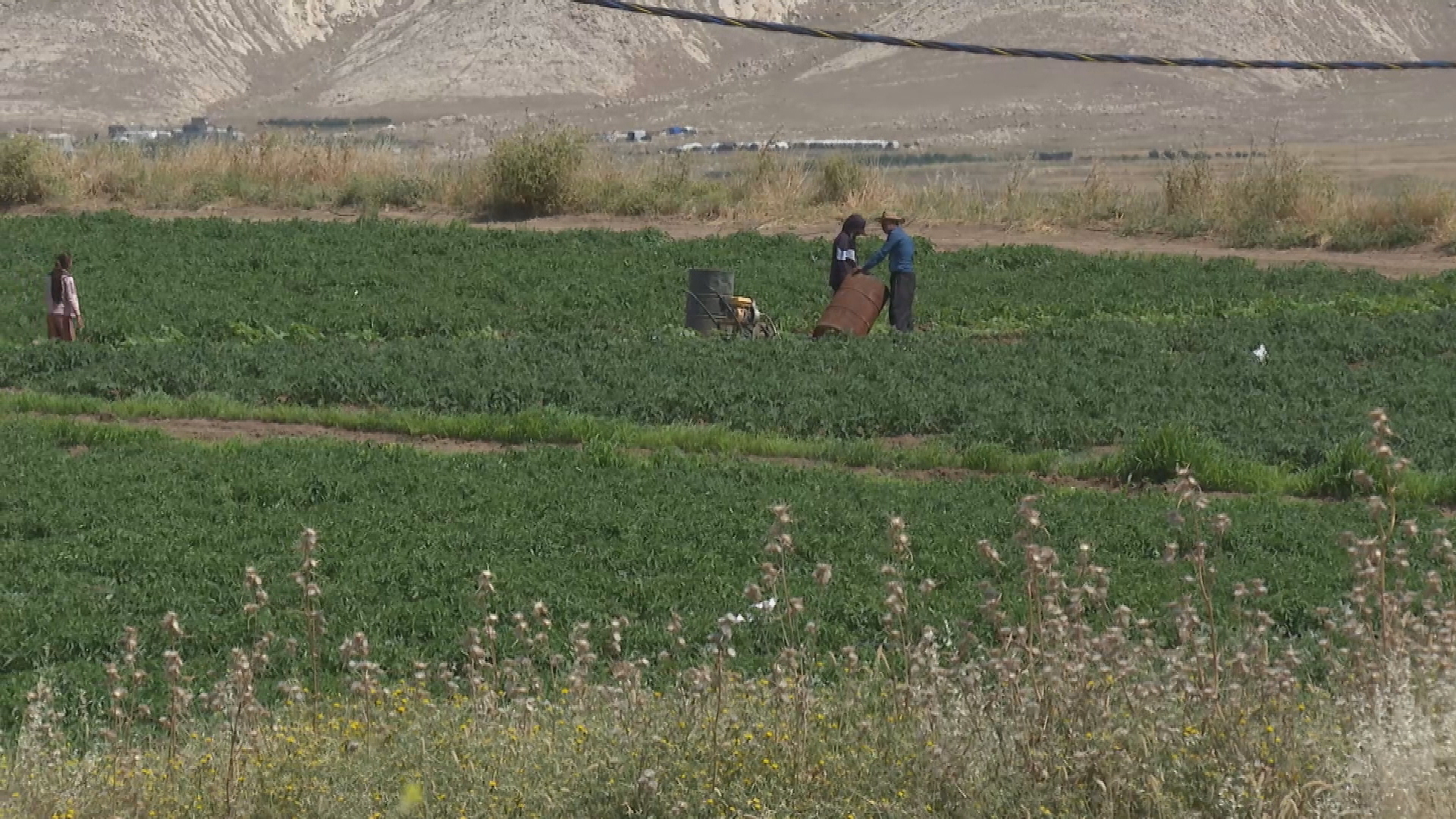
ERBIL (Kurdistan24) - For nearly a decade, the Ezidi (also known as Yazidi) families who fled the horrors of the 2014 Sinjar genocide have lived in a state of suspended animation, their lives defined by the precariousness of displacement. Yet, across the fertile expanses of Duhok province, a quiet, industrious transformation is taking place.
Roughly 1,000 displaced families from Sinjar have traded the uncertainty of camp life for the rhythm of the harvest, leasing agricultural land to plant seasonal crops that are increasingly feeding the Kurdistan Region.
This agricultural mobilization represents more than just a survival strategy; it is a testament to the resilience of a community that has refused to be defined by loss.
By converting dormant land into productive farmland, these families have integrated themselves into the local economy, finding a measure of dignity and self-sufficiency that displacement often seeks to strip away.
From Survival to Sustainability
The work is grueling, and the economic hurdles are steep.
Mazin Qairani, a displaced farmer from Sinjar, told Kurdistan24 that his family has spent the last decade laboring on leased Duhok land, often working seven to eight hours daily under the unrelenting sun.
"The work is physically demanding," Qairani noted, pointing to the rising costs of pesticides, fertilizers, and other essential agricultural inputs that often eat into meager profit margins.
Furthermore, he highlighted that the struggle does not end at harvest; families frequently face significant challenges accessing local markets to ensure their produce is sold at fair prices.
Despite these obstacles, the KRG's agricultural authorities have moved to facilitate their integration.
Muslih Hassan, Assistant Director-General of Agriculture in Duhok, told Kurdistan24 that these farmers bring with them a wealth of agricultural expertise.
Recognizing their contribution to the province's food supply, the directorate has taken steps to assist with the marketing and distribution of their harvest. This state-supported facilitation is vital, as the farmers' labor directly feeds into Duhok's massive annual production of 128,000 tons of tomatoes and cucumbers.
A Region-Wide Agricultural Pivot
The success of these displaced farmers is unfolding within a broader, regional agricultural resurgence. Under Prime Minister Masrour Barzani's Ninth Cabinet, the Kurdistan Regional Government (KRG) has prioritized the modernization of the agricultural sector as a cornerstone of its economic diversification agenda.
This strategy seeks to transition the Kurdistan Region from an oil-dependent economy to one capable of serving as a regional "food basket."
According to recent reporting by Kurdistan24, this policy framework encompasses everything from the expansion of rice cultivation in Amedi, where farmers are now planting prized varieties like Riteke, to the establishment of the Kurdistan Agriculture Export Initiative (KAEI).
Read More: From Local Staple to Global Export: Kurdistan's Rice Boom Signals Agricultural Shift
The initiative uses the "Made in Kurdistan" label to help local producers reach markets as distant as the United Kingdom, Germany, and the United States.
For displaced families, this broader policy shift has been transformative. As Hakar Hamid, the Director of Agriculture for Amedi, recently emphasized, the KRG has invested heavily in concrete irrigation channels and water management systems.
These foundational infrastructure projects are not limited to wealthy landowners; they provide a more reliable, predictable environment for all farmers, including those who are renting land or just beginning to establish their operations in new districts.
Infrastructure as a Catalyst for Stability
The replenishment of water sources this year, spurred by abundant rainfall and proactive KRG water-harvesting projects, has served as a powerful catalyst for growth.
Across Duhok province, the government's push to build dams and ponds has transformed the agricultural landscape, allowing for expanded cultivation in areas that were previously prone to water stress.
As noted in recent coverage regarding the broader transformation of the KRG's water sector, these infrastructure investments, including the completion of nine new dams during the current cabinet, are designed to mitigate drought risks while supporting climate-resilient farming.
For a displaced family in Duhok, a functional irrigation channel or a nearby pond can mean the difference between a failing crop and a successful season.
These state investments have effectively lowered the barrier to entry for displaced families who possess the skills to farm but lack the capital to build their own water infrastructure.
Looking Toward the Future
The resilience of Sinjar's displaced families, combined with the government's aggressive expansion of infrastructure, is reshaping the rural economy of Duhok.
What began as a desperate necessity for displaced households has matured into a sophisticated agricultural presence that contributes significantly to the Kurdistan Region's food security.
The challenges remain real, including the fluctuations of global market prices, the rising cost of imported inputs, and the constant need for better logistics and cold-storage facilities.
However, the trajectory is clear. Agriculture has evolved from a temporary survival mechanism into a source of stability, offering displaced families a path to economic participation and community building.
As the Kurdistan Region continues to modernize its agricultural supply chains and push for greater export capacity, the contribution of these families will likely grow in importance.
Their story is a powerful reminder of how, even in the shadow of historical tragedy, strategic investment and human industry can build new foundations for a more resilient and sustainable future.
|
Summary Nearly 1,000 displaced families from Sinjar have revitalized their livelihoods through agriculture in Duhok. Bolstered by government-backed irrigation and favorable rainfall, these resilient farmers are boosting local production and finding stability in Kurdistan's growing economy. |