20 Kurdish Farmers Face Trial Over Land Dispute in Khurmatu
Lawsuits filed by relocated Arab settlers bring decades-old land ownership disputes in the Kurdistani Territories outside KRG Administrative control back before the courts.
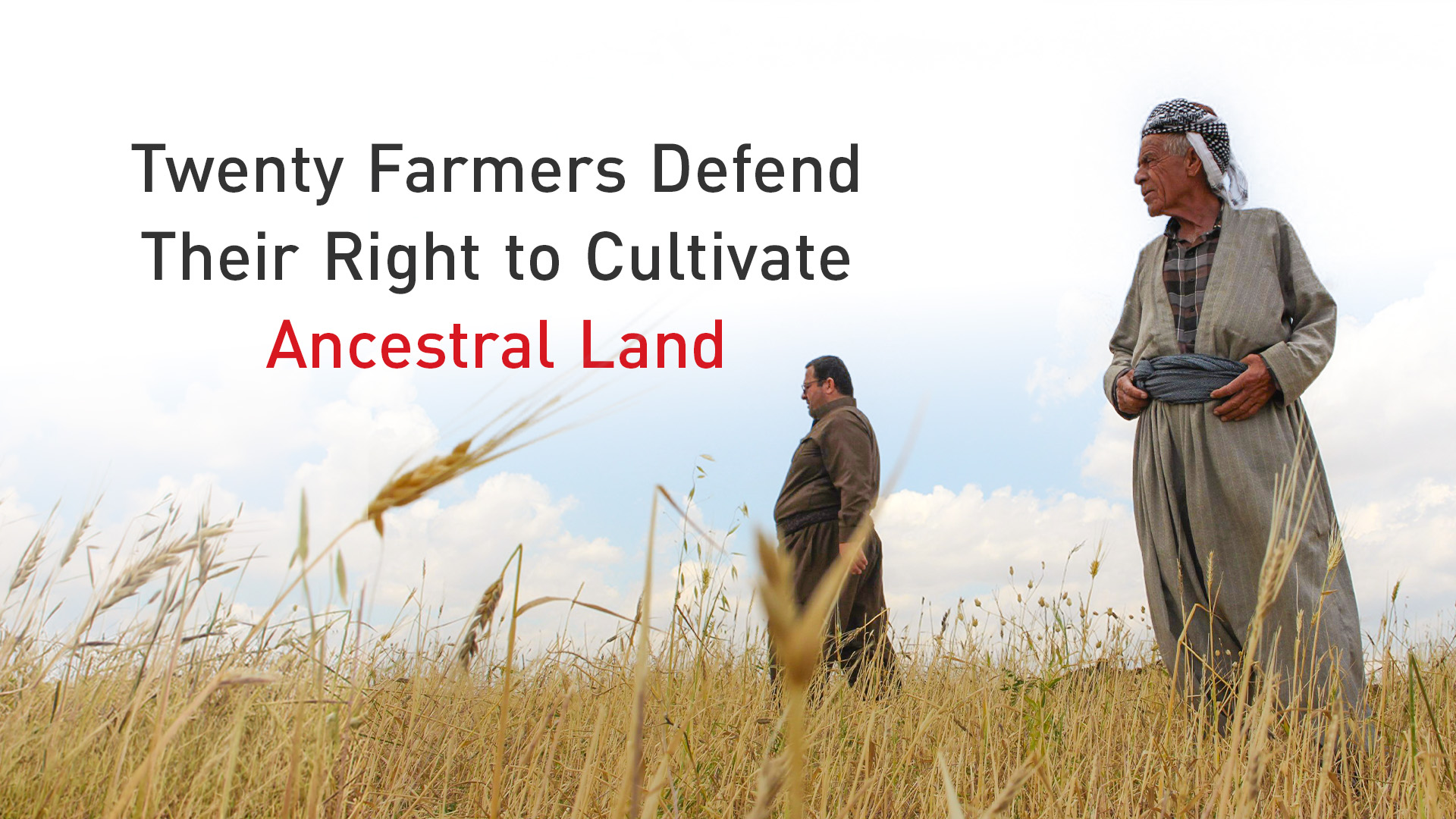
ERBIL (Kurdistan24) - Twenty Kurdish farmers from the village of Tapa Sawz in Khurmatu, near Kirkuk, appeared before a local court on Monday in a case that has become the latest legal test in the long-running struggle over agricultural land in the Kurdistani Territories outside KRG Administrative control.
The proceedings stem from lawsuits filed by relocated Arab settlers who claim ownership of farmland currently cultivated by the Kurdish farmers and allege they were assaulted during recent confrontations linked to the disputed fields.
While the court is expected to examine those specific claims, the case reaches far beyond a single village, reflecting unresolved questions over land ownership that have shaped rural communities for decades.
According to Kurdistan24's reporting from Kirkuk, the complaints before the Khurmatu Court center on two issues.
The plaintiffs maintain that the land belongs to them under existing documentation and further allege that physical altercations occurred during disputes over access to the fields.
The Kurdish farmers are now required to respond to those allegations through the judicial process.
Although the hearings focus on individual legal claims, the dispute itself is rooted in a much longer history.
Large areas of agricultural land across Kirkuk, Khurmatu, Khanaqin and Nineveh were confiscated during the rule of Iraq's former Ba'ath regime.
Under policies commonly associated with the Arabization campaign, thousands of acres previously farmed by Kurdish and Turkmen families were redistributed through state-issued agricultural contracts to Arab families relocated from central and southern Iraq.
Those historical measures continue to influence present-day ownership disputes, particularly in rural areas where competing claims remain unresolved.
As farmers attempt to cultivate land that has supported local communities for generations, questions surrounding historical title, government-issued contracts and subsequent legal authority continue to surface in courtrooms across the region.
The latest case from Tapa Sawz therefore represents more than a localized disagreement over cultivation rights. It illustrates how legal institutions continue to grapple with disputes that trace their origins to policies enacted decades ago and whose consequences remain visible in the daily lives of farming communities.
The Khurmatu proceedings also unfold against the backdrop of other ongoing court cases involving Kurdish farmers in the Kurdistani Territories outside KRG Administrative control.
Among the most closely watched is the legal case involving Mohammed Amin, the representative of Kurdish farmers in Sargaran. His case, which was transferred from the Dubz district court to the Kirkuk Misdemeanor Court, involves two lawsuits related to events surrounding earlier confrontations over agricultural activities.
Amin has publicly rejected the allegations against him and said video footage recorded during the incident supports his account of events.
He has also questioned the transfer of the proceedings to Kirkuk, arguing that the change in venue has contributed to delays in the case. His hearings, held over July 19 and 20, have become another focal point in broader legal disputes affecting Kurdish farmers seeking to cultivate agricultural land.
Taken together, the two cases demonstrate that courtroom proceedings have increasingly become the arena in which longstanding disagreements over farmland, access and competing legal claims are being contested.
For many farming families, however, legal uncertainty is only one of several pressures affecting agricultural life.
Only days before the Khurmatu trial, another incident highlighted the security challenges confronting rural communities.
In Kirkuk's Laylan sub-district, Kurdish farmer Sattar Jabbar was killed after pursuing individuals accused of stealing his wheat harvest.
According to Kurdistan24's reporting, Jabbar, accompanied by two fellow farmers, confronted suspected thieves after discovering his crops had been taken. During the ensuing exchange of gunfire, he sustained fatal injuries.
His family told Kurdistan24 that he had repeatedly raised concerns with security authorities about thefts targeting his harvest and livestock but believed insufficient action had been taken before the incident occurred.
Kirkuk security officials later announced that suspects had been identified and said efforts were underway to bring those responsible to justice.
Although unrelated to the legal proceedings in Khurmatu, the killing underscored the broader challenges facing agricultural communities, where concerns over land access, harvest protection and rural security increasingly intersect.
For Kurdish farmers across the Kurdistani Territories outside KRG Administrative control, the courtroom has become one front in a broader effort to protect agricultural livelihoods while navigating overlapping legal claims that remain deeply connected to Iraq's modern history.
The outcome of the Tapa Sawz case will ultimately rest with the judiciary and the evidence presented before the court.
Yet its significance extends beyond the immediate parties involved.
Alongside the continuing proceedings in Sargaran and recent security incidents affecting farmers in Kirkuk, the trial reflects the enduring complexity of agricultural land disputes that continue to influence rural stability, farming activity and confidence in legal processes across the region.
As hearings continue, many farming communities will be watching closely, viewing the proceedings not only as a determination of individual claims but also as another chapter in the continuing effort to address longstanding questions surrounding land rights, agricultural livelihoods and the rule of law in the Kurdistani Territories outside KRG Administrative control.
|
Summary Twenty Kurdish farmers from Tapa Sawz appeared in court after lawsuits filed by relocated Arab settlers over farmland ownership and alleged assault. The case reflects broader legal disputes rooted in former regime land policies and continuing challenges facing farming communities. |