State Department Accuses Iran, Russia, and China of Weaponizing Antisemitism as Foreign Policy Tool
Confidential report transmitted to Congress on May 26 details IRGC social media operations, a plot to assassinate a rabbi in Azerbaijan, and a Chinese diplomat comparing Israel to Nazi Germany
ERBIL (Kurdistan 24) - The United States State Department has formally accused Iran, Russia, and China of deliberately deploying antisemitic narratives, threats, and physical attacks as instruments of foreign interference, in a confidential report transmitted to Congress on May 26, 2026, and first disclosed by Axios on Monday.
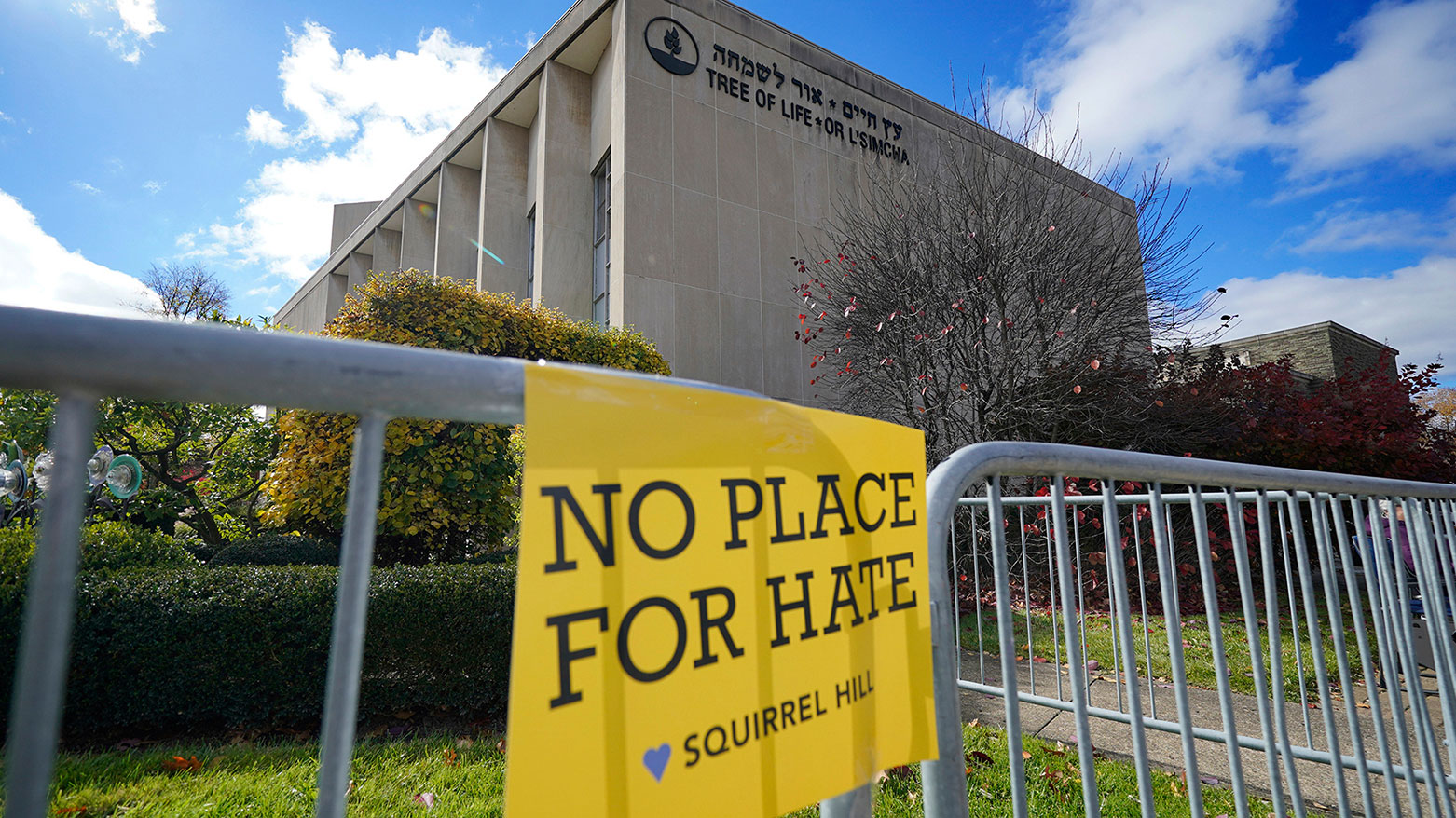
The report, required under the State Department's annual congressional appropriations bill, concludes that all three governments and their affiliated non-state actors have incorporated antisemitism into coordinated operations across both physical and digital domains. "Iran, Russia, China and affiliated non-state actors employed antisemitic symbols, graffiti, threats and online propaganda across physical and cyber domains," the report states, adding that the deliberate targeting of Jewish institutions, memorial sites, and religious symbols "is intended to provoke fear and outrage, polarize societies and erode public trust."
Iran's IRGC at the Centre of Digital Operations
As Axios reported on Monday, the document details how Iran's Islamic Revolutionary Guard Corps leveraged networks of social media bots to amplify antisemitic narratives online, as part of a broader influence operation targeting Western audiences. The report also describes an IRGC-linked plot to assassinate a rabbi in Azerbaijan, extending Iran's alleged antisemitic operations from the digital sphere into direct physical threats against Jewish religious figures.
The allegations against Iran in the State Department report come alongside broader documented activities. Combat Antisemitism Movement confirmed on May 21, 2026, that Mohammad Baqer Saad Dawood Al-Saadi, commander of Kataib Hezbollah, an Iranian-backed terrorist group, was charged by the US Justice Department with plotting attacks on Jewish targets in the United States, Canada, and Europe, including a plan to bomb a synagogue in New York City.
The wider conflict has been accompanied by a documented surge in antisemitic incidents globally, with close to half of recorded cases directly tied to the war. These included threats, violence, and conspiracy theories blaming Jewish communities for the conflict.
China's Consul General Drew Comparisons to Nazi Germany
On China, the State Department report cites a social media post by China's consul general in Osaka, Japan, in which the diplomat compared Israel to Nazi Germany, a post that drew sharp condemnation from Jerusalem and was subsequently deleted. The incident was documented by Jewish News Syndicate (JNS), which reported that Israel formally protested the remarks.
The inclusion of China in the report marks a significant expansion of the antisemitism accountability framework beyond its traditional focus on Iran and Russia, reflecting growing concern within Washington about Beijing's willingness to deploy inflammatory historical comparisons as instruments of diplomatic pressure.
Russia's Information Warfare Budget
Russia Matters reported on May 26, 2026, that Russia officially budgeted $1.77 billion for propaganda operations in 2026, while China is estimated to spend approximately $10 billion annually on what analysts describe as foreign information manipulation efforts, and Iran devotes around $600 million per year to state media and influence campaigns, with additional undisclosed spending on covert operations.
A Report Washington Did Not Publish
Despite the gravity of its findings, the State Department chose not to publicly release the report, a decision that surprised some congressional officials who had expected it to be made available. The report relies largely on publicly available sources, with media reports cited in its footnotes, a methodological approach that leaves it open to scrutiny over the evidentiary standard applied to its accusations.
When approached for comment, a State Department spokesperson declined to discuss the contents, stating only that the department does not comment on congressional reports or correspondence. Requests for comment sent to the Chinese and Russian embassies and the Iranian Interests Section in Washington received no response.
The disclosure of the report is likely to intensify pressure on the Trump administration to treat antisemitic attacks with foreign state connections as part of a coordinated foreign interference challenge, rather than as isolated incidents of domestic extremism, particularly as Republican and Democratic lawmakers have both expanded investigations, hearings, and legislation aimed at countering foreign influence operations in recent months.
|
BRIEF: |