Where are their Graves? Kurdish Family Still Haunted By Anfal Tragedy
Two survivors from Anfal Genocide recount decades of grief, forced disappearance, and unanswered questions over relatives lost during the Anfal campaign
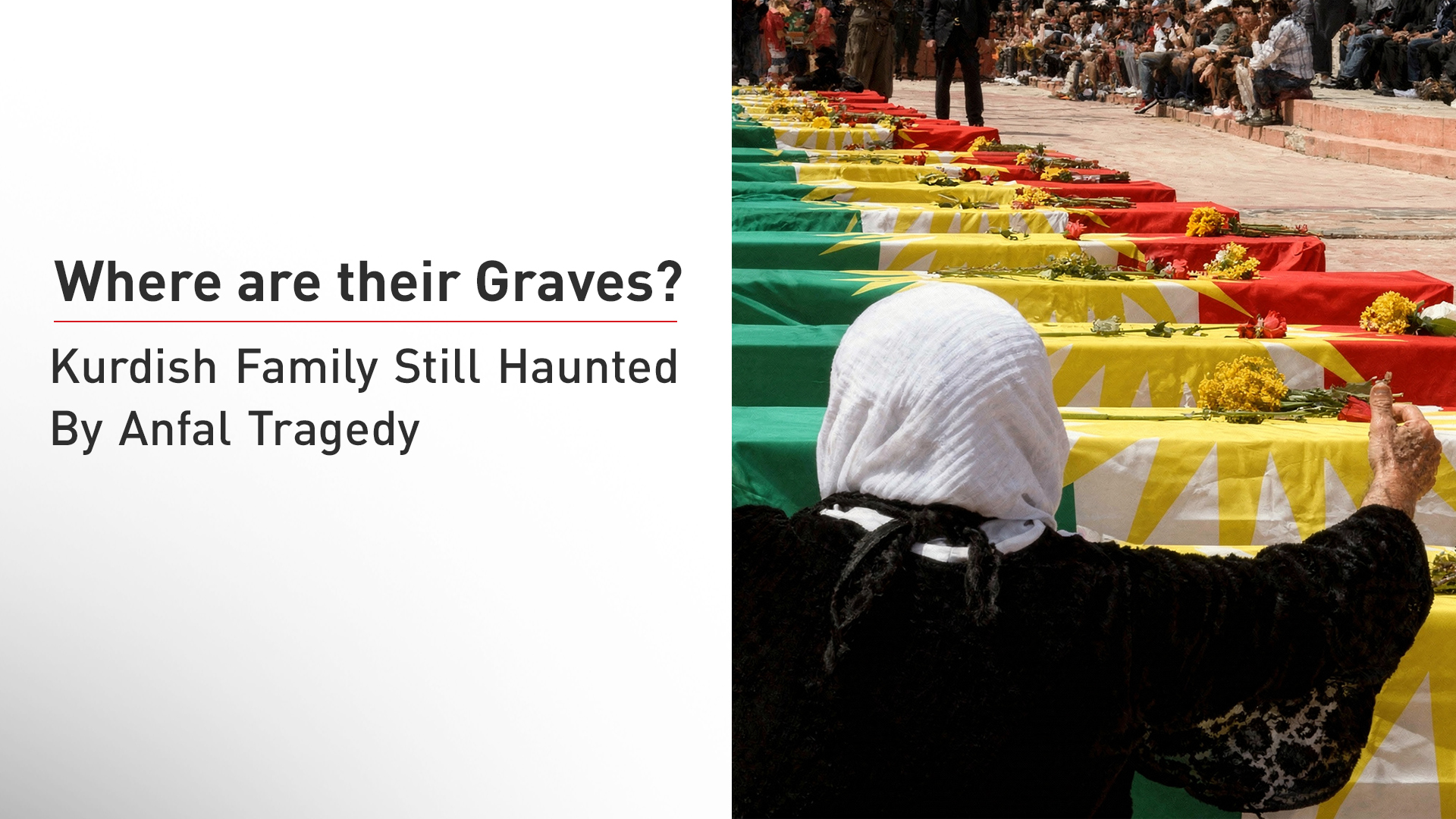
ERBIL (Kurdistan24) - Behind every number in the records of the Anfal victims lies a family shattered by loss, fear, and uncertainty. For Zirak Abdul Razzaq and his cousin Tahsin Ali, the pain of the Anfal campaign did not end with the disappearance of their parents, it continues decades later in the search for truth, graves, and closure.
The two men, both from the village of Kirwan in Rawanduz, shared with Kurdistan24 memories of a childhood marked by tragedy after the former Iraqi regime forces targeted their family during the Anfal operations.
Zirak Abdul Razzaq recalled the day his family was torn apart. His mother was killed, while his father disappeared after being taken away during the Anfal campaign in the village of Malkan.
“We were six siblings, between 18 days old and seven years old,” Zirak told Kurdistan24. “Our grandfather and grandmother raised us after our father disappeared.”
The suffering, he said, extended far beyond the initial loss. Even basic human rights became part of a desperate struggle for survival.
Zirak recounted how his grandfather tried to “buy their freedom” from the local security director at the time, offering 5,000 dinars for each family member in an attempt to save what remained of the family.
The family’s ordeal deepened when authorities issued death certificates for relatives who had vanished.
Zirak described how officials became determined to find and kill his young cousin, Tahsin Ali, after discovering a child had survived.
“When the security director realized there was still a small child among us, he insisted on finding him and eliminating him,” Zirak said.
“With the help of local security officials, the regime was misled into believing the child had died in order to save him.”
He said the five death certificates later handed to the family all carried the phrase “executed,” while the family was even prevented from holding mourning ceremonies.
“To this day, I do not know where my father rests,” Zirak said. “All I wish for is to know their fate so I can free myself from this psychological burden.”
A survivor pursued by fear
Tahsin Ali, who survived execution at the age of eight after his grandfather paid what he described as a ransom of 5,000 dinars, said the trauma has followed him throughout his life.
Now completing his university studies in Raperin, Tahsin still remembers the fear that consumed his childhood.
“I was released in exchange for a ransom, but I lived for years in constant fear for the rest of my family,” he said.
“When they discovered I had been freed, they claimed I was no longer alive and took us to places they said were mass graves to force us to believe our relatives were dead.”
For Zirak, Tahsin, and thousands of Kurdish families, the greatest pain is not only loss — but uncertainty.
The absence of answers about the fate and burial places of loved ones continues to haunt survivors decades after the Anfal campaign.
Zirak ended his account with words that captured the depth of that unresolved grief:
“Everyone who lost their parents during Anfal hopes to see them at least in their dreams. But I have never seen mine, not even in my sleep.”