Iraq Scraps Billion-Dollar Rail and Airport Projects
Two flagship projects once billed as transformative for Iraq's future have suddenly been shelved. What does it mean for the country's ambitions?
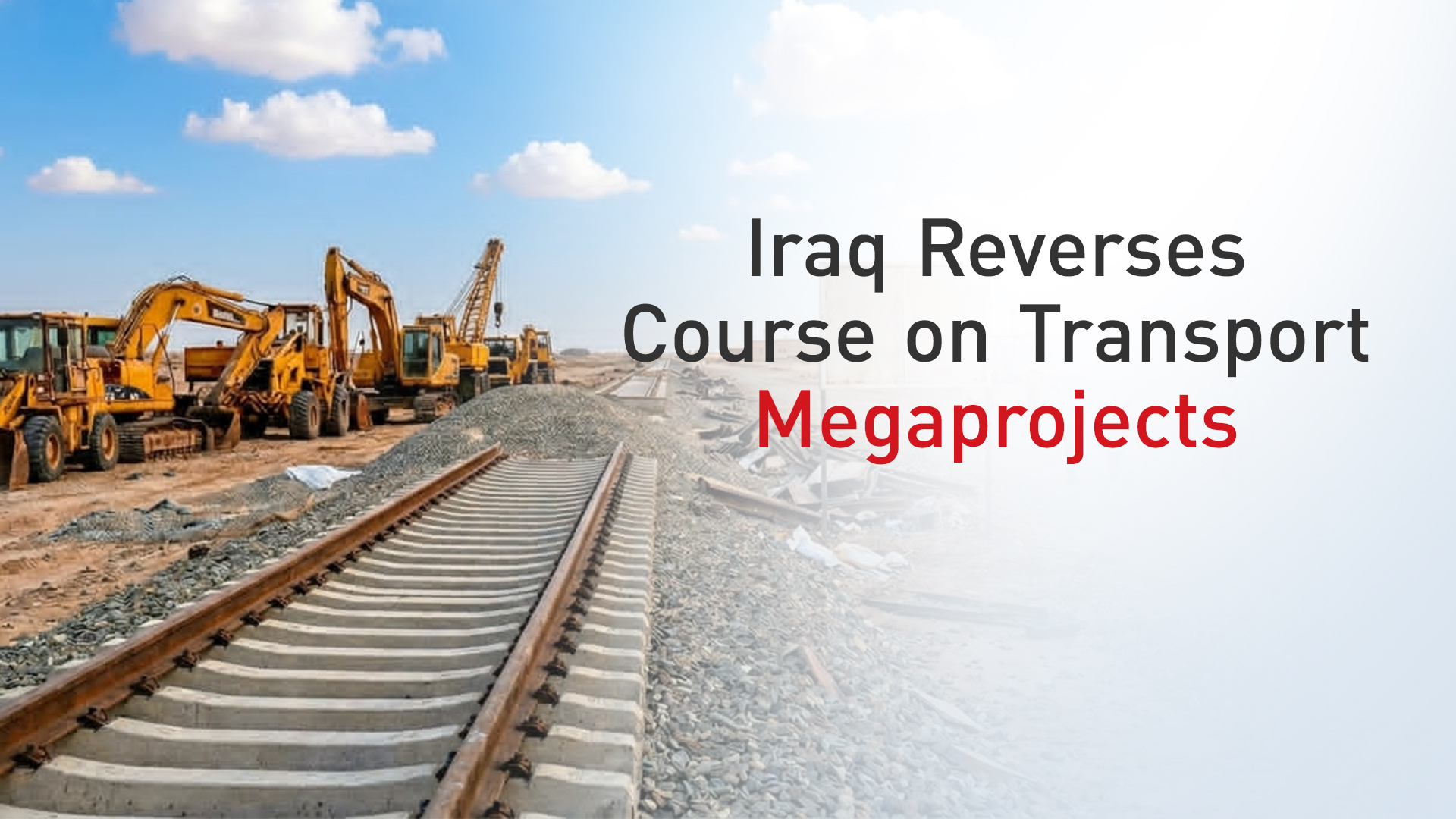
ERBIL (Kurdistan24) - In a reversal of high-profile infrastructure agenda, the Iraqi government has quietly scrapped a sweeping national railway expansion and terminated a landmark redevelopment agreement for Baghdad International Airport.
The cancellation of the two multibillion-dollar initiatives, which had been promoted by the previous administration as cornerstones of Iraq's economic modernization and regional integration, was disclosed by Communications Minister Mustafa Sanad.
According to a post on his official Facebook account, the decisions were taken over the past two weeks by Prime Minister Ali al-Zaidi and Minister of Transport Wahab Hassani, signaling a profound policy shift by the current government.
Sanad explained that the national railway project was canceled primarily due to its prohibitive costs. He stated that the ambitious rail expansion was deemed financially unsustainable and would have placed an unmanageable burden on the state's general budget.
In addition to halting the railway initiative, the government abruptly terminated the Baghdad International Airport redevelopment project.
The contract had previously been awarded to a consortium led by Corporación América Airports (CAAP), with the International Finance Corporation (IFC), the private-sector arm of the World Bank Group, acting as the government's lead advisor.
These abrupt cancellations raise significant questions regarding policy continuity in Baghdad, as the current government of Prime Minister al-Zaidi unwinds flagship investments secured under his predecessor, former Prime Minister Mohammed Shia al-Sudani.
The strategic pivot highlights acute budgetary pressures confronting the current administration, while also threatening to unnerve foreign investors who rely on stable, long-term regulatory environments.
The Airport Overhaul That Wasn't
The Baghdad airport redevelopment was initially hailed as a transformative public-private partnership. According to earlier reporting by Jawad Al-Samarraie for Iraqi News, the agreement was finalized after two years of preparation and evaluation guided by the IFC.
The ambitious master plan included the construction of a new passenger terminal designed to handle an initial capacity of nine million passengers annually, with future expansion aiming for 15 million.
It also promised comprehensive runway rehabilitation, the installation of modern boarding bridges, a new Civil Aviation Authority headquarters, and a VIP terminal. Crucially, the project was expected to generate 1,000 new jobs for every additional one million passengers handled.
During the signing ceremony, then-Prime Minister al-Sudani declared that the investment would position Baghdad International Airport as a regional aviation hub, enhancing global connectivity and stimulating economic growth. Now, the termination of the CAAP contract leaves the airport's future modernization in a limbo.
According to Minister Sanad's disclosure, the transport ministry is currently drafting a proposal to merge the Airport and Air Navigation Directorates, an administrative restructuring that is set to be formally debated in upcoming cabinet meetings.
Additionally, the Prime Minister's recent directives included the removal of the Director General of Ports, further indicating a sweeping overhaul of the nation's transportation leadership.
Derailing the Development Road
The cancellation of the national railway project carries equally profound implications, particularly for Iraq's ambitions to establish itself as a dominant regional logistics corridor connecting the Persian Gulf to Europe.
Iraq's railway network, managed by the state-owned Iraqi Republic Railways (IRR), comprises roughly 2,272 kilometers of standard-gauge track.
Despite its historical significance, dating back to the Ottoman-era Berlin-Baghdad Railway, the network has suffered devastating deterioration resulting from decades of war, sanctions, and the fight against ISIS.
Current operational capacity is severely constrained, with only 10 to 20 percent of the rolling stock fleet typically available for service.
To revive the system, the al-Sudani government had pursued an ambitious, multimodal infrastructure strategy known as the Iraq Development Road Initiative.
A cornerstone of this strategy was the Iraq Railways Extension and Modernization (IREM) Project, a massive undertaking backed by a proposed US$930 million loan from the World Bank.
According to a detailed World Bank project appraisal document approved in mid-2025, the IREM project aimed to rehabilitate and modernize 1,047 kilometers of existing track along the critical Umm Qasr–Basra–Baghdad–Mosul corridor.
The project included the installation of a modern European Train Control System (ETCS), the construction of new greenfield links toward the Turkish border, and the development of new border crossing facilities.
The World Bank projected that these upgrades would drastically cut travel times, shift cargo from congested roads to rail, reduce greenhouse gas emissions, and substantially increase both freight and passenger volumes.
Sanad's announcement that the national railway project has been scrapped due to budgetary constraints suggests that the government is withdrawing its commitment to this massive capital expenditure.
The cancellation threatens to derail the broader Development Road strategy, abandoning the immediate prospect of modernizing the deteriorated rail network and severely undermining Iraq's vision of becoming a central artery for international trade.
Economic Realignment and Uncertainty
The scrapping of the airport and railway projects coincides with a broader recalibration of state economic management under Prime Minister al-Zaidi.
According to Sanad, the cabinet has recently executed several other strategic shifts, including administrative changes in the electricity and fuel sectors, and the official suspension of all wheat imports until the domestic harvest is fully processed.
While the cancellation of these infrastructure megaprojects may reflect a prioritization of fiscal prudence amid budgetary limitations, the decisions may carry significant strategic risks.
By abandoning carefully negotiated, internationally backed modernization efforts, the government might damage its credibility with foreign financial institutions and private investors.
As Iraq attempts to rebuild its infrastructure and diversify an economy overwhelmingly dependent on oil revenues, the abrupt termination of these landmark deals leaves the country’s transportation future stranded at the station.
Crucially, it raises a profound question: Does the cancellation of contracts to develop and renovate the Iraqi railway system effectively derail the broader and more ambitious Development Road Project?
Perhaps, perhaps not. The answer will become evident in time.
|
Summary The cancellation of the Baghdad airport redevelopment and a national railway expansion underscores a significant policy shift by the current government, raising questions about Iraq's modernization agenda and its appeal to foreign investors. |