Iraq's State Administration Coalition: Iraqi Territory Must Not Be Used to Attack Neighboring States
The coalition reaffirmed support for strengthening state authority, restricting weapons to state institutions, preventing Iraqi territory from being used to launch attacks against neighboring countries
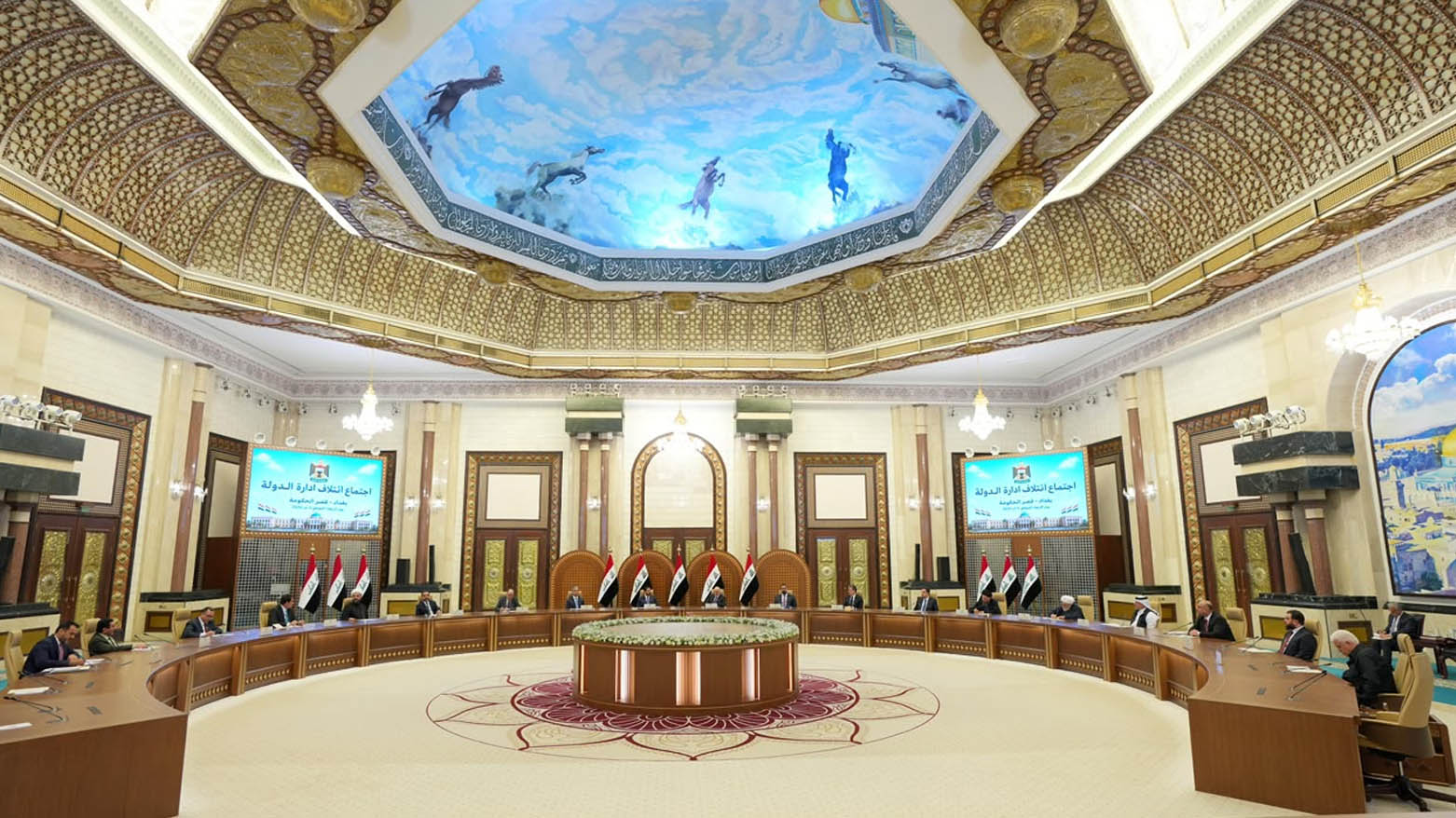
ERBIL (Kurdistan24) - Iraq's State Administration Coalition convened on Wednesday in the presence of Kurdistan Region President Nechirvan Barzani, the Iraqi prime minister Ali al-Zaidi, the speaker of parliament Haibat al-Halbousi, the president of the Supreme Judicial Council Faiq Zidan, and coalition leaders to review the country's political, security, economic, and service-related conditions, as well as the impact of regional developments on Iraq.
During the meeting, the Iraqi PM reviewed the government's efforts to strengthen security and stability, improve public services, implement the ministerial program, and address the country's economic and financial challenges.
He stressed that safeguarding the interests of Iraqi citizens remains the government's foremost priority.
The State Administration Coalition reaffirmed its support for continued efforts to preserve security and stability and reiterated its backing for restricting weapons to state control in line with the government's ministerial program, which has been approved by the Council of Representatives and enacted into law.
The coalition also stressed that Iraqi territory must not be used as a platform to launch attacks against neighboring countries or to drag Iraq into conflicts that do not serve the interests of its people.
Participants described anyone engaging in actions that threaten Iraq's security as "lawbreakers," emphasizing that they should be held accountable under the constitution, which prohibits the use of weapons outside the authority of the state and the establishment of armed organizations beyond the official security forces.
The participants also condemned attacks targeting members of Iraq's armed forces that resulted in the deaths of several personnel.
They called for adherence to the timeline for restricting and regulating weapons following Sept. 30, 2026, stating that after that date, any armed activity conducted outside the state's legal framework will be dealt with under Iraq's anti-terrorism law.
The meeting also reviewed Iraq's economic and financial situation, emphasizing the need to ensure the continuity of public services and strategic projects.
Participants discussed diversifying oil export routes, strengthening non-oil revenues, and confronting waste, smuggling, and corruption.
The coalition reaffirmed Iraq's support for dialogue and de-escalation, rejecting the use of force to resolve disputes and expressing its readiness to play a constructive role in bringing conflicting parties closer together in a way that contributes to regional security and protects shared interests.
The meeting also addressed developments in neighboring countries, stressing the importance of strengthening border security, combating terrorism, narcotics trafficking, and organized crime, while expanding Iraq's regional and international relations on the basis of mutual interests, respect for sovereignty, and non-interference in internal affairs.
At the conclusion of the meeting, the State Administration Coalition called for accelerating the completion of the government formation process and submitting the government's program to the Council of Representatives for discussion and approval.