Over 117,000 Students Take Final Exams Across the Kurdistan Region
With the deployment of nearly 20,000 educators and strict security measures, the massive logistical operation represents a critical milestone for students seeking university admission.
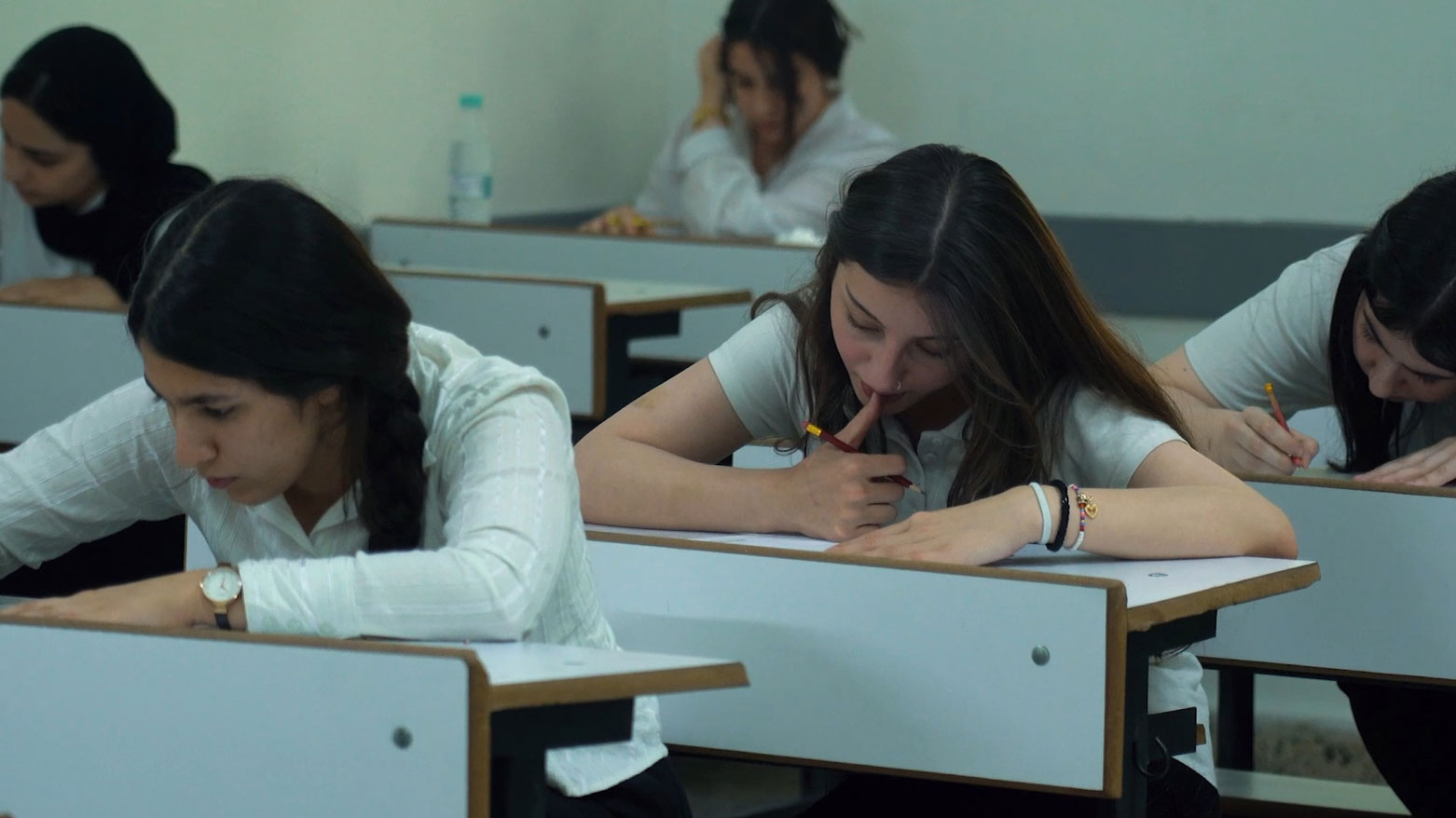
ERBIL (Kurdistan24) - Over 117,000 high school seniors across the Kurdistan Region sat for the first round of their Grade 12 national examinations on Sunday, marking the beginning of a massive logistical operation that serves as the most critical academic milestone for university-bound students.
The Kurdistan Regional Government (KRG) Ministry of Education announced that 117,142 students are participating in the highly anticipated exams, which assess proficiency across scientific, literary, and vocational tracks.
To accommodate the immense volume of test-takers, the ministry activated 2,003 examination centers spanning all provinces and independent administrations.
The scale of the undertaking requires extraordinary coordination.
According to comprehensive data released by the Ministry of Education and reported by Kurdistan24, the government has mobilized an administrative force of 19,403 personnel.
The deployment includes over 12,000 proctors, alongside thousands of center directors, supervisors, and support staff, ensuring that the process adheres to strict regulatory standards.
The majority of students are enrolled in the rigorous Scientific branch, which accounts for 88,116 test-takers, followed by 26,431 in the Literary branch, and 2,595 students in Vocational programs.
The examinations are widely considered a defining moment in the lives of Kurdish youth, determining university placements, future career trajectories, and social mobility.
The immense pressure surrounding the tests has historically transformed the exam period into a focal point for public policy, requiring authorities to balance academic rigor with widespread logistical and security demands.
The Erbil Operation
The administrative challenge is most visible in the regional capital.
According to Erbil Governor Omed Xoshnaw, whose remarks were highlighted in a separate Kurdistan24 report, the province is hosting the largest contingent of students, with over 38,000 candidates testing across 665 centers.
Addressing reporters on Sunday, Xoshnaw confirmed that all logistical preparations have been finalized.
He noted that the examinations are structured on a bi-weekly schedule, occurring every Sunday and Wednesday, designed to allow students adequate preparation time between subjects.
The governor praised the resilience of the educational sector, noting that despite various administrative and financial challenges during the 2025–2026 academic year, teachers and institutions successfully maintained and even advanced educational standards.
Xoshnaw expressed explicit gratitude to the Erbil General Directorate of Education, school principals, and staff for their pivotal role in facilitating the massive operation.
Securing the Integrity of the Exams
Given the high stakes of the Grade 12 results, maintaining the integrity of the examination process remains a paramount concern for regional authorities.
In recent years, the Ministry of Education has battled increasingly sophisticated cheating attempts, prompting a zero-tolerance approach to academic malpractice.
Governor Xoshnaw emphasized that stringent security measures have been implemented in coordination with regional law enforcement.
Specialized security committees have been deployed around all examination halls to prevent disruptions and intercept unauthorized communications.
"The goal is to eliminate any potential for malpractice," Xoshnaw stated.
He referenced previous campaigns that successfully dismantled organized cheating networks, asserting that "every effort is being made this year to ensure a clean and seamless examination process."
A Region-Wide Mobilization
The examination rollout demonstrates the expansive reach of the KRG's educational infrastructure, encompassing both major urban centers and remote administrative districts.
Behind Erbil, Duhok Province accounts for the second-largest student cohort, with 27,266 candidates distributed across 477 centers.
Sulaimani Province follows closely with 26,563 students in 402 centers. The independent administrations, which function autonomously from provincial capitals, also represent significant logistical nodes.
Zakho leads the independent districts with nearly 7,000 students, while Soran, Garmian, and Raperin are managing testing for thousands of local candidates.
Halabja, the region's smallest province, successfully mobilized 38 centers to accommodate its 1,590 students.
As the examination period progresses, the focus will increasingly shift toward the meticulous grading process and the eventual release of scores.
For the 117,000 students currently navigating the high-pressure environment of the testing halls, the results will serve as the culmination of their primary education and the decisive factor in their future academic pursuits.
|
Summary More than 117,000 students began their Grade 12 national examinations across the Kurdistan Region, supported by 19,403 educational staff across 2,003 centers. Authorities implemented strict security measures and anti-cheating protocols to ensure the integrity of the crucial academic milestone. |