Iraq, U.S. Reaffirm Strategic Partnership, Discuss Security, Energy, and Investment Cooperation
Baghdad and Washington emphasize disarmament efforts, economic ties, and expanded U.S. investment as leaders plan high-level White House meeting in July
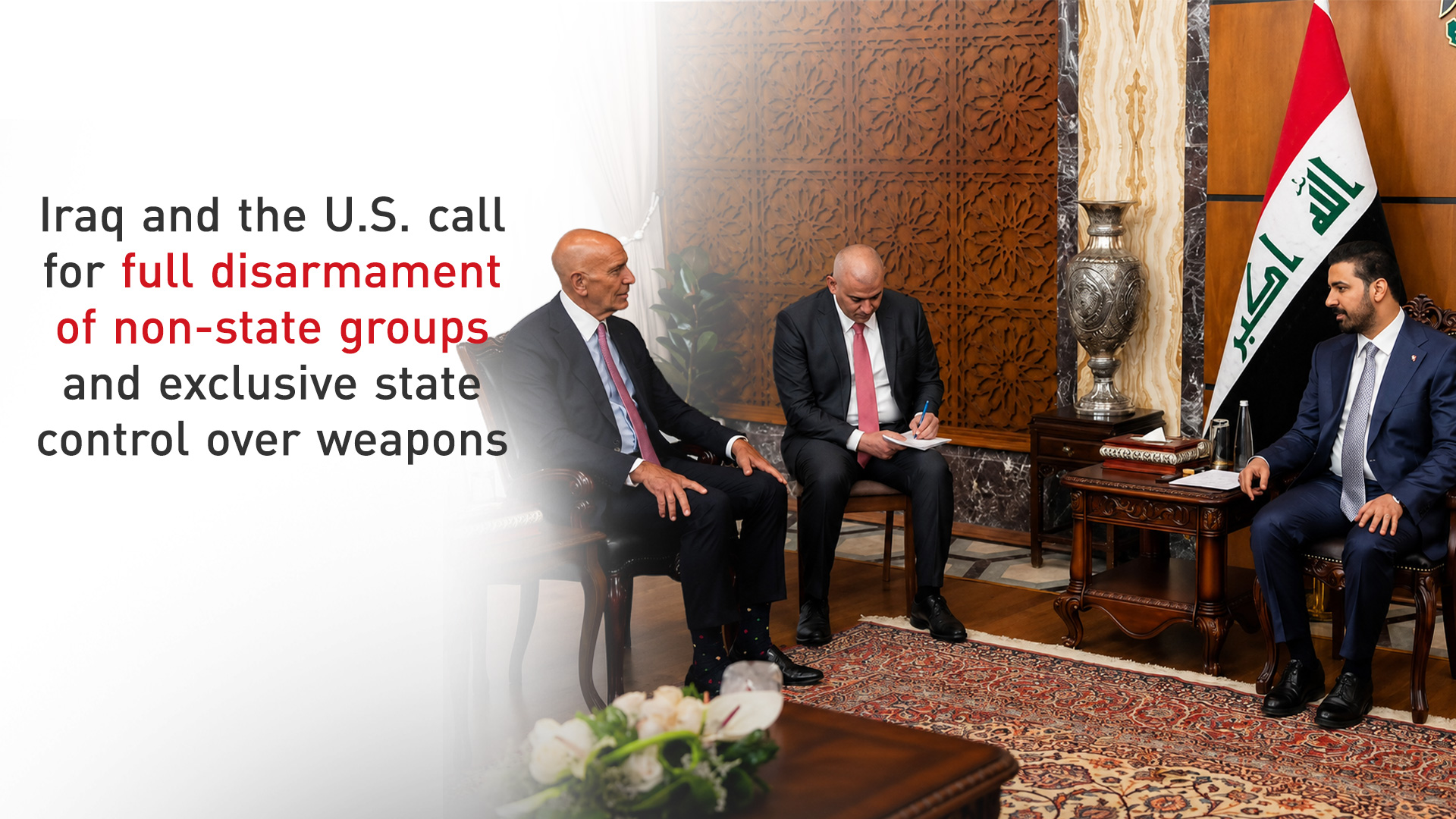
ERBIL (Kurdistan24) — Iraq and the United States have reaffirmed their commitment to building a “strong and mutually beneficial” strategic partnership aimed at advancing security, sovereignty, and economic development, according to a joint statement issued by the Iraqi Prime Minister’s Office on Tuesday.
The statement said Iraqi Prime Minister Ali Faleh al-Zaidi and U.S. Presidential Special Envoy Tom Barrack reiterated their shared vision for strengthening bilateral relations under the leadership of Prime Minister al-Zaidi and U.S. President Donald Trump.
Barrack conveyed President Trump’s invitation for al-Zaidi to visit the White House in mid-July, where both sides are expected to discuss the future of Iraqi-American relations and broaden cooperation across key sectors.
According to the statement, the two sides discussed an ambitious Iraqi vision for building a more stable future “free from terrorism,” including plans to disarm armed groups operating outside state authority and consolidate all weapons under government control.
They stressed the importance of fully implementing efforts to ensure that Iraq’s territory is not used by any party to threaten regional stability, and both sides underscored the urgency of achieving these objectives.
On the economic front, Prime Minister al-Zaidi reaffirmed Iraq’s commitment to expanding trade and investment ties with the United States, a position welcomed by the U.S. envoy as a shared strategic priority.
The two sides also welcomed Iraq’s decision to finalize the operating license for Starlink, aimed at providing high-speed internet services nationwide.
They further discussed Iraq’s ongoing negotiations with Chevron to develop the West Qurna-2 and Nasiriyah oil fields, as well as plans to allow U.S. companies HKN, Western Zagros, and Hunt to resume operations under enhanced security guarantees.
The statement also highlighted progress on a memorandum of understanding with TI Capital to rehabilitate the Kirkuk–Baniyas pipeline, which is seen as a key export route for Iraqi oil.
Baniyas is a coastal city in northwestern Syria’s Tartus Governorate, located on the Mediterranean Sea between Latakia and Tartus, and is known for its oil infrastructure and refinery.
The Kirkuk–Baniyas pipeline is an old Iraqi oil export route that last operated regularly prior to 2003, before being shut down following the Iraq War due to security concerns, political tensions between Baghdad and Damascus, and a shift toward alternative export routes through Turkey and southern Iraq.
Although occasionally discussed in later years as a potential strategic corridor and subject to limited rehabilitation proposals, the pipeline has remained non-operational for more than two decades.
Energy cooperation was also a central topic, with both sides emphasizing efforts to support Iraq’s electricity needs, including a project led by Excelerate Energy to develop a floating liquefied natural gas (LNG) import terminal in Khor al-Zubair.
Finally, both sides reaffirmed their support for a strong, unified, and democratic federal Iraq based on constitutional institutions and equal rights for all citizens, underscoring that such a framework is essential for long-term stability and prosperity.