New Wheat Cleaning Facility in Shekhan Boosts Farmers’ Incomes, Ends Long-Standing Grain Rejections
Advanced processing plant enables wheat to meet top-grade standards, strengthening food security and supporting Kurdistan Region’s agricultural sector
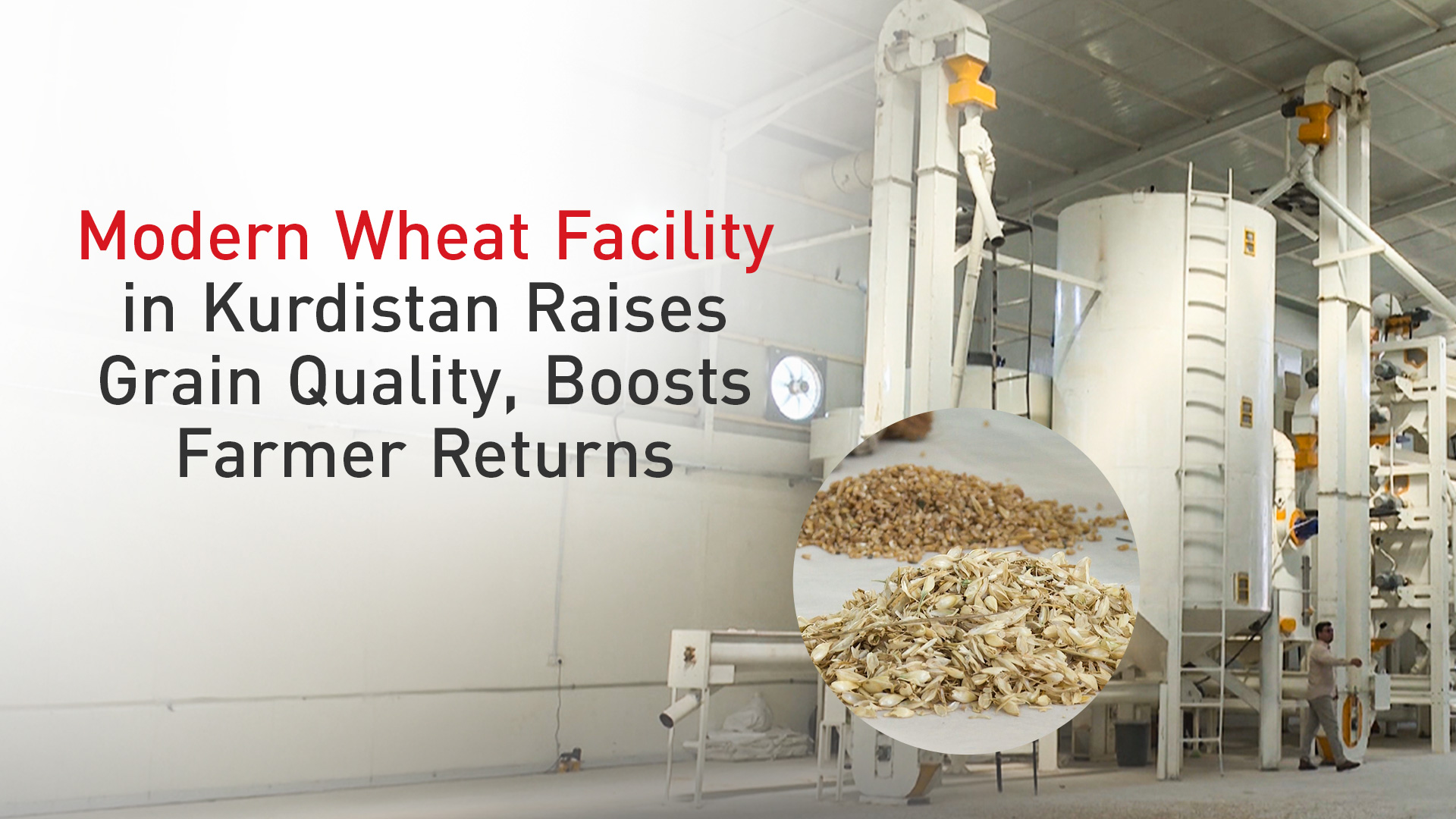
ERBIL (Kurdistan24) — The opening of a new wheat-cleaning facility in Shekhan district of Duhok province has resolved a long-standing challenge faced by local farmers, allowing their harvests to meet top-quality standards and secure better prices in government silos and local markets.
Equipped with advanced technology, the facility can clean between 150 and 200 tons of wheat per day, removing impurities and unwanted materials through a 10-stage processing system designed to prepare grain to the highest standards before delivery.
The Buraq project, inaugurated on June 15, is expected to bring significant benefits to Shekhan and surrounding agricultural areas, where wheat cultivation remains a major source of income for thousands of farmers.
Speaking to Kurdistan24, Salah Jalal, head of the Agricultural Department in Shekhan, said farmers had long struggled to deliver their harvests to silos, which often rejected wheat shipments because of excessive impurities and foreign materials.
He explained that the new facility has substantially improved the quality of local wheat, helping farmers avoid losses and ensuring their products are accepted more easily by grain storage centers.
Farmers in the region say the impact has already become evident.
Sami Ali, a local farmer, told Kurdistan24 that in previous years much of their wheat was classified as second- or third-grade due to contamination with weeds, seeds, and other materials. Through the new cleaning process, however, the grain can now be fully purified and accepted by silos as first-grade wheat.
Another farmer, Bakr Siddiq, noted that before the facility became operational, the Shekhan silo frequently rejected wheat deliveries because of mixed seeds or debris. The new machinery now removes those impurities, benefiting the entire farming community.
Beyond facilitating acceptance by government silos, the project is also increasing the market value of locally produced wheat, giving farmers greater opportunities to sell their harvests to traders at more competitive prices.
Shekhan is widely regarded as one of the Kurdistan Region’s most productive agricultural districts, with large areas of farmland dedicated to wheat cultivation each year. Government silos maintain strict quality requirements for grain purchases, particularly regarding the level of foreign seeds and other impurities permitted in deliveries.
For years, many farmers in the region lacked access to modern cleaning equipment, resulting in portions of their harvests being rejected or downgraded and purchased at significantly lower prices.
The problem reduced farmers’ profits and discouraged investment in agricultural production despite growing demand for locally produced grain.
The launch of the new facility comes as authorities in the Kurdistan Region continue efforts to strengthen domestic agricultural production and reduce reliance on imported food products.
Agriculture has increasingly been identified as a strategic sector for economic diversification, job creation, and enhancing food security amid regional and global supply chain challenges.
Officials and farmers alike view the establishment of modern grain-processing facilities as an important step toward supporting local producers, protecting the value of their harvests, and ensuring that the benefits of their hard work are not lost due to quality-control obstacles.
The project is also expected to contribute to broader efforts to improve food security in the Kurdistan Region by increasing the volume of high-quality wheat entering the domestic supply chain.
Kurdistan24 correspondent Ari Hussein contributed to this report.