Kurdistan Region Hosts 850,000 Displaced Persons as Federal Support Falters
Over 854,000 refugees and IDPs are currently in the Kurdistan Region, according to JCC’s Ali Saeed, who criticized Baghdad for limited support while the KRG continues providing services with UNHCR assistance.
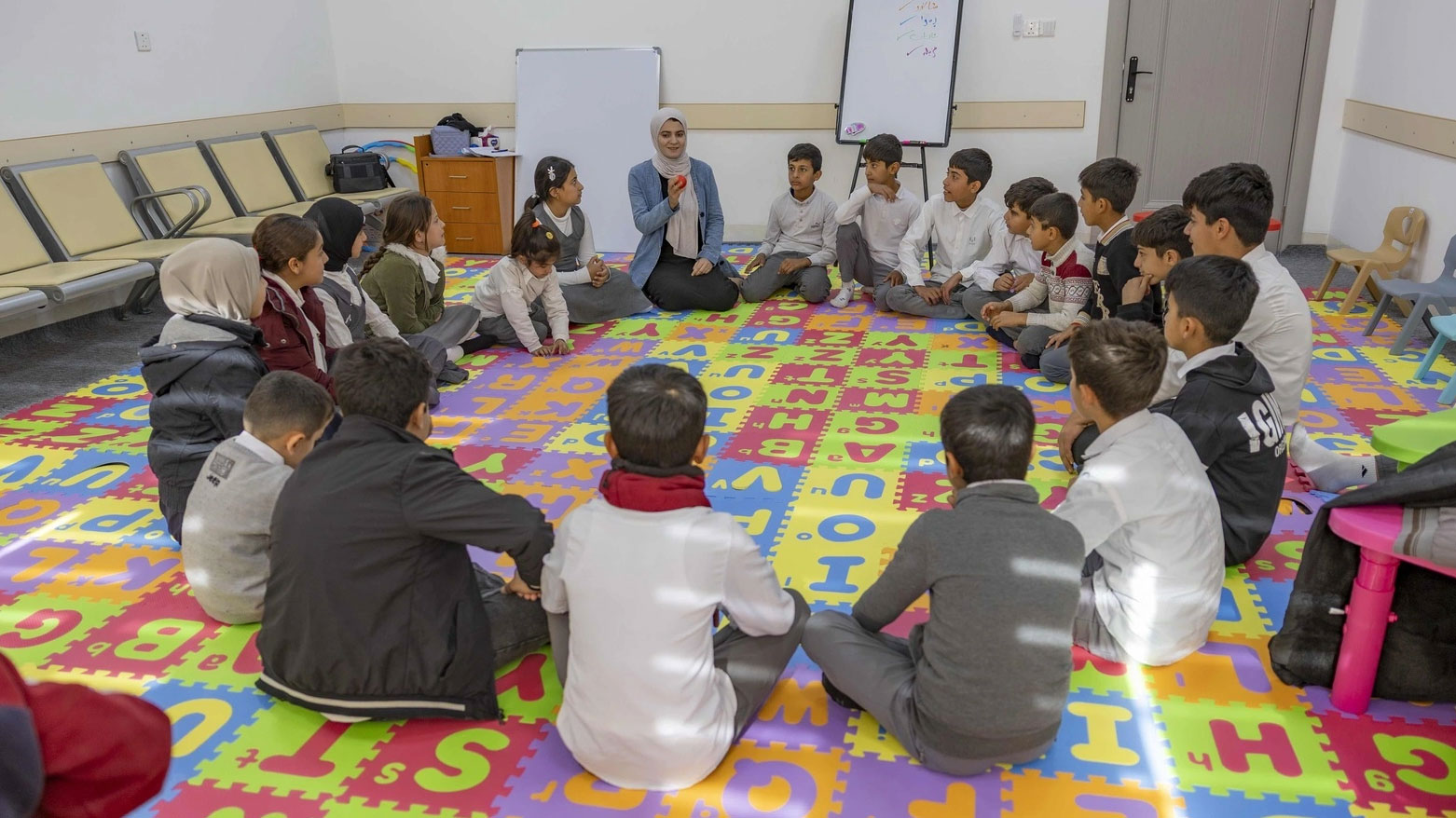
ERBIL (Kurdistan24) - The lingering presence of over 850,000 displaced individuals in the Kurdistan Region underscores a protracted humanitarian crisis that has steadily transformed into a profound structural challenge for local authorities, who say they are bearing the weight of the emergency without adequate federal backing.
According to comprehensive data released by the Joint Crisis Coordination Centre (JCC), the semi-autonomous region is currently hosting exactly 854,000 displaced persons.
Ali Saeed, the JCC's Director of Data and Information, provided the sobering figures during an interview with Kurdistan24 on Saturday, detailing a demographic reality that continues to stretch the region's administrative and financial capacities.
Breaking down the numbers, Saeed noted that the population comprises 285,000 refugees, primarily individuals fleeing conflict in neighboring countries and other Kurdish regions, alongside 571,000 internally displaced persons (IDPs) who sought sanctuary from instability and terrorism in other parts of Iraq.
The sheer scale of this population has brought long-simmering political friction to the forefront.
Saeed issued a sharp critique of the federal government in Baghdad, specifically pointing to the Iraqi Ministry of Migration and Displacement for neglecting its institutional responsibilities toward these vulnerable groups. Despite the vast logistical requirements of housing nearly a million people, meaningful federal assistance has failed to materialize.
"The entire responsibility for serving and providing for these individuals has fallen on the Kurdistan Regional Government (KRG), carried out in partnership with the UNHCR," Saeed told Kurdistan24, highlighting the heavy reliance on the United Nations High Commissioner for Refugees to bridge the gaps left by Baghdad.
Saeed's data release coincided with World Refugee Day, a global observance that local leaders utilized to underscore the Kurdistan Region's enduring, yet increasingly strained, role as a sanctuary.
In a public address reported by Kurdistan24, Kurdistan Region Interior Minister Reber Ahmed placed the current figures into a broader historical context, noting that the region has hosted more than 2.5 million refugees and IDPs over the years.
Read More: Kurdistan Region Remains Safe Haven for Refugees Despite Mounting Pressures, Interior Minister Says
Guided by a humanitarian framework championed by Kurdistan Region President Nechirvan Barzani and Prime Minister Masrour Barzani, the KRG has consistently mobilized its institutions to support fleeing families. However, Minister Ahmed cautioned that the region's capacity is not infinite.
With nearly a million displaced people still residing in the region, a steady decline in international aid has placed intense pressure on vital public services, particularly within the heavily burdened healthcare and education sectors.
"Humanitarian responsibility must be shared and should not fall solely on the shoulders of host communities," Ahmed stated.
He directed his appeal to both domestic and international actors, urging Iraq's new federal government to honor its financial commitments and allocate the necessary budgetary resources to support the displaced.
Furthermore, he called upon the international community to increase investments in programs that foster self-reliance and resilience among camp residents.
To manage the protracted crisis, the KRG has sought to modernize its administrative approach.
The Interior Minister pointed to a comprehensive registration system introduced in 2023, designed to align with international standards and facilitate rapid access to essential services. He also praised the ongoing logistical and relief efforts spearheaded by the Barzani Charity Foundation, which has been instrumental in sustaining the camps.
Yet, providing services in exile is only a temporary substitute for the ultimate goal of repatriation.
Addressing the complexities of return, Ahmed highlighted the unresolved crisis in Sinjar, the ancestral homeland of the Yazidi minority decimated by the Islamic State. Years after the genocide, the landmark Sinjar Agreement, a security and administrative pact designed to stabilize the district, remains largely unimplemented.
Ahmed stressed that the lack of security, reconstruction, and basic services in Sinjar prevents families from leaving the camps. "The return of displaced people must be carried out with dignity and sustainability," he argued, framing the stabilization of Sinjar as a prerequisite for resolving one of Iraq's most enduring displacement crises.
Despite the mounting economic pressures and the absence of robust federal funding, the message from Erbil remains resolute. While demanding that Baghdad and the global community shoulder their fair share of the burden, authorities affirmed that the Kurdistan Region's doors will remain open to those seeking refuge from persecution.
|
Summary The Kurdistan Region is currently hosting over 854,000 displaced people, including 285,000 refugees and 571,000 IDPs. Officials criticize Baghdad for neglecting its duties, leaving the KRG and UNHCR to manage the crisis. The KRG urges the international community to share this heavy burden. |