Iran's Former Supreme Leader to Be Laid to Rest in Mashhad
The confirmation of the final interment site was made by Iman Attarzadeh, the spokesperson for the funeral and burial ceremonies.
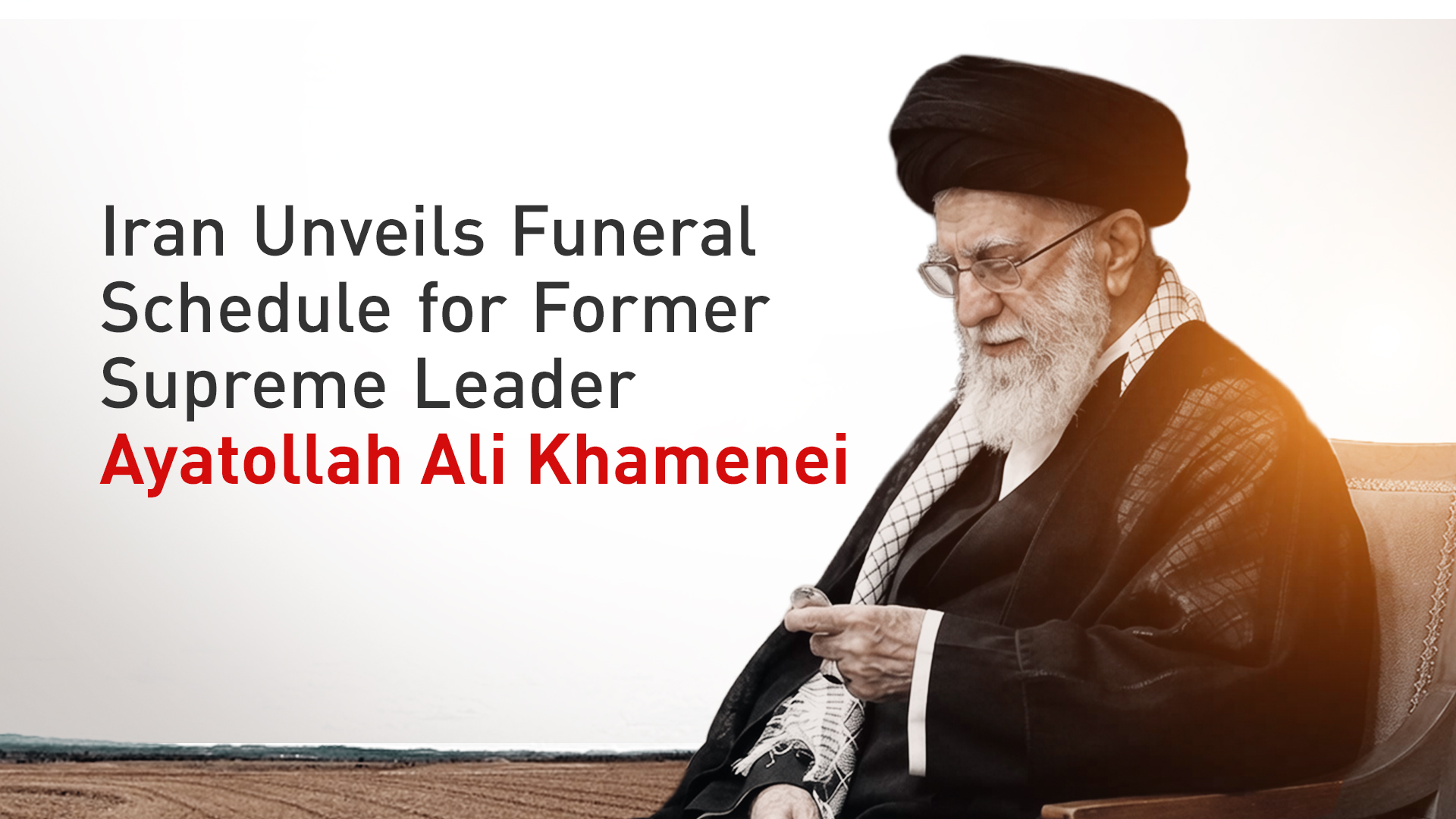
ERBIL (Kurdistan24) - Iranian authorities have announced that the late Supreme Leader Ayatollah Ali Khamenei will be laid to rest at the Imam Reza (Razavi) Shrine in Mashhad, north east of Iran, concluding a deeply complex and highly scrutinized funeral process that was postponed for more than four months due to war.
The confirmation of the final interment site was made by Iman Attarzadeh, the spokesperson for the funeral and burial ceremonies.
Attarzadeh announced that following a public funeral procession through the northeastern city of Mashhad on Thursday, Jul. 9, Khamenei's remains will be transferred to the shrine for burial.
The chosen date carries profound religious significance in the Shiite calendar, falling on the eve of the commemoration of the martyrdom of Imam Sajjad.
The decision to bury the former Supreme Leader at the Razavi Shrine is a monumental symbolic choice.
The complex, which houses the tomb of the eighth Shiite Imam, is Iran's holiest site and a major pilgrimage destination for millions of Muslims globally. By placing Khamenei's resting place within this sacred precinct, the Iranian state is not merely concluding a funeral; it is attempting to enshrine his 37-year rule as an indelible, sanctified chapter in the history of the Islamic Republic.
For Khamenei, whose political and religious life was deeply tied to his hometown of Mashhad, the location cements his legacy at the spiritual center of the nation.
The finalization of these plans marks the end of a chaotic logistical and political ordeal for Tehran.
Khamenei was killed on Feb. 28, 2026, during a devastating joint U.S.-Israeli airstrike on the capital. The bombardment also claimed the lives of several senior political and military officials, alongside members of Khamenei's own family.
According to earlier reporting by Kurdistan24, the state funeral was initially planned for March.
However, the assassination ignited a fierce 39-day regional war that forced authorities to indefinitely postpone any large public gatherings due to pervasive security threats.
Only following the establishment and extension of a fragile ceasefire has the state found the stability required to safely execute a nationwide mourning program.
Read More: Iran Schedules July 9 Burial for Ali Khamenei Following War-Torn Delay
The path to Mashhad has been marked by evolving and sometimes contradictory official statements. Just days before the final announcement, Tehran Mayor Alireza Zakani outlined a sweeping, multi-city itinerary.
In a video broadcast by Iranian state media and reported by Kurdistan24, Zakani stated that farewell ceremonies would begin in Tehran on July 3 and 4, followed by events in the holy city of Qom.
In a surprising detail, Zakani had initially claimed that the body would ultimately be transferred to Iraq for burial and further mourning rites.
Read More: Iran Announces Funeral Procession for Ayatollah Ali Khamenei
The rapid revision of these plans, shifting the final interment from Iraq to the Razavi Shrine, reflects the complex, behind-the-scenes logistical and security calculations defining this transition.
The ceremonies in Tehran, Qom, and Mashhad will serve as a crucial stress test for the regime's ability to project continuity. The funeral unfolds amid a highly sensitive leadership transition. In early March, the Assembly of Experts appointed Khamenei's son, Mojtaba Khamenei, as the new Supreme Leader.
However, as AFP reported, the younger Khamenei was wounded in the same February 28 strike that killed his father. He has not appeared in public since his appointment, communicating only through attributed statements.
Consequently, the state funeral is designed to serve a dual purpose. It aims to monumentally commemorate the life of Ali Khamenei while simultaneously rallying the Iranian public to demonstrate the unbroken resilience of the state apparatus.
As the procession moves toward the gilded domes of the Imam Reza Shrine on July 9, the Iranian leadership will rely on the immense religious gravity of the site to project an image of divine continuity during one of the most perilous chapters in the Islamic Republic's history.
|
Summary Following a four-month delay due to war, Iranian officials announced that the late Supreme Leader Ali Khamenei will be buried at the Imam Reza Shrine in Mashhad on July 9. The decision to inter him at Iran's holiest site aims to project state resilience amid a scrutinized leadership transition. |