Kolbar Trade Resumes at Haji Omeran Border Crossing
Kolbar trade has resumed at the Haji Omeran border crossing after nearly three months of suspension. Hundreds of couriers are again transporting goods daily under new regulations, restoring a critical source of income for border communities in Eastern Kurdistan.
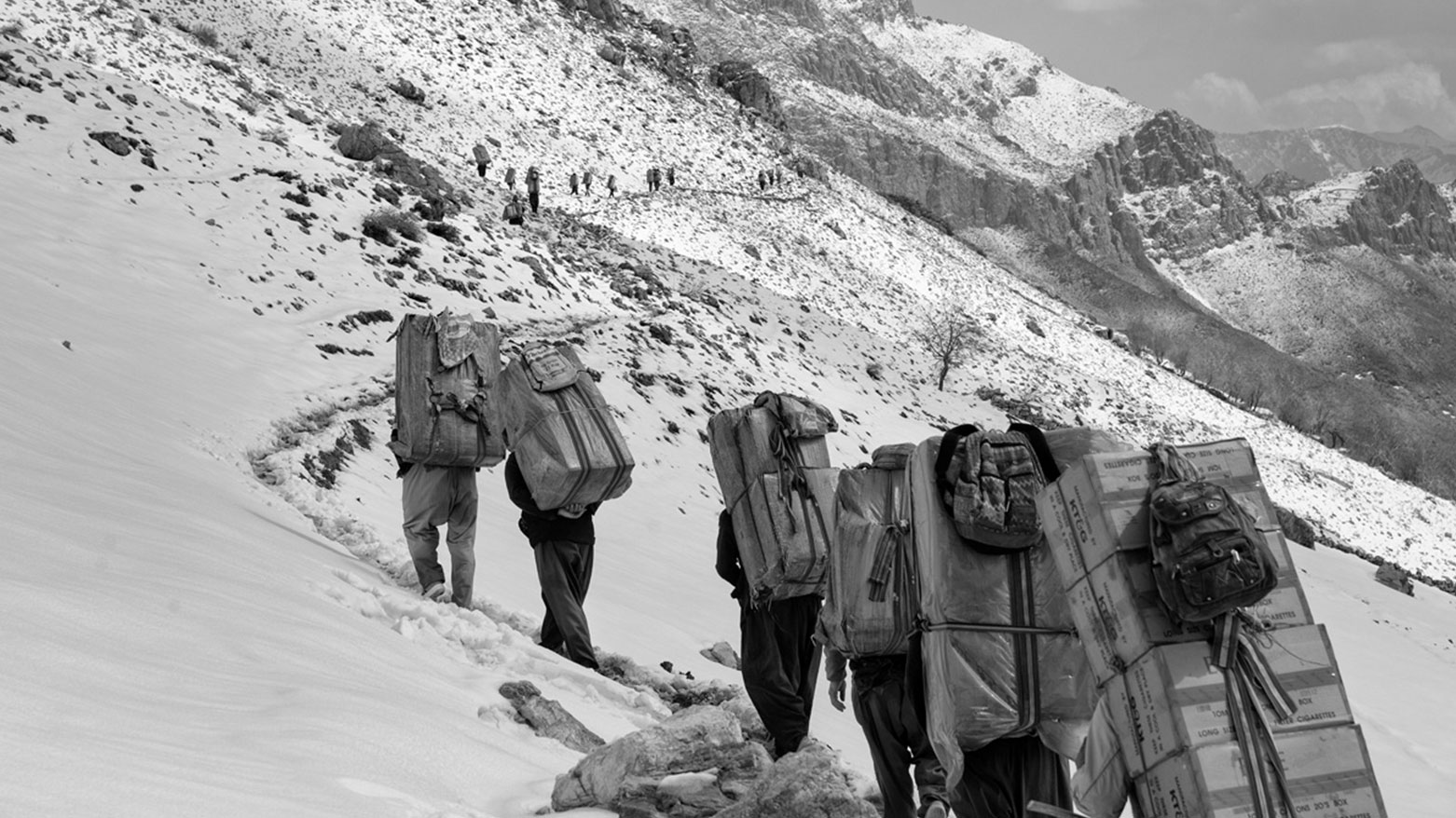
ERBIL (Kurdistan24) - For nearly three months, the rugged mountain trails connecting the Kurdistan Region of Iraq to western Iran lay dormant, severing an essential economic artery for thousands of Kurdish families. Now, the grueling but vital cross-border courier trade known as "Kolbari" has quietly resumed at the Haji Omeran International Border Crossing, reinstating a lifeline for border communities in Rojhelat (Eastern Kurdistan - north west of Iran).
The reopening has brought a cautious wave of relief to a region defined by profound economic necessity.
Abdulwahab Mahmoud, the director of the Haji Omeran sub-district, told Kurdistan24 that hundreds of couriers have returned to the crossing over recent days.
Utilizing established tourist routes, the laborers are once again moving goods across the frontier using passports and specialized identification cards.
The Return of a Vital Lifeline
The resumption of operations is governed by strict, albeit fragile, new regulations.
Mahmoud outlined to Kurdistan24 that current protocols limit daily traffic to 400 Kolbars. Furthermore, laborers are restricted to carrying a maximum of 12 kilograms of goods per person into Iran.
Only those possessing official Iranian-issued permits and specialized ID cards are authorized to cross.
Despite these constraints, the reopening has drawn laborers of all ages back to the crossing.
Kurdistan24's investigations found out that elderly residents of Eastern Kurdistan border towns have joined younger men on the trails. It is a stark testament to the sheer necessity of the work, which demands carrying heavy loads over treacherous, high-altitude terrain simply to secure a basic living.
Why the Border Was Closed
The abrupt suspension of the trade earlier this year was not rooted in local administrative disputes but in a volatile geopolitical landscape.
The Islamic Republic of Iran halted operations at Haji Omeran due to deteriorating regional security conditions and the outbreak of direct hostilities involving Iran, the United States, and Israel.
This closure devastated local economies and paralyzed an initiative launched by the Iranian government in early June 2025.
Under that program, authorities had issued official "Kolbar cards" to more than 10,000 border residents to formalize their work. The ensuing geopolitical crisis abruptly froze the initiative, stripping thousands of citizens of their primary income stream overnight.
The Human Reality of Kolbari
The reopening brings renewed attention to the structural realities that compel individuals into this labor.
The term "Kolbar" literally translates to "those who carry loads on their backs." The workforce is predominantly composed of Kurdish men and boys from Eastern Kurdistan (western and northwestern Iranian) provinces, including Kurdistan, Kermanshah, and Urmia.
Driven by systemic poverty, high unemployment, and historic marginalization, these laborers transport goods, ranging from electronics and textiles to household appliances and tires, that bypass official customs.
While the newly regulated Haji Omeran crossing limits loads to 12 kilograms, traditional Kolbari often demands carrying burdens weighing between 25 and 75 kilograms.
Estimates of the active Kolbar population vary widely, ranging from 80,000 to as many as 300,000 individuals, many of whom are forced into informal routes to survive.
Risks, Casualties, and Humanitarian Concerns
For those operating outside formal channels, the profession remains inherently perilous.
Kurdistan24 has historically documented the severe risks couriers face, including landmine explosions, avalanches, and deadly falls.
Read More: Kulbar
More pressing, however, is the threat of armed violence. According to previous figures published by Kurdistan24, at least 589 Kolbar deaths have been attributed to Iranian border forces over a single decade, with more than 700 fatalities recorded since 2010.
Independent data aligns with this grim portrait.
The human rights organization Hengaw documented 339 total casualties in 2024 alone, consisting of 57 couriers killed and 282 injured. Hengaw reported that over 80 percent of these casualties resulted from direct gunfire by Iranian armed forces, with children comprising nearly 6 percent of the victims.
Additionally, Human Rights Watch has documented a pattern of excessive and often lethal force by security personnel.
The organization has recorded instances of unprovoked shootings, ambushes, and systemic mistreatment in detention, noting a prevailing atmosphere of impunity and limited access to justice for victims' families.
Broader Political Context and Conclusion
Iranian authorities routinely frame much of this informal cross-border movement as illicit smuggling, a narrative used to justify stringent border-control measures and military responses.
However, human rights groups and Kurdish advocates persistently argue that these enforcement policies represent disproportionate violence against economically desperate civilians.
The ongoing reliance on Kolbari underscores the failure of state economic policies to provide viable, legal employment alternatives in the region.
Ultimately, while the regulated resumption of trade at the Haji Omeran crossing offers a critical economic reprieve for thousands of families, it simultaneously highlights the enduring structural vulnerabilities of these communities.
The reopening stands as more than a mere administrative shift; it reflects a continuous tension between regional security imperatives, border enforcement, and the relentless struggle of Kurdish communities in Rojhelat to sustain their livelihoods under extraordinarily difficult conditions.
|
Summary Following a three-month halt driven by regional conflict, Kolbar trade has cautiously resumed at the Haji Omeran border crossing. While new regulations cap daily couriers, the reopening restores an essential economic lifeline for thousands of Kurdish families facing severe poverty in Rojhelat. |