Multiple Suspects Arrested Following Confessions by Iraqi Oil Ministry Undersecretary
As a widening corruption probe pierces the immunity of the political class, the confessions of a former oil official have triggered a dramatic midnight operation in Baghdad’s most fortified enclave.
ERBIL (Kurdistan24) - The walls of the Ministry of Oil have long held some of Baghdad's most lucrative secrets, but this weekend, they began to speak. What started as the isolated detention of a senior bureaucrat has rapidly metastasized into an institutional reckoning that is now piercing the highest echelons of the Iraqi state.
On Sunday, a high-level government source announced that a wave of fresh arrests has been carried out against officials and parliamentarians, marking an aggressive new phase in Iraq's anti-corruption campaign.
According to the Iraqi News Agency (INA), the latest suspects were apprehended following a series of detailed confessions provided by Adnan al-Jumaili, the former Undersecretary of the Ministry of Oil.
Crucially, the arrests reportedly included members of the Council of Representatives whose parliamentary immunity had been formally stripped to facilitate their detention, a rare and politically explosive development in a country where legislative status has historically functioned as a shield against judicial scrutiny.
The source informed INA that the arrests were not limited to minor functionaries but targeted "officials explicitly named in al-Jumaili's confessions."
Among those swept up in the widening net was Raed al-Jubouri, the Director of the Salahuddin Health Department, signaling that the investigation into the Ministry of Oil is acting as a catalyst for a much broader systemic purge.
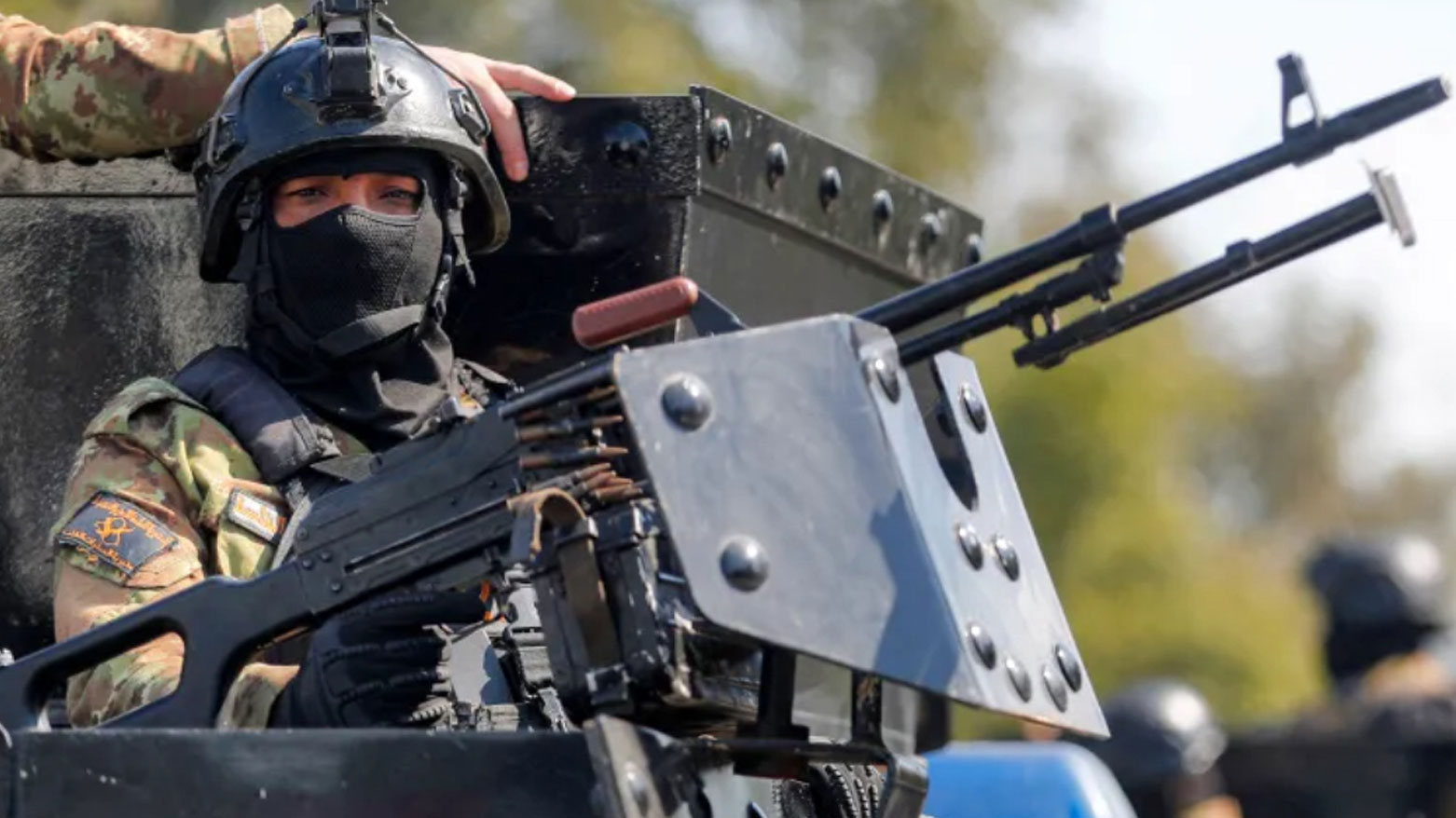
The tactical execution of this crackdown became visible at approximately 2:00 a.m. on Sunday, when the quietude of Baghdad's Green Zone was shattered by the rhythmic rumble of armored vehicles.
As reported by Kurdistan24 correspondent Dylan Barzan, elite units from the Iraqi Counter-Terrorism Service (CTS) moved with surgical intent to seal the entrances of the fortified district.
Read More: Iraqi CTS Raids Green Zone: Officials Arrested in Corruption Probe
The operation targeted specific residential compounds housing senior politicians and party leaders. Unlike previous displays of force that served as political theater, this mission appeared to be a pre-planned execution of judicial warrants.
The evidence anchoring these arrests is as cinematic as it is staggering. According to judicial disclosures corroborated by Kurdistan24, federal investigators have already seized assets valued at more than $85 million.
The details suggest a network that had moved beyond traditional banking, hiding its wealth in the physical architecture of the city. Stashes of cash were discovered secreted behind residential walls and buried in pits up to four meters underground.
The tally of recovered assets includes over 98 billion Iraqi dinars, $11 million in U.S. currency, 21 luxury vehicles, and 70 residential properties. Perhaps most tellingly, three kilograms of gold were recovered, a portable fortune that speaks to the perceived fragility of the very system the suspects were allegedly exploiting.
Prime Minister Ali Falih al-Zaidi, who has placed institutional reform at the center of his governing mandate, reportedly signaled that the state "will spare no effort" in pursuing those involved in the misappropriation of public funds.
For al-Zaidi, the stakes of the current operation extend beyond the courtroom. With a high-profile visit to Washington scheduled for later this month, the Green Zone raids serve as a dual-purpose signal: a message to a weary Iraqi public that the era of impunity is ending, and a pledge to international observers that the rule of law can penetrate even the most insulated corridors of power.
However, the scale of the challenge remains immense.
Atheer al-Shar'a, a prominent political writer and analyst, suggests that Iraq has crossed a significant rubicon.
Speaking to Kurdistan24, al-Shar'a revealed that the government has reportedly compiled a "midnight list" of 129 individuals, including current and former ministers and directors-general, marked for investigation.
"In the past, we heard successive governments raise the banner of fighting corruption, but in reality, no practical steps were ever taken," al-Shar'a observed.
He contends that the current administration is now prepared to challenge the "political pacts" that have historically prioritized a fragile stability over accountability.
The analyst noted that the reported physical altercations between the CTS and the personal security details of influential officials during the Sunday raids underscore the difficulty of dismantling a graft network protected by private interests.
Read More: The 129: Inside the Midnight Raids and Iraq's Widening Institutional Reckoning
As the sun rose over the Tigris on Sunday and the Green Zone gates reopened to regular traffic, a deceptive sense of normalcy returned to the capital. Yet, the political landscape has been fundamentally altered.
The confessions of a single undersecretary have provided the judiciary with the leverage to do what was once thought impossible: strip the immunity of the powerful.
The true test of this reckoning will not be found in the midnight raids or the armored deployments, but in the transparency of the coming judicial proceedings.
Whether these arrests lead to lasting institutional change or merely a rotation of the elite will depend on the government's willingness to follow the "domino effect" of al-Jumaili's confessions to their ultimate conclusion.
For now, the message from Baghdad is clear: the silence that once protected the Green Zone has finally been broken.
|
Summary Iraq's anti-corruption campaign reached a tipping point Sunday as multiple officials and parliamentarians were arrested following confessions by a former oil official. The crackdown, supported by a 2:00 a.m. CTS raid in the Green Zone, marks an unprecedented challenge to political immunity. |